



- What was the brief from the client? And how did you achieve the same intertwining of your style?
The major brief provided by the client was to complete the project within one year. Completed in 12 months during the pandemic, the project has saved significant time and resources with its quick construction. The other instruction was to construct a steel structure. Hence, one of the defining features of these buildings is the use of new and sustainable construction technology called LGSF (Light gauge steel frame).
- What are the environment-friendly initiatives taken for this project?
As a CPWD-certified Green building, the design utilises resource-efficient green technology, thereby promoting environment-friendly practices. Sustainable practices used in the project include rainwater harvesting and wastewater treatment. Part of the treated wastewater is used for flushing, dual plumbing systems, and gardening, while the surplus is supplied to the New Delhi Municipal Council.
Structurally, consisting of pre-engineered structural components, only nuts and bolts were used for assembly on site without any welding requirement, thus saving energy consumption and avoiding the emission of toxic gases and smoke. Additionally, 75% recycled and fly ash content materials are used to reduce any environmental impact.

FRP (Fiberglass Reinforced Plastic) panel tanks are used as overhead water tanks instead of conventional RCC water tanks. The main grid is connected to solar panels of 520 KWp capacity, and the solar energy generated is used for solar-supported street lights. To keep the air quality in check, air quality monitoring devices are used. Additionally, the use of occupancy sensor-based lighting systems and air conditioning systems saves unwanted wastage of electricity, reducing energy consumption.
- What were the difficulties or first setbacks encountered?
With the ripples of the Covid-19, pandemic felt throughout all sectors of the economy, the architecture and construction industry faced numerous challenges. As a result, construction projects were stalled, and delivery dates were postponed, inevitably decreasing the number of new project launches and corresponding sales. However, when the entire construction sector was at a standstill, the Office Complexes at KG Marg and Africa Avenue proved to be an accomplishment. Enhanced acceptance of new construction technologies and industry practices has significantly helped us sail through this project’s difficulties.
- How did your group integrate ‘speed up construction’- new age technology, in this project?
To reduce the construction time, pre-engineered structural members such as structural steel columns and beams have been used. In addition, using standardised materials, PEB structures, and modular practices like aluminium formwork and jump formwork proved to be very effective.
- If you had to name the design style used, what would it be?
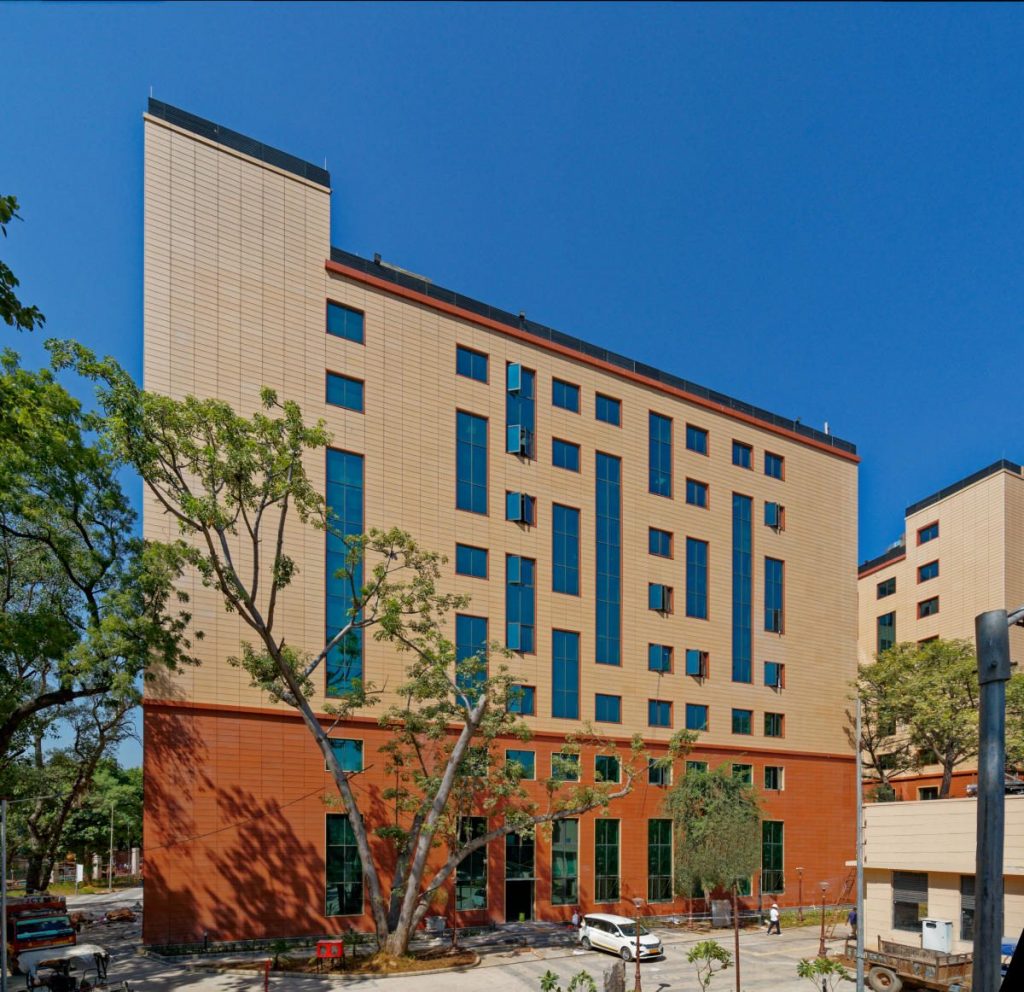
It is a simple linear office building, with the external facade designed in Lutyen’s colour theme.

- What were the inspirations and key concepts for the development of the project?
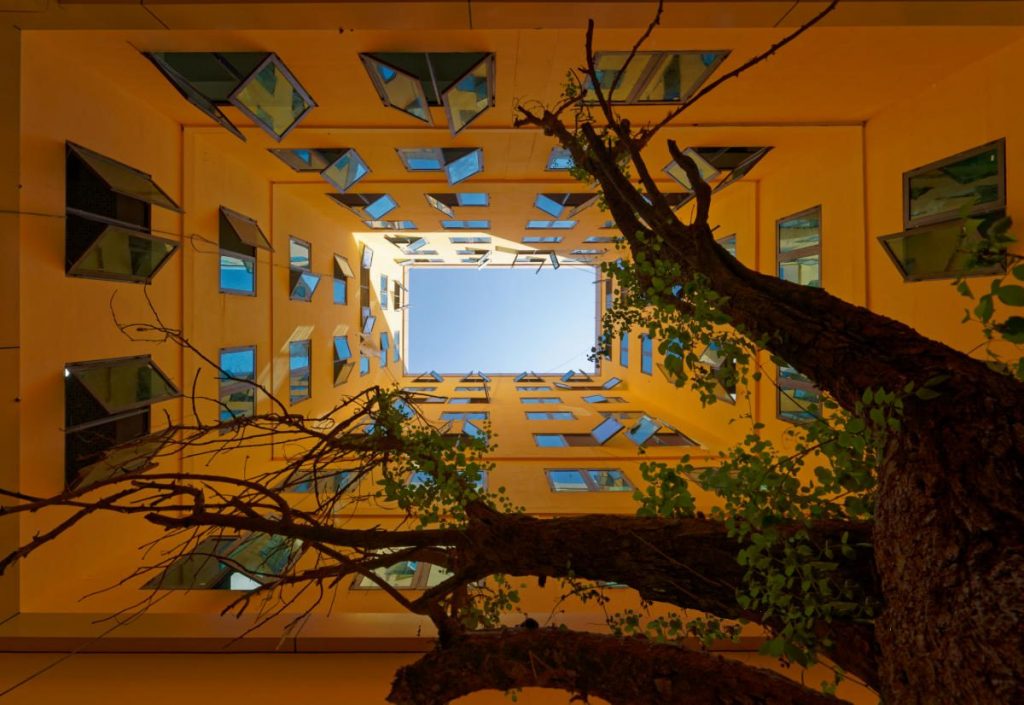
The main idea was to have separate departments, so different buildings were designed for the army, air force and navy. The building blocks were planned to ensure no existing trees were cut on-site. Additionally, a combination of evergreen, deciduous, and flowering trees was planted to provide shade and enhance air quality.
Keeping in mind the global trends, the interiors of the buildings have been designed with a strong sense of space planning and the use of technology and materials. A mix of enclosed and open spaces, conforming to the norms of universal accessibility, are provided for privacy and a comfortable co-working culture.
- If you had to describe the project in 2-3 words, what would it be?
Green office complexes.
- Explain the use of colours and/or other details to add value to the design.
The building has a dynamic facade cladding with ventilated terracotta tiles to provide thermal comfort. Being a low-maintenance material, it provides acoustic insulation from the outside, reducing noise levels by up to 15%. Additionally, it reduces solar heat gain, thereby reducing air conditioning load and saving energy by 30%. The external and internal walls are executed with the help of LGSF, cement board and gypsum boards. The solid mass of the envelope is broken down by the addition of large clear glazed windows bringing adequate natural light.

- One learning you’d like to take on to your next project?
The time during Covid-19 has been challenging, but a change in approach and imbibing new practices into the design has helped us tide over the crisis. Bringing in modular design and new technologies for such large-scale projects can save time and ensure quality, leading to a rise in the frequency of construction.
The defence office complexes are a manifestation of the government’s changing work culture and priorities with the optimal and proper use of available land and resources. This project has the potential to be an example of how we can speed up construction while minimising activity on-site and without disturbing the natural environment.