


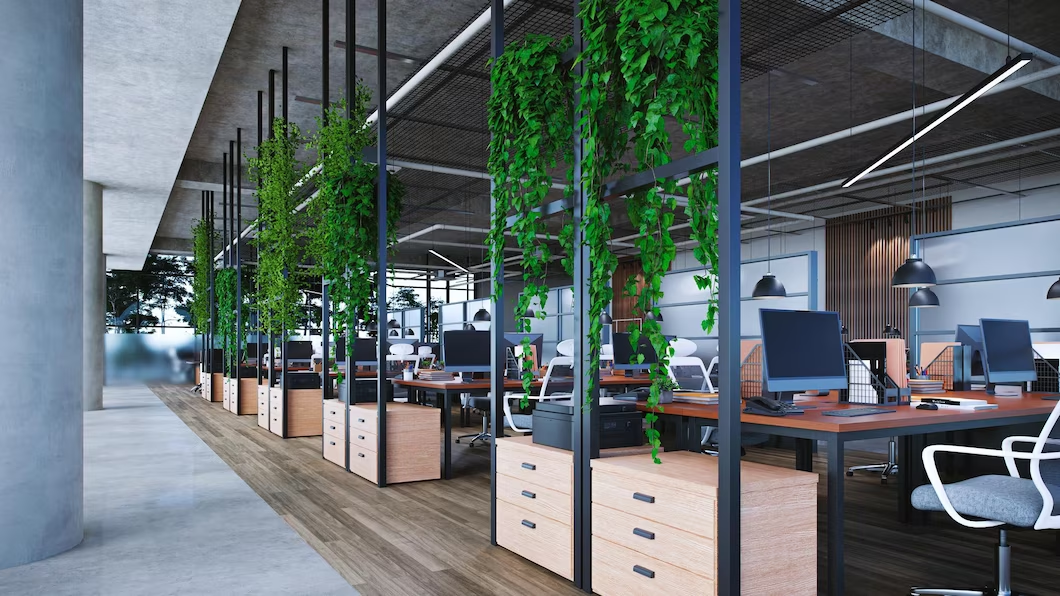
With the rise in environmental issues and climate change, workplaces across the globe need to know how significant it is to take steps and have an approach that would be eco-friendly and for the betterment of the society. The “future of the workplace” has experienced a change into a more ecological approach as there has been immense emphasis on eco-friendly practices in recent times when it comes to the architecture and design of our workplaces.

Following are a few steps that can be taken into consideration for a better approach towards a sustainable lifestyle:
- The rising levels of carbon emissions from transportation have prompted a greater emphasis on creating spaces that prioritize the use of locally sourced furniture and fixtures. By designing spaces that rely on locally available furniture, not only can we contribute to environmental sustainability, but it also proves to be more cost-effective in the design process.

2. Creating a space that has greenery around and outside the office: The HR can take steps that revolve around how there can be more greenery in and around the office. They can also help encourage several schemes such as “adopt a plant” and the use of hydroponic plants. Greenery around the office can help bring about a positive impact on the environment as well as the employees.

3. The utilization of modular meeting rooms and booths represents a groundbreaking innovation that brings forth a multitude of benefits. This innovative approach not only contributes to environmental sustainability but also enhances the longevity and effectiveness of the designed space. By incorporating modular structures, the environmental impact is reduced, as the materials can be disassembled, repurposed, and relocated, minimizing waste and promoting a circular economy.
Additionally, modular meeting rooms and booths offer flexibility and adaptability, allowing for easy reconfiguration and customization as per changing needs, ensuring optimal space utilization. This versatility provides long-term value for space designers, eliminating the need for frequent redesigns and costly renovations. Ultimately, the usage of modular meeting rooms and booths is a spectacular innovation that benefits both the environment and the designers, creating a sustainable and efficient work environment.

4. Strategically incorporating natural light in the design of a space can lead to significant energy savings and cost reductions. By thoughtfully planning and implementing a design that optimizes the use of natural light, reliance on artificial lighting can be minimized, reducing electricity consumption. Additionally, the integration of diffused lighting techniques can further enhance energy efficiency by mitigating heat generation and minimizing associated cooling needs.

5. The adoption of eco-friendly materials plays a vital role in protecting the environment. Instead of relying on artificial options, using sustainable alternatives becomes essential, such as incorporating cork boards for acoustic paneling. By opting for eco-friendly materials, we can reduce the ecological footprint associated with construction and design. Embracing these sustainable choices contributes to a more environmentally conscious approach and helps pave the way for a greener future.