



Zydus Wellness is an integrated consumer company. The Company is engaged in the development, production, marketing, and distribution of health and wellness products. The term ‘wellness’ is an active process of becoming aware of and making choices toward a healthy and fulfilling life. It also means creating and living in spaces that nourish our bodies and mind. The concept was to create a mindful space achieving the Zydus way of being.

Client Brief
Zydus Wellness is an extension of Zydus Cadila, a pharmaceutical company that focuses on products related to lifestyle and wellness. The client wanted to incorporate a sense of wellness within the interiors by having a space that reflects the ethos of the brand.

Challenges faced
The challenge was faced due to the location of the project. The building had leakages and infrastructure issues which were tackled accordingly. Corporate office projects are generally time-bound and price sensitive, which can also be challenging to deal with.
Design integrating nature
The idea was to achieve a simplistic design integrating nature.
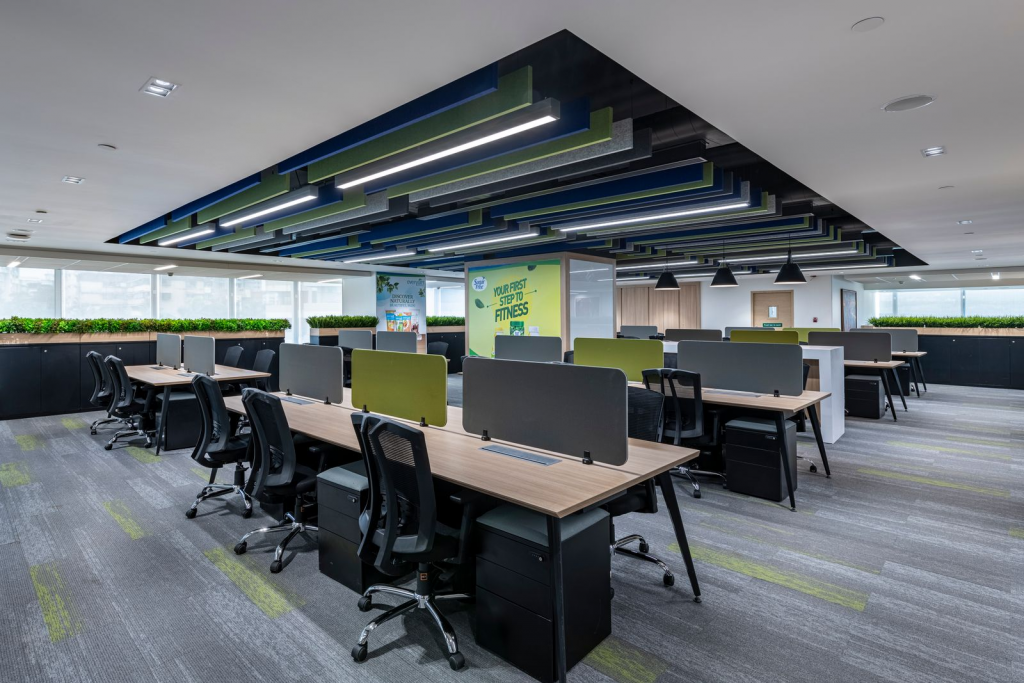
This was manifested in the form of greenery, natural light and other natural elements keeping to the theme of biophilic design. The idea of nature was then juxtaposed into the design in the form of wall cladding or in partitions and sometimes on the floor as well.

Central open space planning allows for layout flexibility. The open working space with an exposed ceiling painted in a unifying shade adds to the palette. Graphics play an important part in any office setup. Here the products and their marketing graphics have been included. Collaborative workspaces have been created so that employees share common areas that allow flexibility of work throughout their day.

Spatial planning to segregate the various hierarchies at the office has been planned; this includes cabins to large cubicles and workstations. Break-out spaces are integrated with the established and more formal working area.
Color/ material palette
To uplift the mood of people coming into the space, biophilic design features were added by bringing in the greens. Photosensitive lights were used in the interiors as they automatically adjust the intensity of the light depending on the amount of daylight received.

Green walls were integrated, planter beds were created in storage units and wooden decking was used in the entrance lobby for seamless integrations of indoors and outdoors. Graphics depicting the brand image and products were also a central part of the interior aesthetic.

Lighting
Photosensitive lights are automated to adjust according to the daylight intensity, depending on the hour of the day.

As daylight decreases, the intensity of artificial lighting increases.

Furniture


Depending on the hierarchy of divisions within the office and their functions—different furniture configurations and layouts were used.


Office planning is about making sure that circulation is optimised and integration of other spaces like workstations, breakout spaces and meeting rooms.