


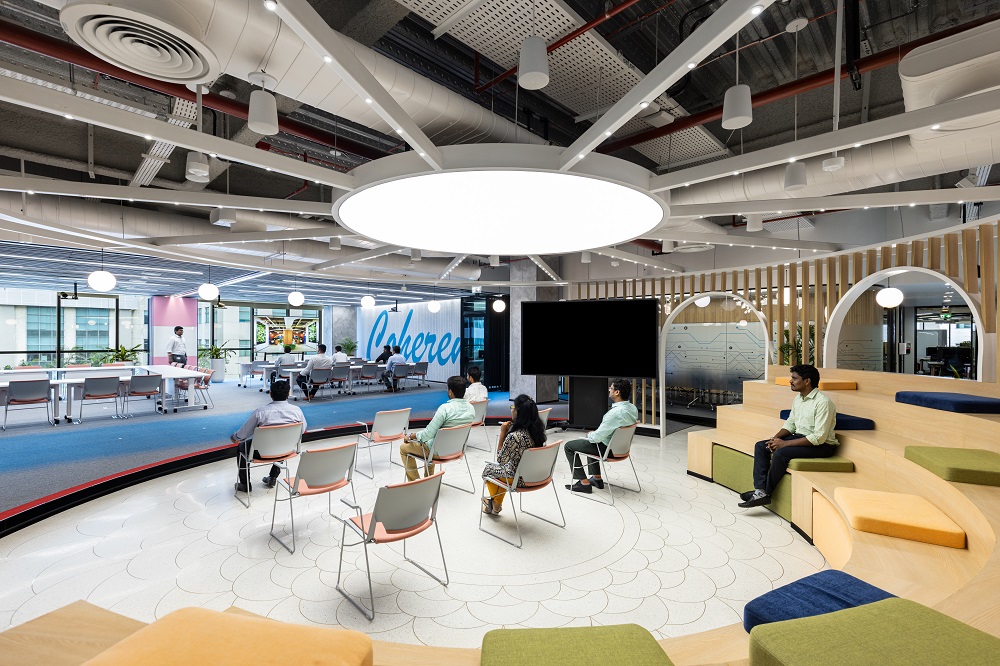
With its heuristic elements and functional design language, the new campus of the international banking company, Citi, in Chennai displays a sensitive balance in the symphony of spaces and volume. Every office needs a space that reflects its own ideations, its growing sensibility — a space that captures the essence of its principles. To this end, Citi’s core ideas, notions of journey, spatial experience, and interior transition are all present in the design of its new office, executed by M Moser Associates. It is conceived as an ambience conveyed through light tones, individualistic treatments, and, most importantly – flexibility.
After successfully completing several offices across the globe, including more than 20 offices in India, Citi engaged M Moser to design their new 227,000 sq.ft campus located at the heart of DLF Cybercity Park, Chennai. The workplace is a three-storied, fully-glazed building with approximately 1900 seating spaces.
For this global pilot, M Moser worked closely with the India leadership of the Corporate Real Estate team to create a workplace, guided by their global playbook, which is intuitive, inclusive, and caters to the new era of post-Covid workplace, while also adapting to different personas and work styles. This workplace merges the priorities of today with the vision of the future, thereby creating opportunities and fostering productivity, innovation, while being adaptable and future-ready.

Human-centered design
Moving away from activity-based design, which focuses on the type of work done in the space, the design team ideated toward a behavior-based design by placing value on the users and the well-being of the person as a whole. They also delivered an inclusive, user-friendly, intuitive design by providing handicap-accessible toilets and a compliant layout.
The planning solution mimics the movement of its inhabitants from remote working to a resident by expanding the layers of agility and flexibility. Teamwork happens at the core, while individual work takes place at the periphery. Furthermore, employees can choose to do their focus work at the office or any other place.
Community and engagement
Post pandemic, the office needed to become an avenue to help build social capital and belonging. By being dynamic, inspirational, and including “wow” moments that reflect dignity, pride, history, and tradition, the design reinforces the Citi brand and celebrates the unique character of Chennai.
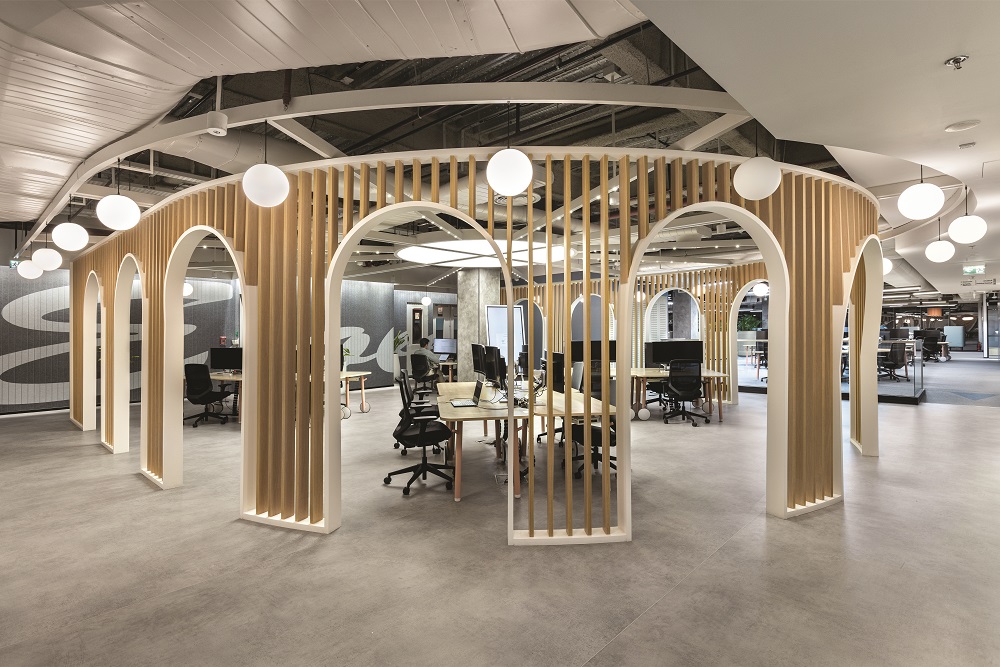
To support the ever-increasing need for collaborative work and cross-collaboration, the planning includes a wider choice of collaborative work settings. The brand-infused office includes work lounges, social hubs, an adaptable town hall, team tables, team suites, and huddle rooms. The new space provides more chances for unplanned encounters and interactions.

Choices and flexibility
The new campus caters to different personas and work needs by offering plenty of choices to its inhabitants. Aside from collaboration spaces, employees can choose between flex workstations, focus desks, or team tables for their daily tasks. Touchdown rooms and phone booths provide privacy whenever required.


Dependable and seamless technology
With a broad choice of work settings and the option between in-person and digital collaboration, it was imperative to have tech solutions that are responsive, intuitive, and adaptive. The campus design enables teams to host virtual meetings in the phone pods or the small, medium, and large meeting rooms. The layout even includes special “Zoom rooms.”

Artistic value
With a strong sense of company culture, the company was looking for consistency in the design approach to ensure universal identity across all offices. The Citi Chennai office is no different; there is a distinct but warm and timeless architectural language, layering, textures, and Citi’s choice of colors and branding graphics.
The design theme is driven by the deep-rooted elements from Chennai, including the fauna and flora surrounding the city. Materials, such as wallpapers, flooring, and wall partitions, were carefully selected to achieve the desired Chennai-inspired aesthetics.
Benefits delivered to the users, proactive health & wellness. It is known that nature positively impacts people’s well-being and helps increase their energy levels. By increasing the number of biophilic elements, the design brings the outdoors with the interior landscape of the office. The new workplace also offers plenty of options for rejuvenation; the work cafes are good examples.
The variety of choice settings helps offer a wide range of postures, and the ergonomic furniture, along with the increased number of sit-stand desks, supports physical well-being. In addition, maximisation of natural light, task-based lighting, and acoustic buffers support the employees’ health.
By prioritising the use of regional and sustainable materials, designing an energy-efficient HVAC system, providing solutions for waste segregation, water conservation, and using LED fixtures with motion and daylight sensors, the new state-of-the-art campus is also demonstrating sustainable stewardship, including the use of renewable energy.
The design integrates the learnings from remote working, and the solutions consider the shift towards more choice and flexibility and enable the workplace to be a valuable and critical component for connection and community.
To achieve the above, the design team focused on five key pillars as per CWE guidelines:
- Human Centered Design
- Community and Engagement
- Dependable & Seamless Technology
- Choice & Flexibility
The new workplace was the perfect way to welcome back employees post the pandemic. The office takes care of their health, supports some of their tasks better than their home office, and offers flexibility and plenty of opportunities to socialise and grow.