

Co-working spaces have become a major factor in the modern workforce, and they’re changing the way people work. The concept has grown in popularity among entrepreneurs for one strong reason. Entrepreneurs, big and small, are solution seekers, and co-working spaces tackle the issue of ever-increasing property rents – a prevalent and growing concern in India. Plus, with rapid urbanisation, burgeoning traffic and increased travel times, ‘anywhere workspace’ became the new normal. Aiding this, co-working environments provide them with an inexpensive alternative to a traditional office. The year 2017 marked the largest growth in the co-working industry, and produced all-time highs when it came to number of spaces as well as members.
Conceptualisation
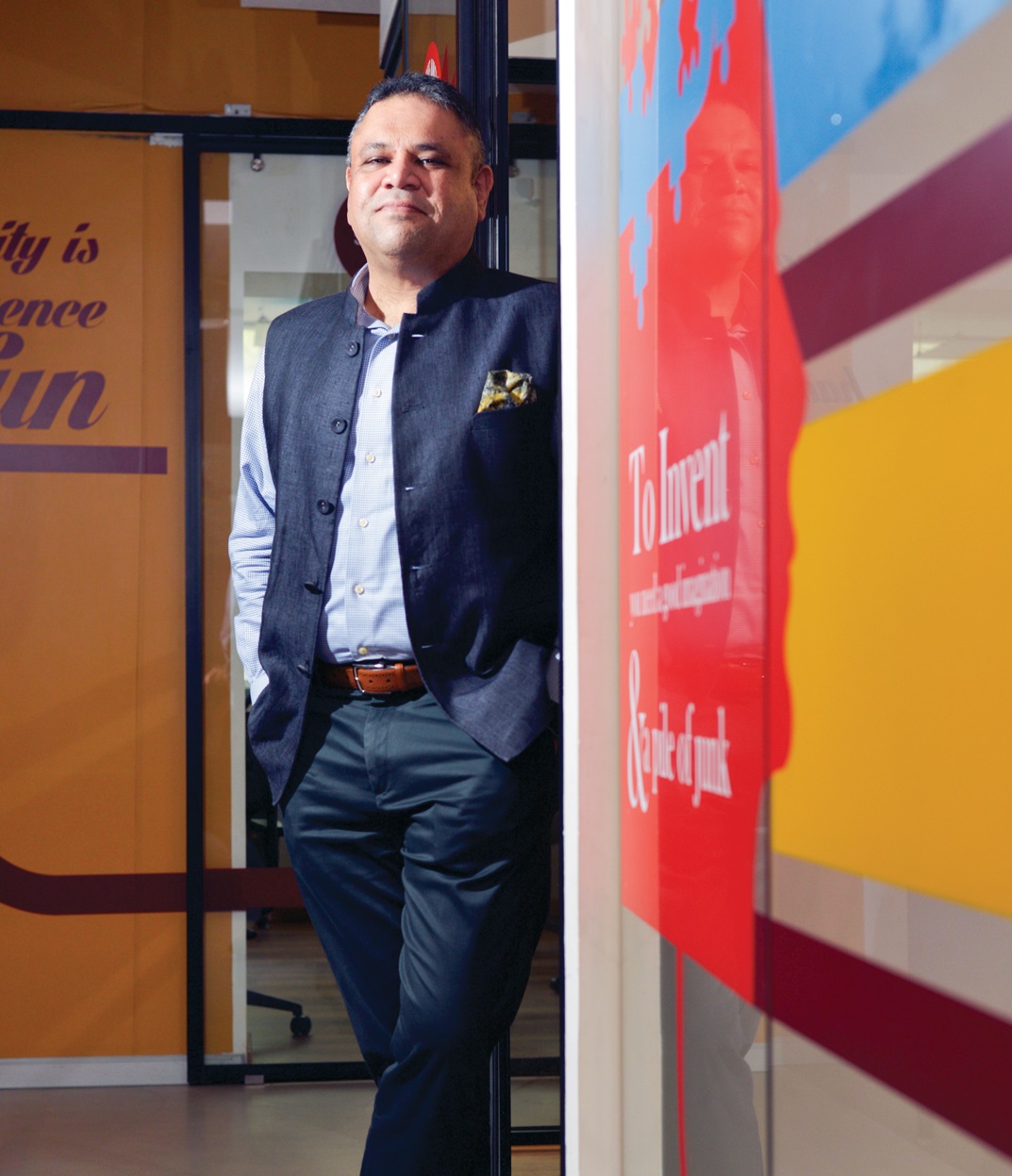
With a foremost stand in the industry, Awfis India was one of the earliest players in this domain. It has gone on to establish itself as one of the biggest supplier of shared workspaces. Shedding light on its inceptive days, Amit Ramani, Awfis’ founder and CEO, states, “Business and real estate shifts primarily drove the evolution of such workplaces. Before we launched in 2015, Awfis was conceptualised in an effort to re-imagine what the workplace of the future would look like for large corporate clients, start-ups and individuals. Today’s multi-generational workforce seeks to collaborate, work from anywhere, at a cost-effective solution, without having to spend on a complete new office setup. Awfis made a significant impact in the co-working space right when start-ups and SMEs saw a massive surge in India.” Ramani adds that given the inflexibility and lack of transparency for a long time in real estate, the company turned the situation into an advantageous one by setting up as solution providers in the commercial realty segment.
The commercial real estate industry is quickly adopting the shared economy model that allows consumers to utilise real estate on a truly “just in time” and flexible basis. The idea germinated during Ramani’s consulting days when alternative office solutions was the need of the hour and these solutions were widely accepted in global markets by leading corporates. And so, the inception of Awfis was driven by an unrelenting desire to provide quality workplaces at the best locations on a just-in-time basis.
Initiation
India is the youngest start-up nation in the world with 72% of founders being under 35 years of age. Millennials matter because they account for over half of the population in India. By 2020, they will form 50% of the global workforce. Shared workspaces are where they prefer to work because it maximises their productivity with the right exposure, network and community engagement and without any organisational boundaries.
With this in mind, several steps and parameters were outlined to streamline the purpose and functions of Awfis for the Indian market. The company‘s pilot launch was its very first centre in Delhi at Vasant Kunj. The 70-seater saw a lot of experimentation with regard to furniture, fixtures, cabins, activity-based settings and operations, as the team explored the right kind of technology and solutions. It established a lot of learnings and helped gain insights on the workability of the concept. The Awfis team also conducted customer interviews for feedback. The insights, knowledge of consumer demands and market dynamics led the brand to eventually expanded across the country as well as by increasing its centre seat occupancy.
The centres are essentially designed to suit the sensibilities of modern-day entrepreneurs. They offer everything – from flexible workstations, new-age cabins, activity-based setting including comfortable couches and beanbags, meeting pods and lounges, a collaborative culture as well as curated events.
Creating a support system
Working as a corporate support system with major players warming up to shared workspaces and preferring the agility of a start-up, companies like Vodafone, Mercedes-Benz, RBI, Hitachi, ShareKhan, Zomato, Practo, etc, operate from various Awfis centres across the country. Some companies choose to operate under a hub, establishing their satellite or regional offices in co-working spaces; some others take up seats to accommodate their sales teams; while travelling professionals and independent workforce such as consultants choose such spaces for increased efficiency. When big corporates are entering new markets to test waters, they usually start with relatively small and agile teams. In such cases, shared workspaces keep costs under control and logistics relatively easier. This also offers flexibility when scaling up or expanding the team temporarily without having to enter into long-term lease commitments.
The growth story
“From the very beginning, we thought of the developer as a partner and approached the whole development by partnering with the land lords. We explored different partnership models like straight lease, joint venture and management operator,” explains Ramani. With respect to designers and architects, his previous experience of managing a commercial interior design firm and partnerships with suppliers and vendors played a crucial role in the company’s journey. “We extended our existing partnerships with designers and contractors, who were a part of the same ecosystem. For instance, we‘ve collaborated with NCUBE for designing some of our Awfis spaces, whereas my association with Petra, a facility management setup, helped us tap into the existing ecosystem of facilities providers (housekeeping, security guards, etc). Eventually, we brought the three pillars – developers, designers and contractors – under one roof.”
Crafting out the built space
Today, technology has become completely unified into the everyday life for millennials. Additionally, employees seek out technology that contributes to their personal growth. Learning management systems, certification and training programmes, collaborative mind space that offers personal and professional developmental opportunities are some of the key desires that separate today’s generation. With the fast transformation of the current workforce, the onus lies on using technology to innovate and change the world.
With this in mind, Awfis designs and provides a vibrant and minimal space with a well-defined collaboration area, interesting furniture, installations, flexible settings for events, enclosed spaces with good acoustics and flexible meeting areas that can be easily reconfigured. The brand’s attempt is to build a futuristic space that resonates with new-age India as well as is dynamic in nature. Being a shared workspace provider, the interiors of Awfis centres require a much broader spectrum of thought, where a designer could transcend the usual design sensibilities of a space and think of a varied user base with, sometimes, contradicting work profiles. Hence, the final concept is a blend of design and aesthetics that finds place in every user’s visual and psychological acceptance. The intent is for the space to radiate and exhibit the energy of today’s millennials, while still allowing them to see, touch and feel the raw ground of their belonging. Various design and material elements bring this energy and give an earthy and raw aesthetic feel to the space. “Building a speculative shared workspace for different types of customers is a challenge in itself and the correct form of design has to resonate with every personality who works out of our workspace.” elaborates Ramani.
Digital leverage
Awfis, as a brand, enjoys a strong technological inclination when it comes to providing solutions to its customers and managing spaces. The company ensures that all its systems and processes are as automated as possible. The thoughtfully devised Awfis app allows customers to book spaces real time, opt for alliance partnerships and purchase F&B through its mobile wallet. They also have a chatbot called “Ava – Awfis Virtual Assistant” that allows customers to login complaints, share feedback and suggestions or utilise concierge services. The centralised Network Operation Center manages all IT installed within the centres – including access control and security surveillance systems, which are centrally monitored 24×7. The facility also monitors internet bandwidth, speed quality, air conditioning and electrical systems through a central location as well as manage devices remotely.
Expanding footprint
Awfis currently holds a nation-wide network of 19,000 seats spread across 50 centres in eight cities and micro-markets, including Mumbai, Delhi, Gurgaon, Noida, Bengaluru, Pune, Hyderabad and Kolkata.
Having witnessed the fastest growth in a span of three years, Awfis plans to establish 100+ centres with 35,000+ seats across Mumbai, NCR, Bengaluru, Chennai, Hyderabad, Kolkata, and Pune in the next 18-24 months.
The brand has witnessed a transformation in the workspace market, where conventional office users have moved towards shared infrastructure. Awfis has adopted a geographical or location-based approach to build a cohesive network of centres at prime business hubs and sub-hubs in major cities and tier II markets like Chandigarh, Ahmedabad, Jaipur, Kochi, Indore, etc.