


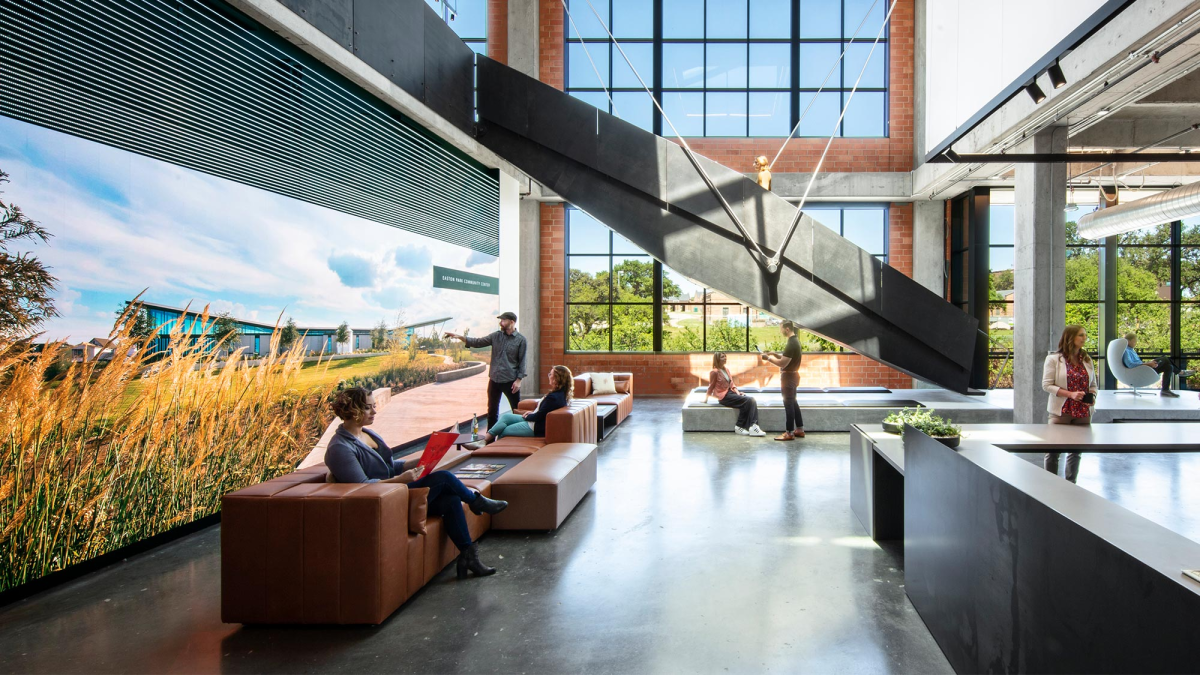
Global architecture, design, and planning firm Gensler has released its annual Design Forecast report, which highlights the sustainability trends that will shape the built environment in 2023. With a focus on climate action and sustainability, the report offers insights on the opportunities for sustainable development and clean energy implementation across the GCC region, which is projected to see an annual growth rate of up to four percent in the building industry from 2023 to 2024.
Here is an overview of the key trends identified in the report.
Trend 01: Carbon performance certifications will increase in importance across global real estate in the immediate future
The report identifies that radical transparency is the name of the game as companies shift to a culture of disclosure around their environmental commitments. Net-zero energy and carbon certifications will become baseline expectations even in industries with traditionally poor building performance. Carbon performance certifications will increase in importance across global real estate in the immediate future.
Trend 02: Europe will chart a course toward regenerative systems. The Middle East will follow suit
Recognising that carbon reduction is only the first step in a long journey, much of Europe is embracing climate action strategies focused on low-tech design and regenerative systems. Such strategies will shift the focus from minimising environmental harm (net zero) to actively benefiting local ecologies and generating renewable, clean energy (net positive). This presents a great opportunity for the Middle East to learn and leverage from this success and partner for advancement in these sectors.

Trend 03: Transforming Existing Buildings and Materials With Reuse Strategies Will Supersede New Construction
As energy grids decarbonise, the embodied carbon associated with new construction will become more consequential. Adaptive reuse, which can reduce a building’s life cycle carbon by 40 percent, will be an important antidote to this dilemma, especially as forward-thinking governments and firms pledge to prioritise retrofits over new builds. The GCC currently has growing initiatives on reuse and recycling, with upcoming focus on low-carbon projects, emphasised by KSA’s vision for sustainable giga-developments.
Renovating existing building stock to a zero-carbon-ready level should be the next priority for advancing the region’s sustainability targets for 2030-2060. Renovating buildings typically saves between 50 to 75 percent of the embodied carbon emissions compared to constructing a new building, particularly when the building foundation and structural skeleton are maintained.
Trend 04: Certifications Will Emerge to Better Define and Quantify Socially Responsible Strategies — the ‘S’ in ESG
While many prominent certification programmes exist to demonstrate environmental and governance commitments, the same cannot currently be said for social aspects of ESG. Funds are increasingly seeking clarity on equity, inclusion, and wellness. In coming years, we expect new evaluation systems for socially responsible strategies as companies look to prove their mettle to investors and customers.
An uptake of qualification targets will encourage a new set of baseline sustainability measures to be enforced across the Middle East and globally. While the region is far behind the rest of the world in building renovation and reuse volumes, the region has a unique opportunity to develop and implement sustainability measures from the outset across new projects.

Conclusion
Gensler’s annual forecast report provides valuable insights into the future of sustainable design and planning. With the increasing importance of carbon performance certifications, regenerative systems, and the need for transformation of existing buildings and materials with reuse strategies, the report highlights the urgency for action and change across the built environment. It also emphasises the need for new evaluation systems for socially responsible strategies, a much-needed step toward a more sustainable future.
To achieve these goals, it is important for governments, businesses, and individuals to work together to prioritise sustainable design, construction, and retrofitting practices, as well as to invest in innovative technologies that can help reduce carbon emissions and create more regenerative systems. By taking action now, we can help ensure a more sustainable future for generations to come.