


In this era of global climate change, architects and designers are actively exploring some key innovations to overcome the adverse effects. The idea of a ‘zero energy building’ has attracted much discussion across the AEC industry and is now increasingly seen as critical for the future of sustainable architecture.
1. Passive Strategies
Designing a building with passive strategies is about understanding the environmental constraints of the site and responding to them. For instance, using ambient energy sources to heat, shade, or ventilate a building space is a form of passive design. Environmental factors such as sun path, wind direction, and building orientation play a critical role in the design, determining the need to minimize heat transfer through the exterior walls to maintain occupant comfort levels. Working with the existing natural conditions through passive strategies helps decrease the energy required to offset a net-zero building. The challenge with incorporating passive strategies in design is that they must be planned and executed in the early stages of the process to be effective.
2. Solar Shading
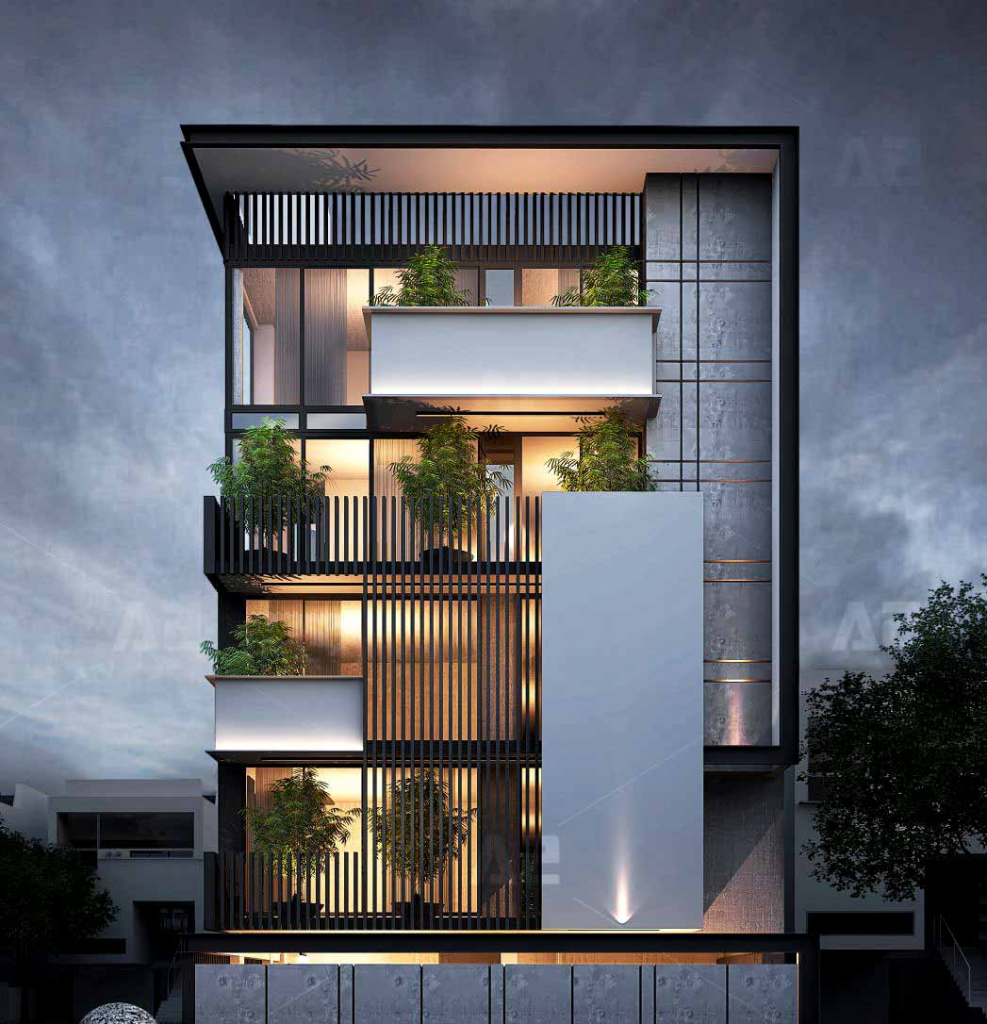
Solar Shading is a potential design strategy that if properly utilized, can have a massive impact on a building’s overall performance and spatial quality. This neutralizes the use of energy and which results in a design with net zero energy. Solar shading encompasses a large scope of factors, such as Shading Elements, Window to Wall Ratio, Glazing Placement, and Fenestration Performance among others. Using this strategy reduces energy use and therefore has a strong impact on the thermal and visual comfort of the occupants by preventing glare and overheating during summer. However, the effectiveness of the design strategy is dependent on multiple parameters, including the type of shading device, depth, and context.
3. Active Strategies
The energy use of a building refers to the amount of energy required to operate and sustain the building once it’s occupied. The goal of active strategies is to increase the efficiency of the active system aiming at decreasing the demand for overall energy. For instance, installing air source heat pumps, that extract heat from outdoor air to warm up the home, actively reduces the carbon footprint. Optimization is the core powerhouse of reaching net-zero building design, through renewable energy sources. Optimizing energy helps in improving the building’s performance and enhancing comfort.
4. Renewable Energy
On-site renewable energy is yet another essential tool for reaching net zero. Providing energy generation is possible through technologies that produce electricity, like wind or photovoltaic “solar” panels. This strategy uses natural energy sources like the wind or the sun to generate electricity. For example, solar panels mounted in a frame with wiring help absorb and convert sunlight into usable electricity. Renewable power generation is thus the most reliable solution to reach both net-zero-energy and net-zero-carbon status.
Net-zero energy and carbon neutralization are the keys to sustainable architecture. Not only are these design strategies good for the environment, but they also foster a smarter, healthier built environment that is beneficial for human well-being. With the use of artificial intelligence technologies, architects & designers are set to build a responsive environment that helps people adapt to the age of global climate change and evolving human needs.