


1. What are the various evolving trends in office spaces?
The pandemic has dramatically changed the way people operate. With hybrid and flex working models taking centre stage, it is imperative to create spaces that are efficient, invoke inspiration and suit the changing needs of the modern workforce. At WeWork India, we ensure that our offerings are aligned with the evolving trends, and focused on enabling our members to grow and thrive.
A few notable trends in modern-day office spaces include
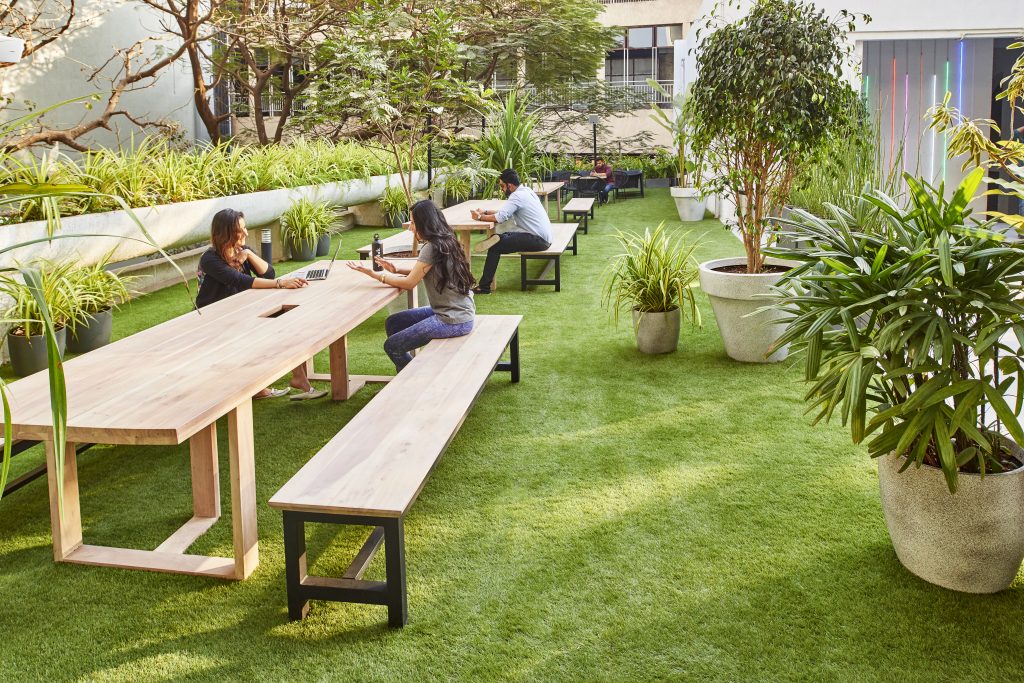
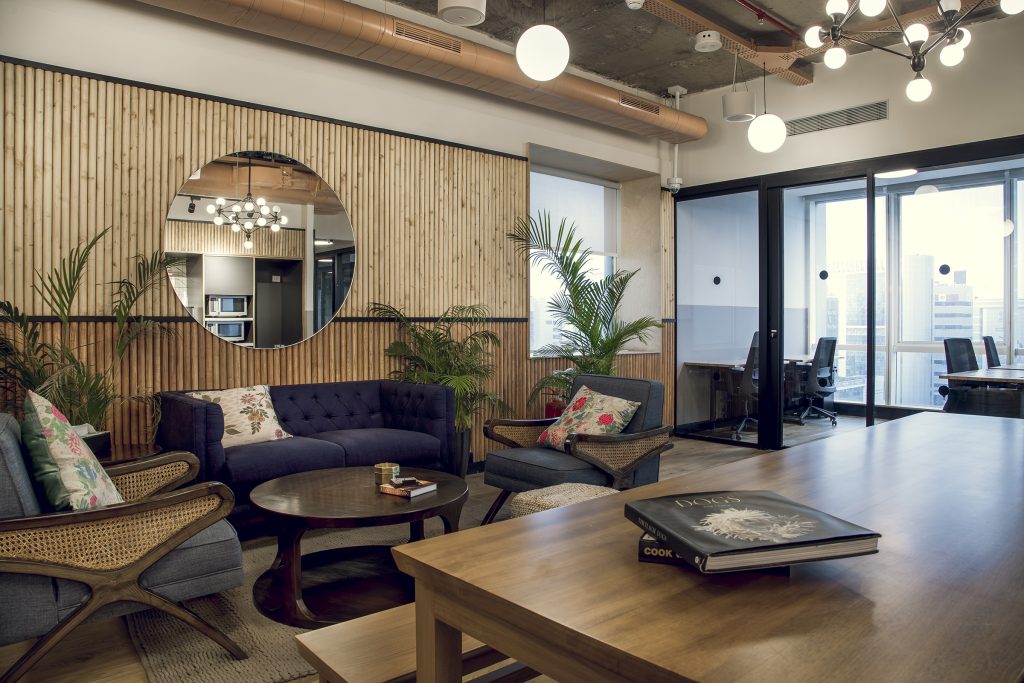
● Biophilic Design: The proven physiological and psychological advantages of biophilic elements makes biophilic office design an important trend of the post-COVID workplaces. Taking strong guidance from nature, biophilic design not only improves indoor air quality but also helps in making the workplace soothing and welcoming. The hanging pots with a variety of green plants at WeWork Prestige Atlanta and the large potted ferns placed inside the workspace at WeWork Embassy One are a testament to how we are furthering the greenery inside our spaces. After the last few uncertain years, this might be just what individuals require as they transition back to the office.

● Technology: a key ally: Present day world is heavily reliant on technology and the same rings true for workspaces as well. Technology will continue to play a central role in evolving the way people work in office spaces. From smart buildings that enable complete automation of building operations to AI-driven technology that require less human intervention, integration of technology has come a long way and is definitely going to play a major role in the years to come.

● Sustainability-oriented designs: Lately, companies worldwide have been laying an increased focus on eco-friendly practices and the same holds true for workplace design as well. For instance, at WeWork, we have come up with various sustainability initiatives like avoiding leather in design or single-use condiments and providing reusable cutlery. By initiating steps like these, companies can aim to contribute to the betterment of the environment without compromising on member experience.
● Flexibility and adaptability: For businesses to remain competitive, it has become essential to adapt to today’s ever-changing market conditions. Flexibility and adaptability allow businesses to scale up or down, enabling businesses to work from anywhere. WeWork India provides scalable and customised solutions which flexibly allow businesses to make rapid adjustments in record time as per their requirement.

2. Has there been a greater emphasis on sustainability and energy efficiency lately? How can one incorporate the same in workplaces?
The idea of sustainability and energy efficiency has become a priority for most organisations due to growing concerns about the environment and the impact of human-led activities on the planet. Careful measures are being incorporated to make workplaces and their operations sustainable and energy efficient. As this should be a long-term goal for any organisation, sustainability can be ensured by making differentiated choices even in the smallest of things. For instance, at WeWork India, we encourage our members to carry their own reusable bottles to work and provide them with reusable stainless steel cups, compostable bowls and plates. We have engineered our water fixtures for efficiency, utilising low flow technology to maximise water utilisation. We have implemented a centralised building management system, known as the command centre, to promote energy conservation and proactively maintain comfort and equipment. As new buildings are constructed, they are seamlessly integrated into the command centre network.
A few ways to ensure sustainability and energy efficiency vis-à-vis workplace design include:
- Adopting sustainable and natural materials in construction and interior design.
- Incorporating biophilic elements to enhance air quality and boost employee productivity.
- Utilising smart building technology to monitor and regulate lighting, temperature, and other systems.
Additionally, reducing energy waste through these measures can lead to a more sustainable future.
3. How can workplaces use AR and VR to create immersive and interactive offices?
Virtual Reality (VR) and Augmented Reality (AR) are the fastest-growing technologies that offer wide potential to change many aspects of our lives, including how we work. From training new employees to improving communication and collaboration, these two technologies (both separate and mixed) are changing the way enterprises operate. Organisations can use AR and VR to create immersive and interactive experiences such as:
Onboarding: AR/VR can provide an engaging, hands-on, and effective onboarding experience, guaranteed to leave a lasting impact on new hires. These technologies can enable new hires to interact with custom-built content that tells a story about the history, culture, values, and leadership of the organisation, a digital map of the office that displays where key areas of the business are located, and walk them through detailed instructions of real-world tasks their position requires.
Training: AR and VR can help make simulations to provide hands-on learning and training to the workforce in a structured, engaging, safe and cost-effective way. Owing to its interactivity, these technologies enhance the learning and comprehension of both trainees and seasoned workers. With the host of digital devices, trainees can practise tasks in real-time at their own pace. Providing such enriching training with AR and VR’s assistance can encourage and help employees in retaining information, knowledge and skills.
Collaboration: As people are getting accustomed to hybrid, flexible work models, AR and VR technology has come to the fore for an enhanced sense of collaboration and immersion while overshadowing the physical absence of teammates. Through these technologies, organisations can enable sharing of virtual holograms in real-time which help simulate the physical objects and people.
4. How can one intertwine colour psychology to stimulate work environments in offices?
The scope of using colours has gone beyond mere beautification of the workplace or branding. Today, it has become an important element that designers consider to ensure employee well-being, productivity, overall mood setting and more. Colour psychology is a powerful tool to be considered while designing workplaces as it explores the emotion that each colour triggers in us.
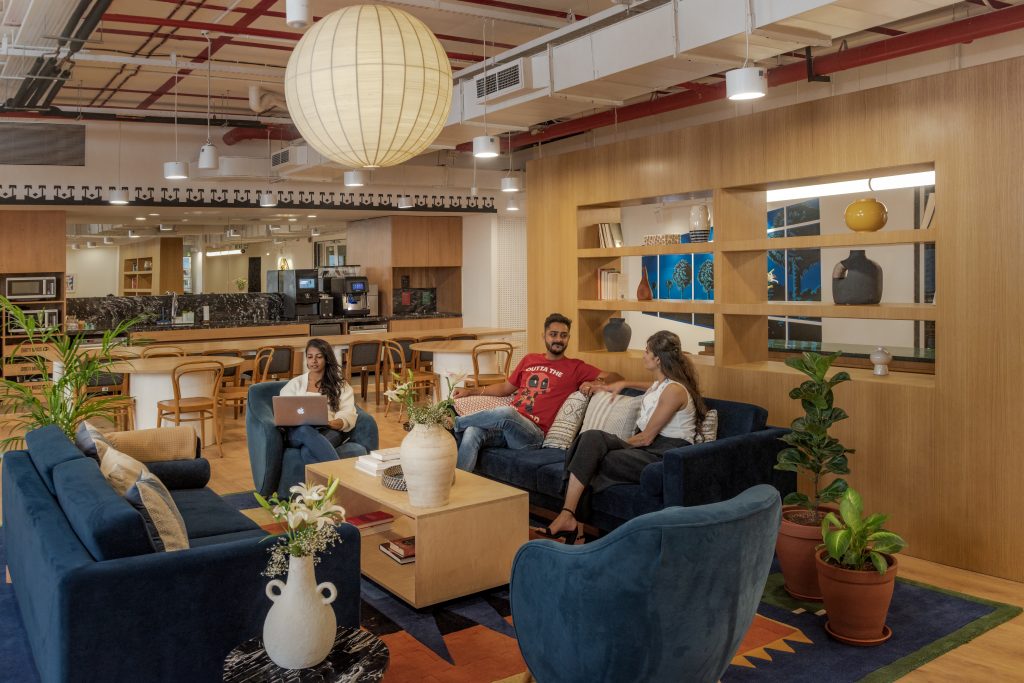
As new age flexible workspaces cater to various functions like fostering collaboration, productivity, networking and evoking a sense of community, colours need to be incorporated by understanding what each space desires to accomplish. For example, warm colours like red, orange and yellow can create a positive and energetic atmosphere, while cool colours like blue and green can have a calming effect and are known to boost concentration and productivity. White, a neutral colour with a modern-appeal, is often perceived as calming and can evoke feelings of peace and tranquillity. When it comes to collaboration, its neutral and calming qualities can help to create an environment that is free of distractions, allowing team members to focus on the task at hand.
It’s important to keep in mind that colour psychology is not a one-size-fits-all solution, and the best results will come from experimenting with different colours and combinations to see which works best for your office space and the specific needs of your team members.
5. How does one seamlessly blend technology in workplaces?
Accelerated by the pandemic, companies and employees have reached an inflection point in redefining how the world works. Technology is finding extensive applications in every aspect of the workplace. In addition to providing quality service, advanced technology integration is also driving cost and operations optimisation. For example, to make better use of spaces, WeWork India uses JARVIS Video Analytics which identifies precise heat maps in all shared areas inside our facility. We also recently invested in Zoapi, an enterprise SaaS solution provider that supports numerous video conferencing facilities and collaboration applications to make meetings immersive and engaging. We have also integrated technology at a product offering level with products like On Demand offering day passes, and Virtual Offices allowing individuals to access workspaces in a matter of few clicks without requiring them to even own an address.
As flexible working models continue to gain popularity and the demands of the workforce continue to evolve, adoption of innovative technologies at the workplace will only rise. The focus of workplaces should be in understanding what the need is, identifying the right
6. What are your top-3 tips for efficiently designing a modern office?
Gone are the days when people preferred working in traditional office settings. Modern-day workspaces are all about creating a space that lends the comfort of home while still fuelling productivity. Aspects that contribute to increased employee productivity, well-being and seamless functioning must be prioritised while designing an office for the modern-workforce. Here are 3 tips to design a modern office:
● Activity-based work designs – Incorporating a design that can accommodate a variety of working styles is essential for modern workforce. The activity-based working concept will maximise the workplace’s overall effectiveness and satisfaction by giving employees the flexibility to work from any location in the office that best fits the task at hand, be it individual work, team collaboration, or deep focus. This can be accomplished through the use of modular furniture, adjustable seating and private spaces for individuals to work in.
● More reliance on natural light – The presence of natural light in an office can have a positive impact on employees, making them feel more relaxed and cheerful, while also giving the illusion of a larger space. According to a recent survey, access to natural light is considered as one of the top attributes preferred by employees at their workplace. Mirrored surfaces help amplify the effect of natural light. Pale colours, shiny surfaces, and mirrors facilitate the flow of natural light. A minimalist design approach, in terms of furniture and storage, will allow natural light to reach every part of the workspace.
● Relaxation or Recreation: With an increasing importance of physical and mental well-being of employees at the workplace, recreation facilities must be one of the major focuses while designing a modern office space. Gyms, swimming pools, wellness rooms, libraries, and other amenities are necessary to maintain a healthy balance between work and leisure and to ensure that workdays are enjoyable as well as productive.