


Currently, the head of real estate, product and procurement for WeWork India, Arnav Gussain, is primarily responsible for market identification, property closures, and market mapping. He works closely with key partners and experts to understand new markets and their working culture to create a sense of familiarity for the company’s members. Having studied Real Estate Management (IIPM; MIT), he is well versed in advanced leadership techniques. With a passion for enhancing and improving existing systems, he has overseen the successful implementation of various processes for new ventures and projects.
WeWork India’s motto has always been to create an environment where people work towards ‘Making a Life and Not Just a Living! They strongly believe that the design of a workplace always has a vital influence on the employee’s output. Gussain believes that factors such as seating arrangements, overall building structure, use of colours, and even tasteful artwork have a stimulating effect on employee productivity in their own ingenious and significant ways.
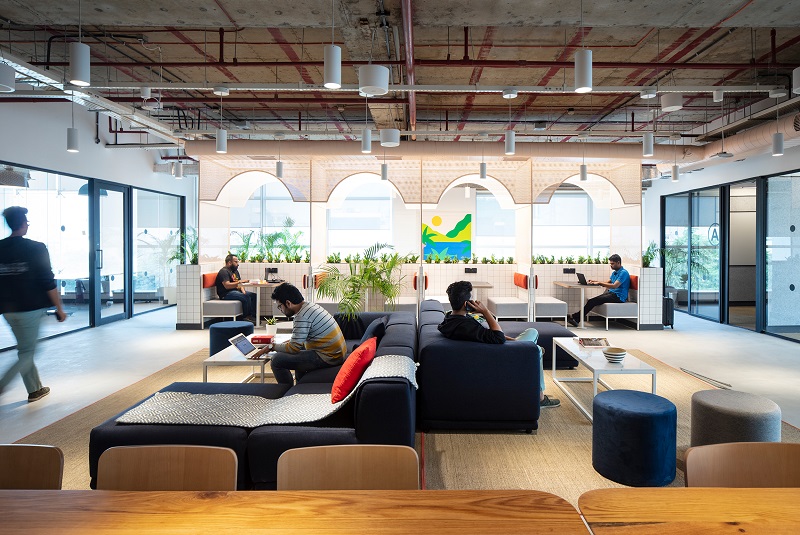
WeWork draws inspiration from psychology, biology, design, and architectural principles to create a space that evokes creativity and collaboration. In fact, no two WeWork locations are designed identically, creating a unique appeal and adding excitement to the space’s overall vibe.
Their Grade-A+ spaces also have a breakout or tucked-in areas scattered around workplaces, designed to give an interval from the monotony, where people can have more privacy to work in solitude or take calls. These advancements help promote employee productivity while simultaneously developing well-being. With a focus on creating a space where everyone feels heard, valued, and encouraged to do their best, the team at this coworking company works cross-functionally with their global interdisciplinary team of specialists. It comprises architects, interior designers, lighting designers, and building engineering & information modeling groups, which take workplace design to a new level.
Building the right workplace infrastructure
There has been a significant shift over the past two years in the way people perceive workspaces. Due to the pandemic, the emergence of a hybrid work culture has given rise to the need for a flexible office setup by individuals and enterprises alike. As we all reimagine the future of work, flexible workspaces like WeWork India have played an instrumental role by providing customised offerings to meet the evolving demands of businesses of all sizes. It has launched an innovative range of products and services catering to working professionals across start-ups, freelancers, self-employed individuals, and scaled enterprises in India.

There is a high demand for employees looking for workspaces that offer greater flexibility. While flexible workspace providers have an excellent opportunity for expansion and growth, one of the major challenges for large enterprises has been to get their employees back to work post-COVID.
Another critical challenge can be technological adoption by the real estate sector. In the current workplace scenario, advanced technology is crucial for consumers to aggregate flexible office space availability.
The availability of platforms allowing users to search, book, pay for, and track space utilisation will be essential to support growth, user experience, and healthy competition within the flexible office space market.
Arnav Gussain further states that there has been a seismic shift in daily working patterns. The hybrid work model has led companies and individuals alike to rely heavily on technology for their operations and processes. To ensure smooth and safe workspace operations, they need well-equipped technology with less manual exposure to risks. These include:
- Smart buildings: There has been an encouraging shift towards automation in building operations through tech-enabled and fully integrated self-operating systems such as touchless doors, faucets, sensor lights, and contactless health screenings to ensure the safety and well-being of all employees.
- Cloud Computing: With the implementation of cloud computing, companies have efficiently maintained all employee-related databases online and enabled data storage and file-sharing. This has proven to be particularly important during remote working, allowing a seamless flow of communication.
- Talent Management Platforms: What has been severely impacted during the pandemic is perhaps HR processes such as hiring, onboarding, and evaluating employees. Companies have now embraced talent management technologies to virtually hire and onboard employees while keeping existing employees engaged and motivated.
- AI-driven technology: The future is undoubtedly dominated by AI and machine learning. For offices, one can also witness AI assistants reducing the dependency on the human need for day-to-day tasks such as blocking meeting rooms or recording sessions. With a more extensive outlook for user experience, we continue leveraging technology and design to foster connections and shape our spaces to create holistic environments and experiences that humanise our cities, work, and lives. We also use data and analytics from our global buildings to understand large-scale workspace and real estate trends and re-evaluate new locations and services to help our members save, grow, and thrive.
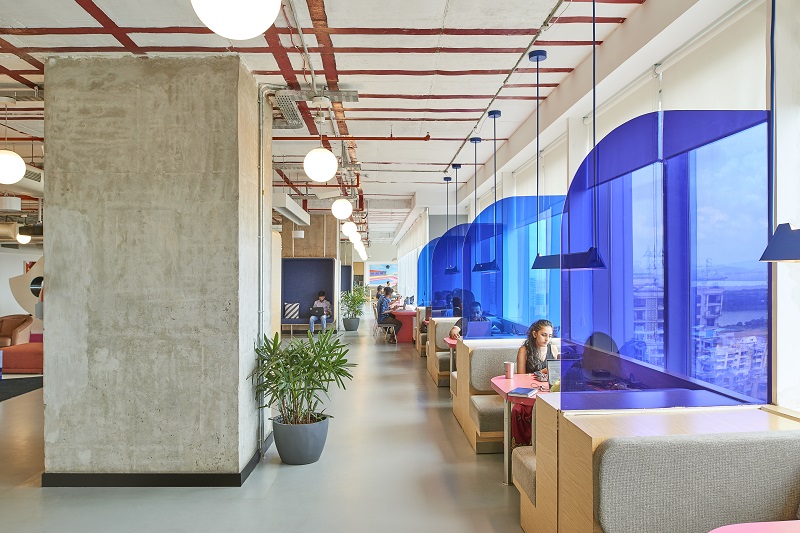
Building it ‘green’
One of the biggest learnings for companies from the pandemic has been to introspect their businesses’ impact on the environment while embracing greener ways of carrying out daily processes. Moreover, the adoption of satellite offices due to the current hybrid work model has led to the decentralisation of spaces, thus reducing carbon emissions and the overall commute time. While workspace design and architecture are steadily moving towards the path of innovation, it demands the right balance between sustainability and creation.
Arnav says, “At WeWork India, we believe it’s essential to align with the evolving requirements of today’s workforce while creating and implementing sustainable solutions that pave the way for an innovative yet environmentally conscious workspace. We have made targeted efforts to improve our energy and materials by imbibing various elements through our local vendors. Further, health and safety have become the key tenets of resiliency and sustainability due to the pandemic, due to which there has been a renewed focus on the need to optimise air circulation and cross-ventilation, as well as designing hygienic, dust-free spaces.
“We extensively use technology in terms of sensor-based automation to reduce electricity and water consumption and regulate air quality through HVAC systems across our workspaces. We have also conscientiously improved our use of energy and materials, giving due importance to our members’ overall health and well-being. For instance, we don’t use leather anymore or any single-use plastic condiments; we provide only reusable stainless-steel cups, compostable bowls and plates to our members and encourage them to bring their own reusable water bottles.

The changing dynamics of a workplace
Workplace design in the current scenario is not just about creating a comfortable environment through materials but also creating different types of spaces. As we move forward, everyone is looking to adapt to emerging ways of working. This has encouraged companies to capitalise on the flexibility and offer a space that can transform based on different needs.
With the current situation, workplace design changes have become a part of the conversation.
Offices are innovating and reimagining newer designs that are reinforced with safe and comfortable spaces that also boost productivity and ignite a sense of collaboration. Workspaces with smarter spatial planning that are designed keeping in mind employee well-being and are more welcoming and user-friendly have become the need of the hour. Private cubicles and tightly packed desks may give way to more open-plan and flexible arrangements that facilitate greater collaboration and engagement.
Additionally, biometric systems have been overtaken by online attendance portals to enable low-touch processes, and sensor-based lighting and doors have been adopted to minimise the need for human touch and reduce transmission from surfaces.