

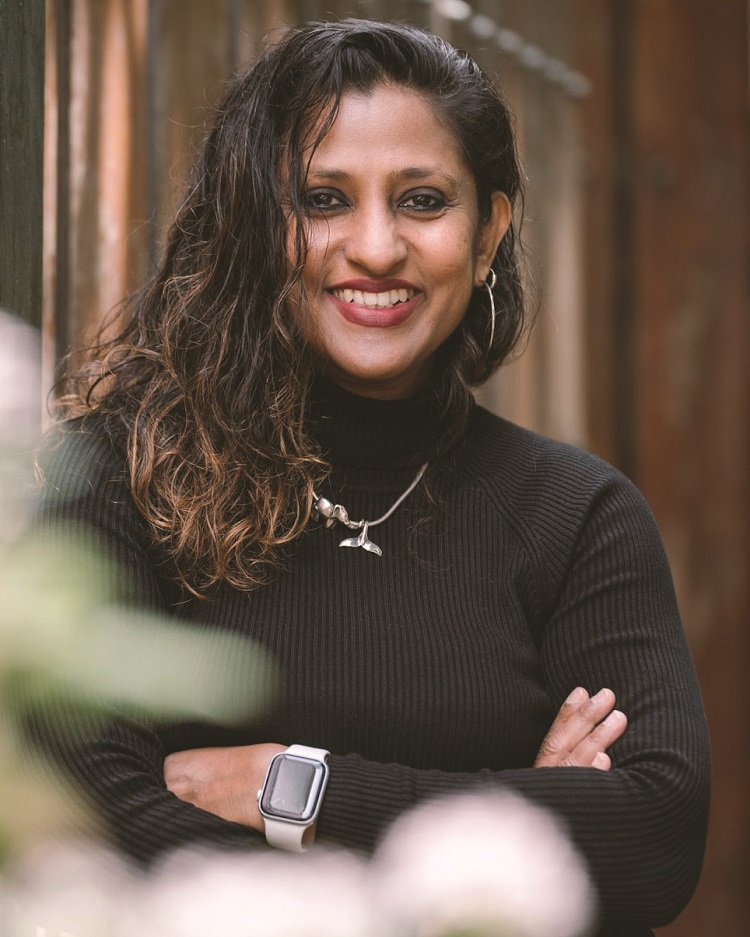
Fancy George was one of the foremost experts who witnessed and also played a critical part in the evolution of workplace design in India. With a career spanning over three decades, she was instrumental in designing and strategizing workplaces for several Fortune 500 companies setting up their offices here.
She graduated from Manipal Institute of Technology (formerly known as MIT Manipal; now MAHE) in 1992 and started a business venture with her classmates soon after. In 1996, RSP Architects was building the first IT park of its kind in Bangalore, India, when she was offered an opportunity with them. Being one of their first few employees, Fancy was exposed to large-scale corporate work environments, which quickly became a passion.
She moved to the US in 2002 to Ithaca, central NY, working with a wonderful boutique firm. In the US for seven years till 2008, she had the opportunity of experiencing a ‘balanced work-life’. That is also where she learnt to refocus on design and detailing, working on a wide variety of architectural and interior projects.
Fancy moved back to India in 2008 and rejoined RSP for the next ten years before she flew out on her own. she has always considered herself to be a “global citizen” – born on the island of Borneo, East Malaysia; educated in boarding schools in India; with a career that spanned the globe. This gave her a ‘sense of being’ and, more importantly, a need to collaborate in a positive and happy environment.
In this interview, Fancy George, the CEO at Thomas Workplace Design and Co-founder of WiREnet World (Women in Real Estate), reveals how the key to creating a functional and efficient workplace is to gain a ‘deeper’ understanding of how people use the workplace rather than a brief or corporate playbook.
Approaching design holistically
My core principle for workplace design is to approach design holistically with a “life-centred solution”. I have always deeply appreciated businesses with a core philosophy of nurturing their employees first and believe that if you protect and nourish your ecosystem, you are giving back to our planet, which honestly has to be the basis of any design.
‘Universal design’ guidelines are now being followed religiously by many corporate firms. The industry has also woken up very recently to acknowledge the contribution of women in their workplace, with diversity, equity and inclusion being a norm. But instead of following a mandate, we need to do this from our hearts and believe that it’s the right thing to do. Having said that, in India, we are still behind most western countries when it comes to having conversations around this topic.
Respecting your coworkers, valuing their work and ensuring that you maintain an appreciative and engaging work decorum will reward you with a successful output. While in the US, I lived in an international community at Cornell University, which housed residents from all over the world- here is where I learnt humility and co-lived with residents from various cultures, understanding, respecting and celebrating world religions.
Be Real. Honesty and Integrity will bring the right energy and business to you. Question the rules- trust your instinct and jump into every exciting opportunity that comes your way. Act responsibly and be mindful about every decision you make.
- What are some of the key strategies implemented by the team to adapt to the dynamically changing needs of the workforce?
Workplace design is an interesting and complex subject. I had the opportunity to brainstorm this topic with Tilak Thomas, the Principal Architect at Thomas Associates Architects. We have a great equation with a common interest in driving change – impacting workplace environments for the better. Tilak and his father, TM Thomas, are part of a legacy firm with projects spanning over 50 years in Bangalore. We both saw an opportunity to drive impactful transformation in how workplaces are perceived in India. This serendipitously happened during the pandemic, and we decided to establish a Workplace Design Consultancy with a difference that addressed the current need for change. To date, the bigger focus has been on numbers and efficiency. Now with the pandemic, the conversation has changed to the wellness of the employees as a priority and not just an agenda. Work has changed and we are here to help drive the conversation to a fruitful workable design solution.
- What are the two biggest challenges that the industry is grappling with?
CHANGE CHANGE! – Workplace Change / Climate Change!
Every day has been an exciting one since we started this workplace consultancy in 2020. Not to mention, post-pandemic blues are everywhere. Meeting and reconnecting with Industry peers, having that meaningful conversation, brainstorming, reflecting on the dos and don’ts of the business & concluding that we need to act and definitely ‘Do Now’- is the big ‘realisation’! At this moment, the most exciting topic or challenge is the future of work – and no one answer is the right answer.
We all need to act by being conscious and responsible architects in the way we design, choose/select the right materials and finishes that are either recycled or upcycled products, focus on renewable energy, ensuring that existing materials are put into reuse (circular design) — zero-waste should be the norm. Of course, modular and flexible solutions will be the right answer when change is imminent. There is a lot more focus on health and wellness – rightly so, and about time.
- Given the accelerated pace of transformation, what emerging technologies are the industry working with?
Remote working was never considered a possibility/web calls have become a norm, while FTF meetings are more of an option. Online tools, 3D printing, etc., are now commonplace. But having said this, emerging tech like the online QS tools to ensure accuracy in measurements help with accurate quantity takeoffs and budgets are now coming into play. Three-dimensional AR/VR tools help with visualisation and faster approvals. Paperless construction is real and will be here sooner than we think.
- How are companies working towards balancing sustainability with safety in the post-pandemic era? What are some of the new systems and processes in place to adhere to green practices?
Ancient wisdom has a part to play in every aspect of our work and life. The more we learn from our ancestors on many aspects of their lives, the more we will be able to balance and nurture our ecosystem. There are many lessons learnt that we should transfer to our current day systems, practices, and processes. From their natural body movements, farm-to-table nutrition, unprocessed foods, natural medicine, Ayurvedic and yoga practices, recycling, upcycling, reusing and putting pen to paper – having that energy flow into your designs, natural products etc.
There are many international and local certifications to ensure we are directed right – but this made me rethink the role of the clients, project managers, stakeholders, architects, and designers in the CRE industry. The impact of our designs should be weighed carefully & delivered responsibly – and this should be done together with all of us taking ownership of the success or failure of our decisions.
- What elements from workplace design do you see being replaced or disappearing entirely?
After thirty-odd years in the field, you just know ‘workplace’. I look forward every day to advising and mentoring organisations/firms/design partners/colleagues on the dos and don’ts of the corporate world, be it narrative storytelling, reading and translating playbooks into a functional workspace, design auditing etc. The key will be a ‘deeper’ understanding of the people using the workplace rather than a brief or playbook. The choice is key – efficient and tight workplaces are being replaced as we speak with choice of a variety of workplaces, amenities etc. Set rules with fixed hours will replace flexible timings and an ownership-driven approach. You are your own boss – now be responsible and deliver to the best of your ability.
And last but not least – Sadhguru has a beautiful analogy: “There is no such thing as work-life balance, it is all life. The balance has to be within you. So find that balance – you only live once and you only have you to answer to.”