

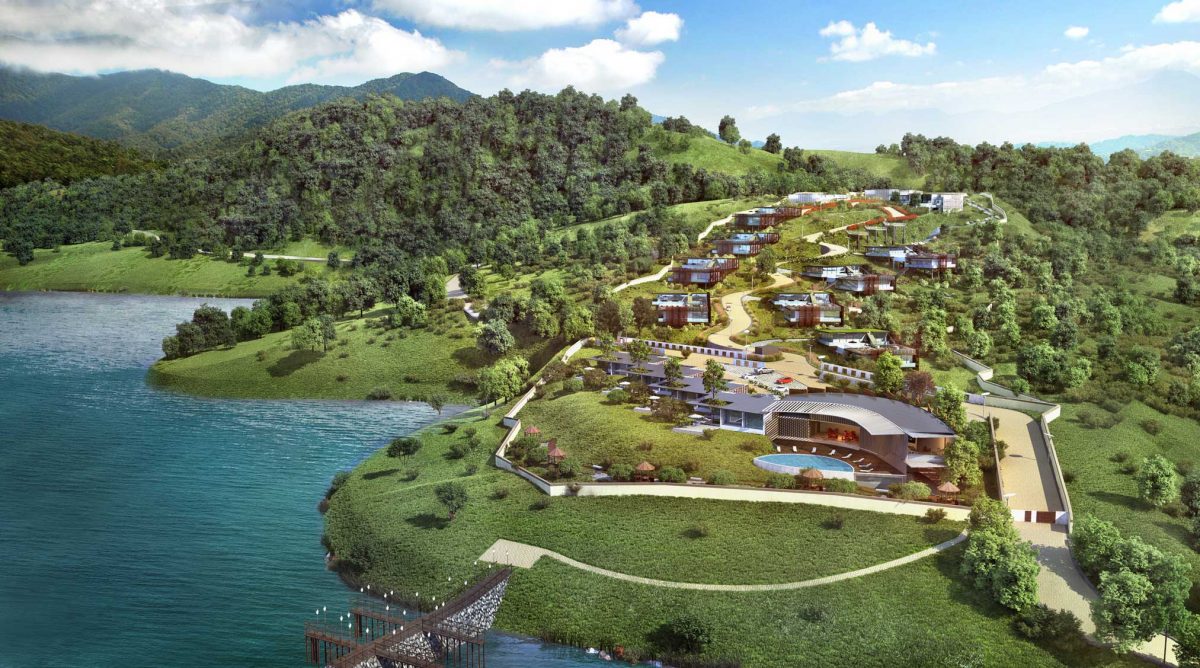
With the growing population and climate change, designing sustainably is one of the most crucial challenges faced by architects. At Access Architects, we are making a conscious effort in reducing the carbon footprint released by the buildings by maximizing building efficiency. There is a recognized conversation to adapting to design ideas that harmoniously work with the surroundings of the built environment. We believe that longer life spans of structures can be realized with the raising awareness in the use of feasible materials.
Sustainable Materials
We have incorporated steel in designing most of our recent commercial & residential buildings. Steel as a construction material allows the buildings to have a higher number of floors as per the total height ratio as illustrated in the project called ‘Rupa Renaissance’. The beams in steel structures don’t go as deep as RCC to support the floor plate that aids in producing a higher efficiency in structural construction. Steel offers little to no construction waste. With continuous innovation and production techniques of reusable steel, there is a permanent reduction in energy emissions. It has been recognized that steel’s longevity, versatility, and renewability value grant exceptional construction applications. Steel is best suited for modular construction further spurred by new technological advances.
The notion is to prioritize the use of steel and precast concrete as construction materials to achieve environmentally friendly structures & increase the ante on sustainability. Like steel, precast concrete is environmentally sound and contributes to social responsibility. It causes minimal waste in the process of manufacturing. This is possible due to the precise manufacturing techniques used that produce less wastage.
Deploying ‘green’ technology
Technological advancement and its easy adaptation towards building design parameters have allowed us to design commercial buildings for sustainable and social development. Our use of BIM for the last 15 years for all our designs has eminently aided in delivering highly functional designs while using maximum FSI. Technology helps break barriers in architecture & design parameters by offering unique viable solutions to complex design challenges.
The idea is to follow eco-friendly design building schemes such as employing passive design strategies while considering the sun orientation, climatic conditions, and management of daylight & natural ventilation. We believe that architects should also employ active design strategies that support highly efficient electrical, plumbing and HVAC systems. We further make use of smart glass in structures that provide soothing interiors. While green building practices cost merely a 2 percent increase, they result in better energy efficiency interventions.
There is a deeper understanding in regard to the importance of developing ergonomic spaces. At Access Architects, there is a deliberate approach in building structures that emit less carbon footprint & have more eco-friendly design interventions. This also includes aiming for minimum wastage in spaces by planning efficient structures. Designing schematic layouts with coherent spaces helps encourage a more environmentally conscious future in architecture. With the rising demand for spaces in urban cities, architects have to consider user-based design interventions. As architects, it is our responsibility to design for functional, sustainable, and user-interactive spaces rather than solely focusing on esthetical needs.