

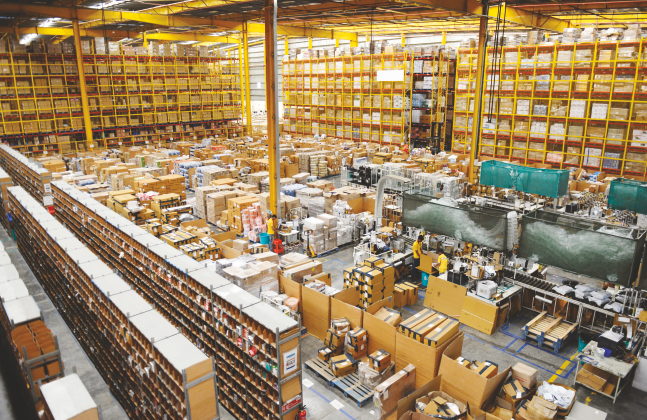
Warehousing is rapidly gaining prominence across the Indian realty sector. Several factors at the micro and macro level have made it an attractive proposition for investors looking to leverage the significant tailwinds witnessed around it. In fact, as per recent reports, significant investments are expected to be made in the tune of US$8-9 billion for creation of warehousing facilities across India over the next two years. This could result in the creation of over 20,000 jobs at varied levels of specification and specialisation.
To gain cognisance of the paradigm shift witnessed in warehousing, it’s imperative to understand that warehousing, at the core of it, plays a multifaceted role and is integral to logistics systems. They are intermediate storage points, where raw material, work-in-progress, finished goods and goods-in-transit are held for varying durations of time for varied purposes.
In the larger context, the very first headway made, was around the government’s decision to give logistics and warehousing sectors infrastructure status last year. This gave a much-needed boost to the sector, spawning interest from big players, many of which were keen to invest over US$2 billion. Also, the implementation of GST helps bring about remarkable structural changes and more systematic modes of operation with increased emphasis on supply chain efficiencies.
From developers’ point of view, the sector seems promising as minute adjustments may be needed to turn the physical structure from a warehouse to a manufacturing space. Thus, developers are moving ahead with speculative spaces to cater to either need. Another aspect is that Ecosystems are being built around warehouses — residential, hotel, exhibition centre, etc — for goods to be displayed.
According to the India Warehousing Market Report 2018, the leasing transactions in this sector across key Indian markets burgeoned to 25.7million square feet in 2017, recording a 85% spike year-on-year. The NCR region attracted the highest footprint followed by Mumbai. Bengaluru, Ahmedabad and Hyderabad saw double-digit growth. Greenfield projects or new developments attracted over two-third of these investments followed by 27% for acquisition of completed projects.
The interest of private equity and venture capital firms in warehousing is indicated by a five-fold jump in investments in the segment. Warehousing is attracting foreign players and there have been multiple initiatives associated with large investments, clearly underscoring the upcoming trend. With many players investing, there could be higher supply and rent escalation will be critical.
Strong influencers, such as an overall growth in e-commerce and a shortening turnaround time for delivery has necessitated a sharp growth in warehousing in India. Aside from e-commerce, the next big sector of spaces will be the electronic and white goods that command significant warehousing spaces in urban and semi-urban locations. So, this increase in demand from sectors, including e-commerce, third party logistics, consumer durables, FMCG and manufacturing, coupled with a requirement for larger-sized warehouses has opened up the field for more organised players.
Other factors driving growth include impact of technology. Today’s warehouses need fewer operatives and line managers, owing to certain labour-reducing technologies that have either made labour more efficient or eliminated it altogether. These include Warehouse Management System, scanning technologies, voice technologies, and warehouse automation. The present technology and system allows products to be stored across the globe, which can later be brought to a centralised location.
Industrial growth across tier 2 cities has already benefited these locales. Reports estimate that tier 2 cities such as Surat, Kanpur, Lucknow, Ranchi, Madurai, Coimbatore, Ludhaina, Ambala, Tiruchirapalli, Nasik, Madurai and Jaipur have shown strong growth characteristics to emerge as warehousing hubs. They are strategically located — in proximity to other major markets — allowing easy transportation to the feeder, and their favourable policies are ideal for businesses and manufacturing hubs.
Sectors such as auto and auto-ancillary, chemical and pharmaceutical sectors are the largest demand drivers for warehousing. The expansion is also seen in inland container depots that offer services for handling, temporary storage and warehousing of import and export laden and empty containers, carried under customs control. Agriculture logistics, cold chain management, etc, will open up opportunities for large warehousing and logistics infrastructure. A wide range of warehousing infrastructure including private, common warehousing, specialised warehouses, cold storages and free trade warehousing zones and logistics parks will come up in the coming years.