


Living and working in spaces that are safe, secure and sanitary take precedence over location and other factors that were important in the pre-pandemic world.
Sick building syndrome along with poor indoor air quality were identified by the World Health Organization as major concerns over 30 years ago; however, these issues continue to threaten the health of office workers, school children and residents all over the world.
In fact, some building interiors, once thought of as safe havens from outside air pollution may be more polluted than the surrounding environment.
The pandemic has changed priorities and so the public will increasingly look for healthy buildings, specifically as offices are partially re-opening. For the safety of the general public, factors such as indoor air quality should be top of mind for real estate developers and owners when they plan to develop the cities of the future.
The case for more healthy buildings
Although the term is not new, there is much debate on what comprises a healthy building.
The industry has broadly agreed that a healthy building is a space that facilitates the mental, social and physical well-being of its occupants.
With 40 years of scientific research from Harvard’s healthy buildings lab, it has determined that there are nine foundations of a healthy building, namely – ventilation, air quality, thermal health, moisture, dusts and pests, safety and security, water quality, noise, lighting and views.
Real estate developers are excellent at addressing most of the foundations on this list; however, often overlook the first and most important items – ventilation and air quality.
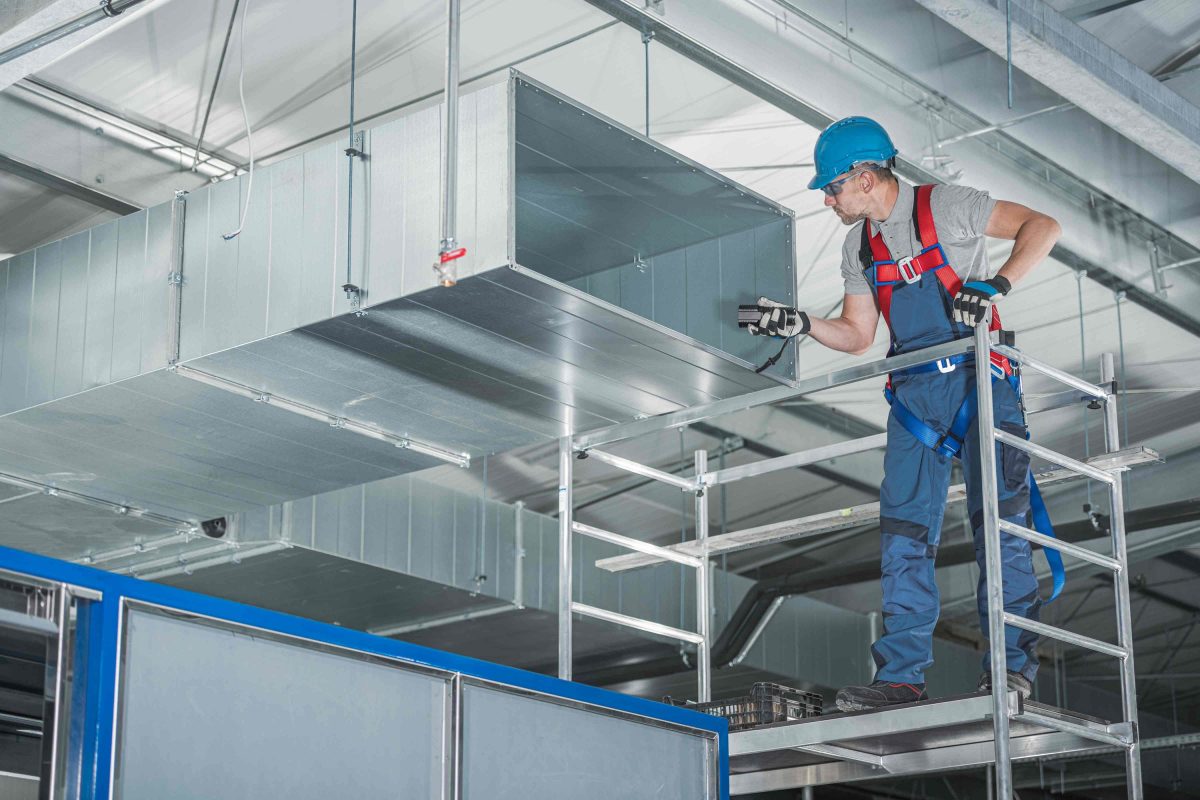
Indoor air quality is determined very early in the process of constructing a building, when choosing contractors and construction techniques for the development of a heating, ventilation and air conditioning (HVAC) ductworksystem.
Need to look closely at the systems
The HVAC system of a building is the single most important driving force of indoor air quality. HVAC systems can act as a source of pollutants if improper materials are used, specifically, the accumulation of dust and high humidity can lead to fungal growth in ductwork systems which ultimately reduces indoor air quality.
At times, HVAC systems can even play a role in the spread of air borne diseases. A position paper by ASHRAE suggests that small particles may be transported through ventilation systems, as has been documented for Q-fever, tuberculosis and measles.
One of the key elements of building a healthy HVAC system is the ductwork. Ductwork systems with anti-bacterial interior linings and no thermal bridging prevent condensation and subsequently the accumulation of mould and the transmission of particulate matter.
Preventing the transmission of particulate matter is significant, as the inhalation of PM 2.5 over a long period of time can lead to lowered levels of immunity and susceptibility to airborne diseases.
Drive change through regulation
Regulations in the industry have been cognizant of the requirements for green buildings for a while, mandating developers to consider energy efficient systems when constructing new buildings, thereby ultimately contributing to creating eco-friendly cities.
The regulations stipulate that all HVAC systems should be chosen with energy efficiency in mind, considering energy consumption per square foot, carbon emissions, equipment efficiencies and saving targets.
However, given the concerns related to sick building syndrome and the requirement for truly healthy buildings in addition to green buildings, the regulations should include stipulations for particulate matter with requirements to evaluate how each HVAC component contributes to indoor air quality rather than energy efficiency in isolation.
Indoor air quality should be a key decision-making point for all parties when choosing suppliers and contractors for the construction of a new building.
Well designed, maintained and commissioned HVAC systems with non-metal ductwork will be pivotal in taking the first steps towards constructing buildings that keep indoor air quality top of mind.
IoT for improving indoor air quality
A great deal has been spoken about COVID-19 and its consequences on our lives. How we live, work and play from now on has inevitably forced the Facilities Management (FM) industry to rethink how they can cope with the newest new normal whilst ensuring the highest levels of efficiency.
The broader question is how FM teams can make their operations more efficient, compliant, and cost-effective in the current situation. The answer lies with the Internet of Things – better known as IoT – that have the power to realise economies of scale desired in FM. In the context of FM, IoT is any system of devices and software that helps make a building and its various features smarter and more efficient.
The exponential growth of IoT is already introducing a cohort of smart buildings that range from homes and office blocks to factories and parking lots. Research by International Data Corporation – better known as IDC – revealed that IoT spending in the world is projected to reach double-digit growth rates in 2021 and achieve a compound annual growth rate (CAGR) of 11.3% over the 2020-2024 forecast period, as organisations gradually invest towards digitising various facets of their properties.
One of the key responsibilities for a facility manager is improving the Indoor Air Quality (IAQ), in addition to maintaining the right levels of humidity and temperature. The current crisis shows how FMs and HVAC engineers are crucial in ensuring proper ventilation, i.e. clean supply of air and removal of contaminated air, that in turn is a key factor in mitigating the risk of transmission.
Nothing impacts us more than the air we breathe inside a room or a building. For instance, to demonstrate the importance of improved IAQ, The Harvard T. H. Chan School of Public Health led a notable study in 2015 that showed an 101 percent increase in cognitive performance amongst those who work in well-ventilated offices with below-average levels of indoor pollutants and carbon dioxide. Poor indoor air quality is a compromise to both our health and performance as proven by many notable studies.
The world of IoT has already made tremendous progress with solutions that help manage air quality, in tandem with managing temperature and humidity of the building. IoT-powered technologies, such as HVAC Load Reduction technology and Demand Controlled Ventilation (DCV), enable facility managers to monitor and control air quality, whilst keeping tabs on the levels of various air impurities which can differ based on an ever-changing list of factors.
For instance, a sudden spike in the number of people in a building due to an event or a large gathering can rapidly impact the level of CO2 and other contaminants in the air. IoT-enabled HVAC systems alert FM teams on issues such as the sudden rise in contaminants in real-time and react accordingly by releasing air cleansing solutions in certain cases. Moreover, in the long-term, real-time insights empower FM professionals with proactive management of buildings and help them make more informed decisions with respect to energy consumption, cost efficiencies and improved indoor air quality.