


1. What was the brief from the client? And how did you achieve the same intertwining of your style?
As our own office, we wanted it to be transparent, flexible, and responsive to the new generation of entrepreneurs.

By adhering to the four principles of transparency, flexibility, sustainability, and minimalism, we were able to accomplish the same.
2. With evolving office designs, what latest trends have you absorbed into this project?
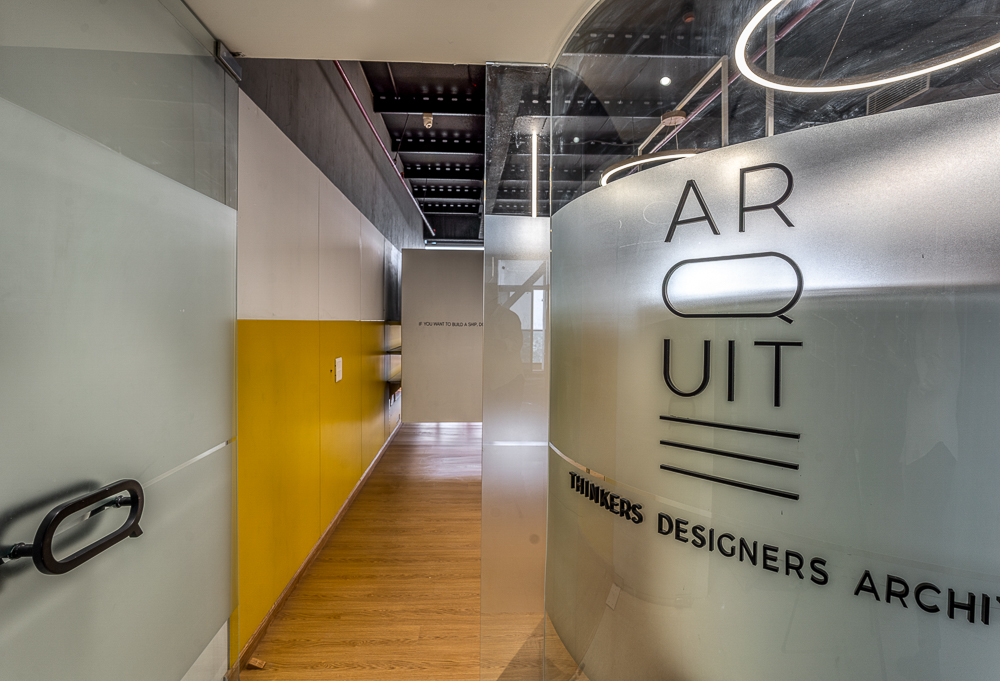
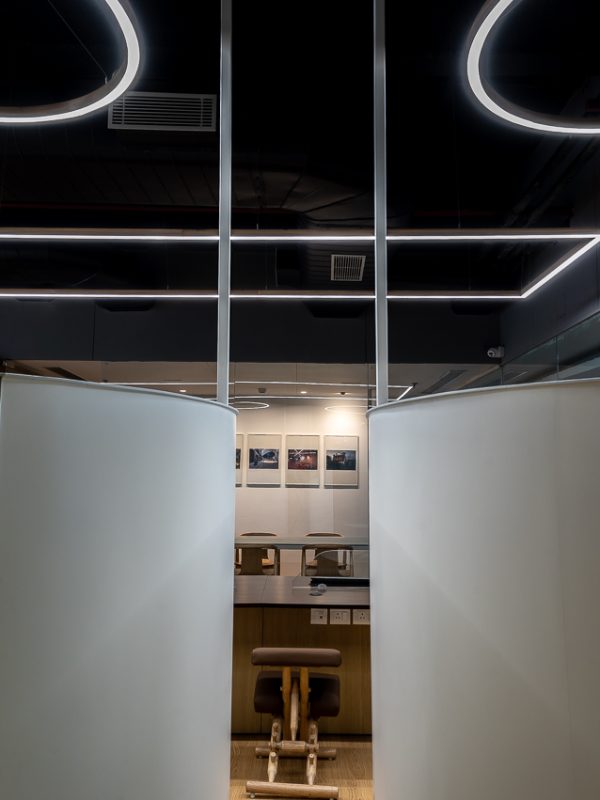
The office stands out for its fluid layout, floating volumes, and keen sense of detail. The play of proportions both at vertical and horizontal levels, a sincere dialogue between aesthetics of form and the practicality of function along with the simplicity of the material, all contributed to shaping the space.
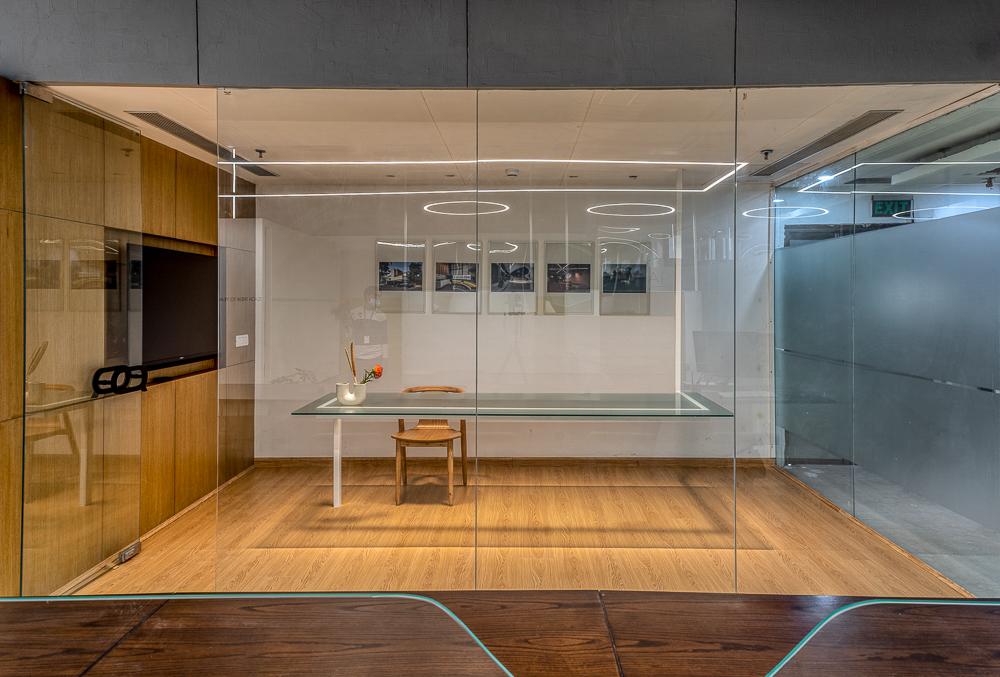
Transparent walls, lined up one after another like a backbone, dividing the space into sections, while also offering different perspectives that invite visitors into the building’s flow.
3. What are the environment-friendly initiatives taken for this project?
Combined with minimal use of material, the project defines functional aesthetics while also being environmental friendly in the face of a fast-paced scenario where change has been dynamic.

4. Can you give us insights on the selection of furniture and finishes of the project?
Talking of the furniture selection, this 1500-square-feet floorplate differs from the typical cabin and cubicle design. It follows an open plan – in terms of layout, communication, and work too.
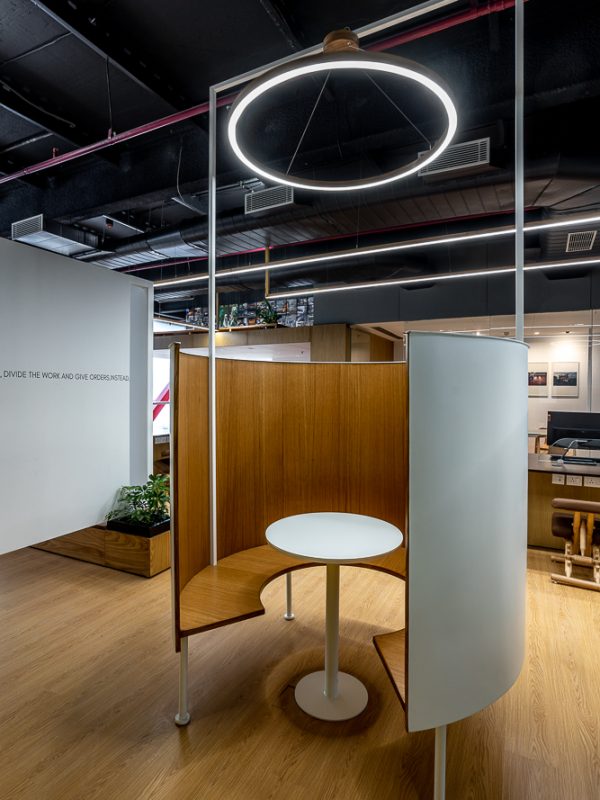
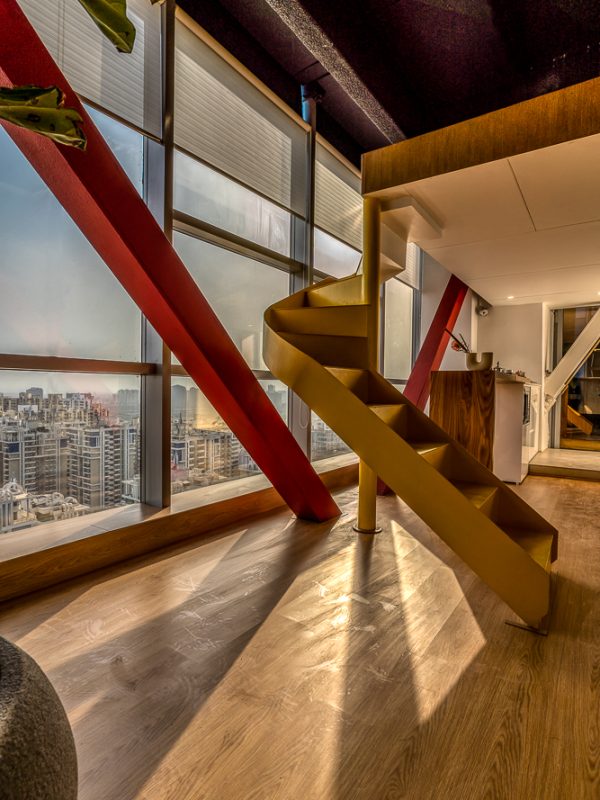
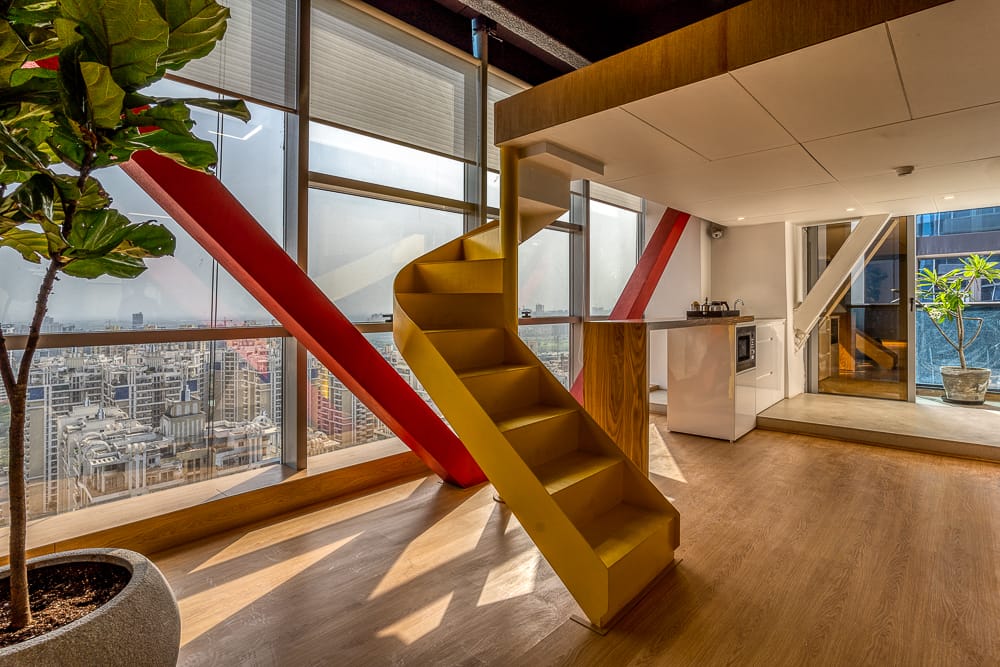
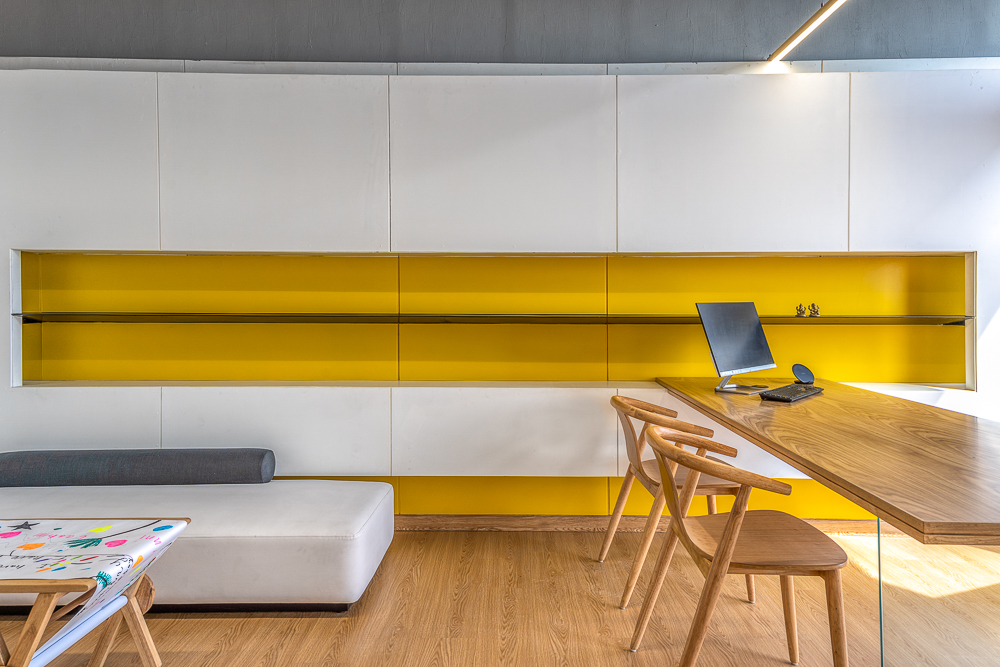
With spaces stylized to surrender to the adjoining city skyline, a beautiful interplay of light and shadow adds to a functional material palette of MDF and metal in the floating partitions, an all-wood flooring ensuring seamlessness, and tinted glazing on the large floor-to-ceiling windows with frosting at the level of the lintel.
5. What were the difficulties, or first setbacks encountered?
When you are both the designer and the client , its already a difficult proposition.


6. If you had to name the design style used, what would it be?
Minimalism defines our design style.

7. What were the inspirations and key concepts for the development of the project?
Unlike a typical cabin or cubicle, the 1500-square-foot floorplate follows an open layout for layout, communication, and work as well. Clean geometric forms become the basic sustainable tool for design development.
8. What is your favorite element of design in the project?
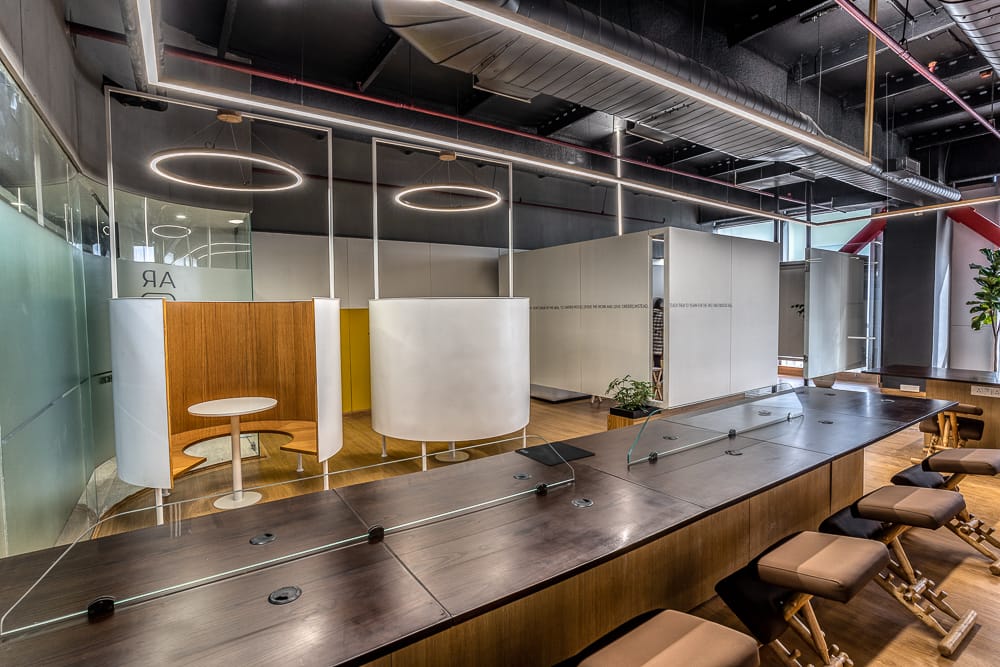
Floating pods are one of my favorite elements, designed as rotund inserts to provide mini private spaces. They not only break away from the traditional layout and add a playful element, but they also become an object of fascination, adding intrigue.

9. If you had to describe the project in 2-3 words what would it be?
Plug in and Play.

10. Explain the use of colors and/or other details to add value to the design.
Prioritizing the right kind of energy to enhance productivity, primary hues like red and yellow highlight the raw industrial nature of the exposed structural members and add vibrancy to the otherwise neutral palette, whilst an exposed ceiling furthers the idea of transparency.

A touch of quirk in the choice of light fittings adds an oomph factor!