

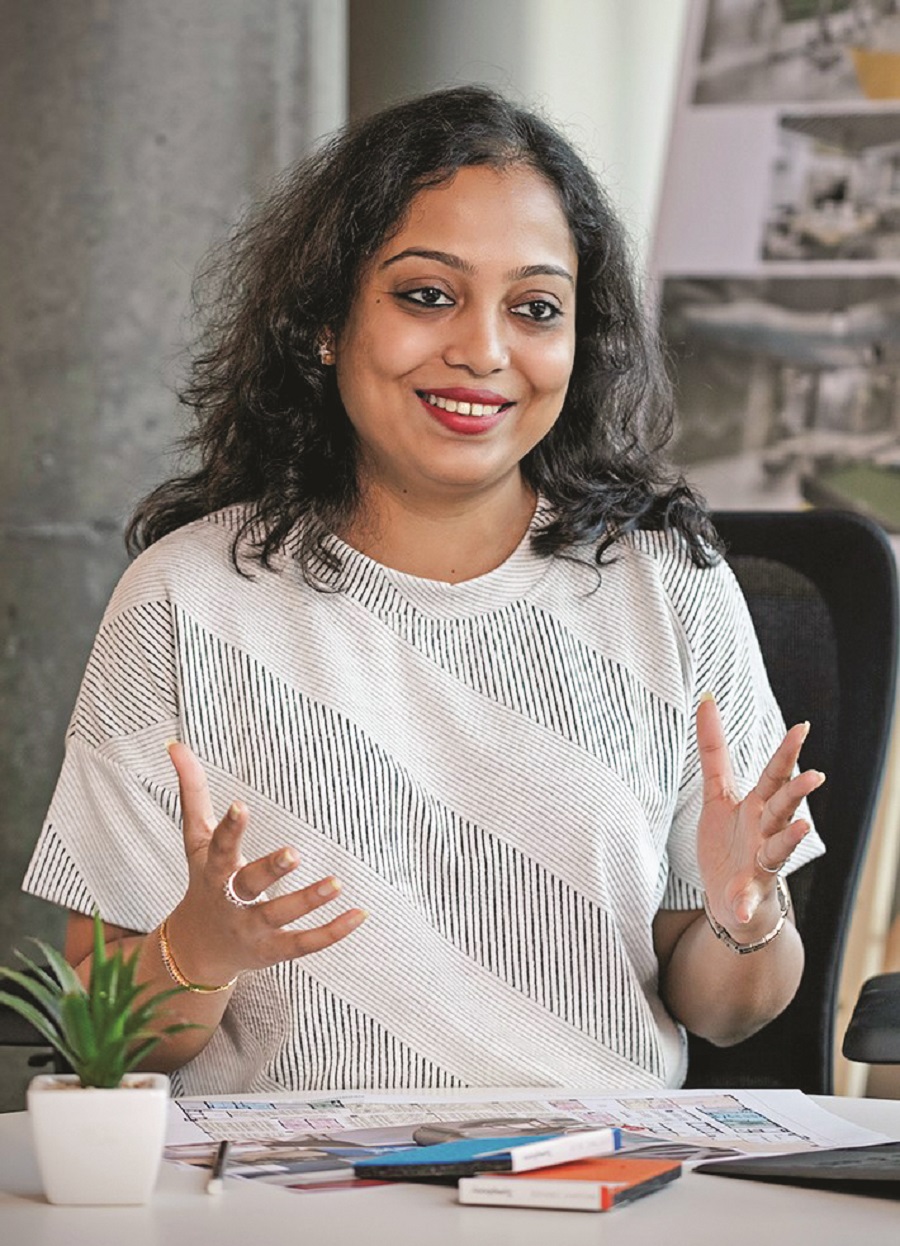
- What are the core principles that are followed M Moser Associates to deliver future-ready workplaces?
Our most important principle is to always start by understanding our client’s goals and business objectives. Even when it comes to repeat clients, we never assume that their objectives will be the same as the ones before.
Whenever needed, our workplace strategy team helps clients come up with a project brief that will fully support their mission. Through sharing the latest industry trends, benchmarking, workshops, site visits, and leadership interviews with the client, we agree on the core design principles for their new space(s), while also considering their budget and timeline.

- How does the nature of work impact the interior landscape of offices?
The answer is yes! For example, the tech and ops teams each need a completely different set-up; a small hot desk might suffice for the first group, while the second might need a large desk with two monitors.
The work pattern has turned a corner in today’s time, especially post pandemic. Hybrid working is here to stay, which means we can optimise the real estate furthermore, lending diversity and a higher seat-to-head-count ratio.
The goals and objectives we mentioned above can vary within the same company. It is, therefore, important to understand the nature of the work of each business unit and integrate the CRE leadership (Corporate Real Estate) and Business Heads in the conversations at an early stage. Workflows, culture, and aspirations will influence our planning and design.
- What are some of the unique design elements integrated into the design of the CITI office?
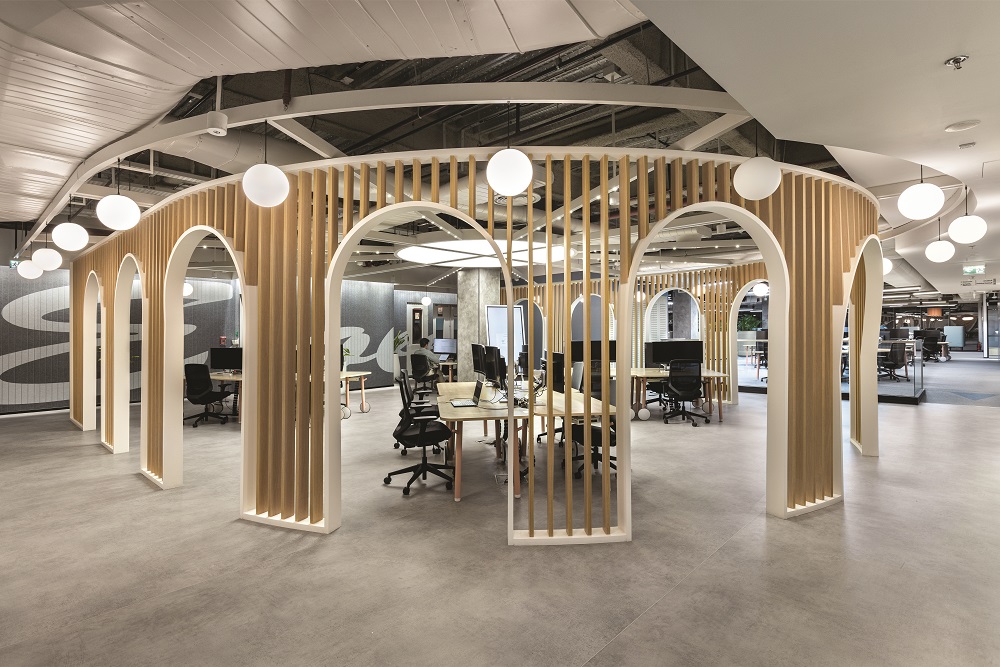
Citi DLF Chennai serves as a Global Pilot project for the client. M Moser was tasked to merge today’s priorities with future ideas. Our design integrates the learnings from hybrid workings, new Citi guidelines, and our solutions consider the shift towards more choice and flexibility, and enabling the workplace to be a valuable and critical component for connection and community.
We follow a holistic workplace strategy that prioritises business performance by focusing on human drivers. There are a few processes we have put in place to achieve this balancing act:
- Creating a cross-functional team: By creating a team that includes stakeholders from CRE and business leaders, a holistic strategy can be developed that considers the whole organisation.
- Co-create a vision for the future: The cross-functional team can co-create a vision for the organization’s future. This vision will guide the analysis of the collected data and, ultimately, the solutions that are created.
- Define personas: Understand employee or team work styles and “persona” groups. These definitions can refocus design and support agility, behaviors, and workplace occupancy.
- Understand the operating system: Layered into our persona development, we work with managers and subject matter experts to understand how the business operates and the programs that support performance.
- Incorporate global truths: Beyond your organisation there are truths around wellness, inclusivity, culture, and performance that have an impact and can drive results in the workplace.
- Can you elaborate on the “interface” between a brand, the workplace, and its inhabitants? How has the firm addressed this?
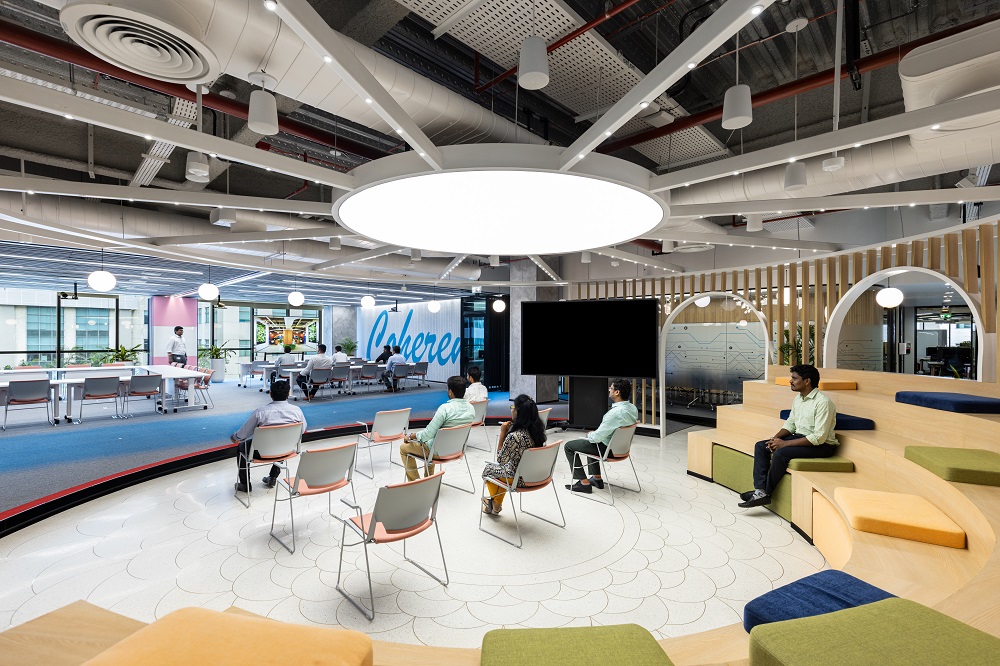
For many organisations, it is a constant challenge to maintain employee understanding of corporate culture and values. An embodiment of a company’s culture and values, the workplace needs to address this challenge. This might include planning flexible and connected flows to enhance connectivity, promoting exchange and mutual understanding.
At our Citi premises at DLF, we have incorporated the company’s global branding guidelines, colors, and graphics throughout the space. The design elements inspired by Chennai help bring a sense of belonging to the space, which in turn supports connectivity.

- The industry is now witnessing differing reviews about open floor planning. What are your thoughts?
Open floor planning works for some and doesn’t work for others. Once again, it comes down to understanding the organization and its people. Especially post pandemic, the open office landscape remains a favorite with most of our MNC clients. An open office plan is scalable, malleable, and bespoke, taking into account individual needs of ideation, collaboration, learning, and growth.
- What do you think are key components in generating employee satisfaction within the workplace?
Location flexibility: Offering the right level of flexibility can drive productivity and staff satisfaction. Organisations should consider a spectrum of flexibility, and new workplace priorities and encourage an appropriate balance of work locations.
Wellness: The physical space we work in every day significantly impacts our physical and mental well-being. Companies that have invested in redesigning their offices to maximise health benefits have seen a huge impact on their employees, from improvements in individuals’ moods and productivity, to increased collaboration and a sense of belonging.
Inclusivity: Designing for inclusivity has become even more important – from age, gender and neurodiversity, to ability, identity, and more. An inclusive workplace, empowers every single employee, and supports their challenges and aspirations.
Behavior-based design: An organization’s largest investment is its human capital. There is no one-size-fits-all. Understanding your people, and being supportive of their needs is the softer side of design, which truly contributes to success.

- This methodology puts the value of the real estate in the people, not in the space itself. In your opinion, what is the future of the workplace?
The pandemic has force-pushed a pause button in all of us to sit back and reimagine a new future. It has prioritized physical and mental well-being over and above all. The future of workplace truly encapsulates this.
The future is a functional workplace, which is future-ready, agile, malleable, and scalable. It is a place that supports agility, with technology being its biggest driver, but in equal measures, it supports analogue spaces, devoid of any tech or gadgets, for people to meet, grow and nourish. The future of the workplace is also endorsing ethical sourcing, which, in turn, is a big step towards reducing the carbon footprint.