

Though the past couple of years witnessed a complete revolution in the facility management segment, as the socio-political and economic challenges veer, a number of factors continue to impact the practices and trends in this sector. For FM professionals, this means greater creativity and discernment in how their company’s portfolio is organised and managed, mainly when the sites are distributed across a diverse geography like India’s.
For an insurance giant like Max Life insurance Ltd, protecting its brand image is paramount – the perception of quality and great service is measured not just by the basic hygiene standards, but by the complete experience of their customers and employees.
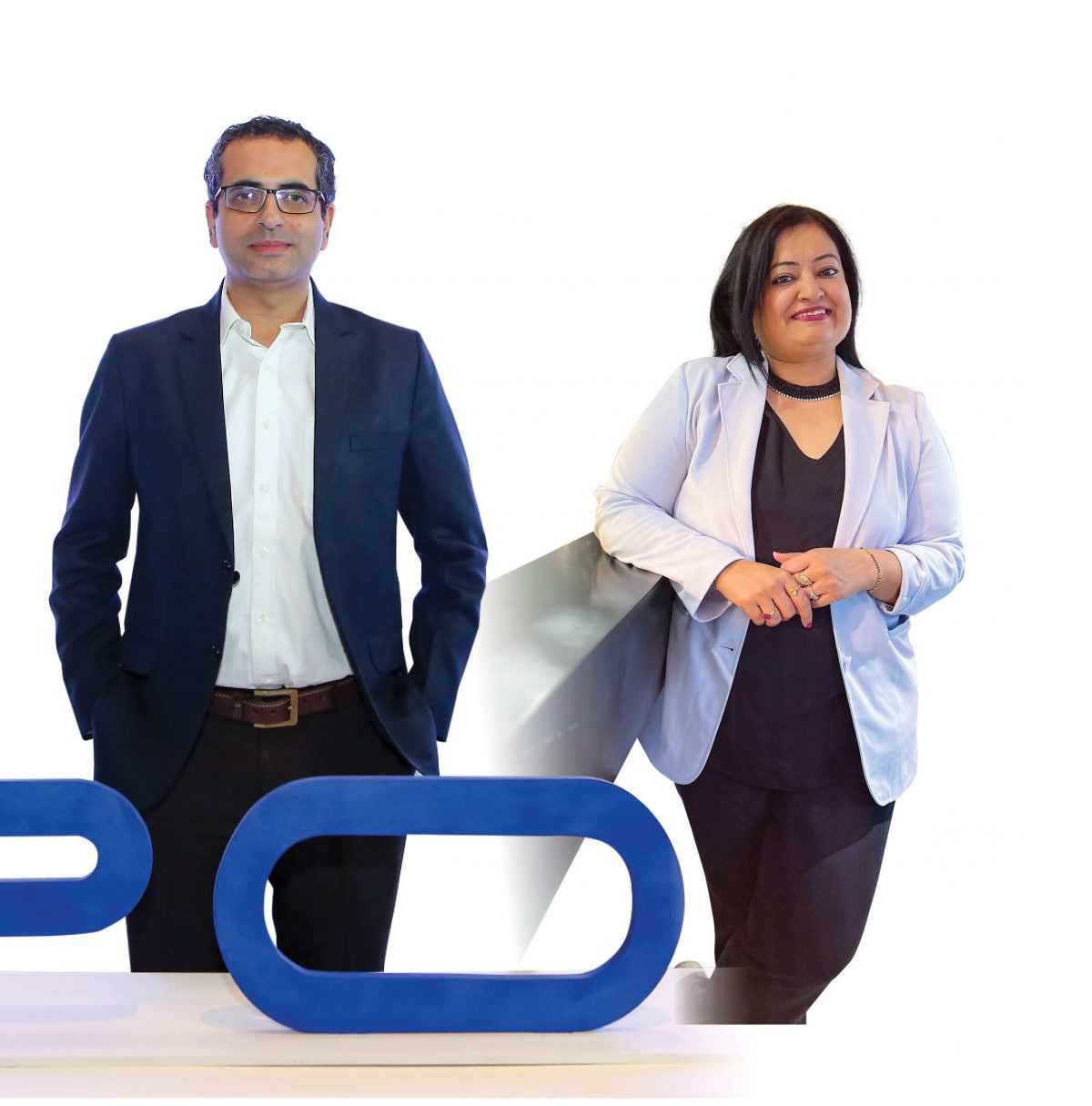
The facility management team at Max Life Insurance – headed by Saurabh Juneja, Corporate Vice President – Facilities, and Neelam Chhabra, Asst Vice President Facilities – India, appears to have struck the perfect balance between these seemingly contrasting factors. With a cumulative experience of over 45 years between them, Juneja and Chhabra, in this exclusive interview, elaborate on how they’ve built a solid foundation for the growth and development of the FM vertical within the company and the strategies implemented by them at their new office building in Gurugram.

- What are some of the design principles adopted for the new office building of the company?
Saurabh Juneja (SJ): The sole purpose of Max life insurance Ltd. is to improve the quality of life, whether it is for our customers or employees. The happiness score of our employees matters the most to us. And that’s what encourages us to provide them with a work life that’s inspiring as well relaxing.
This new office building that we have recently built for our employees supports the implementation of the agile working culture. Spread across one lakh sq ft, the office building has eight floors with a capacity of 1300 seats with plans to expand for a larger workforce in the future. The office space is designed to provide flexibility that allows the employees to find the most productive way to work while increasing their well-being and job satisfaction. It meets the expectations for flexibility, functionality and modern IT equipment. It is about bringing people, processes and technology together to find the most effective way of carrying out a particular task: It is working within the guidelines of the task but without boundaries of how you achieve it. This way, employees become empowered, innovative and more productive.
Neelam Chhabra (NC): Workplaces have undergone a monumental change, with the pandemic playing a catalyst role in redefining how our work environment evolves. We believe that workplace design should align with the idea of a ‘choice-based workspace’ that fosters interaction, learning, and inclusion. It is important to ensure that the workplace offers personalised experiences that enhance productivity, bringing dynamism to everyday work. We at Max Life thrive to build a culture of holistic growth, agility, flexibility, and boundary-less collaboration among employees, resulting in a truly contemporary next-gen workplace.

- What are some of the key features weaved into the fabric of the new office?
SJ: The new office for Max Life Insurance in Gurugram offers its employees a plethora of unique experiences that enhance their workstyle and, thereby, productivity. The new workplace honours the history and stability of the Max life insurance while fostering a transition to a future that leverages a diverse, dynamic and collaborative work environment; hence same is to be scaled up with the addition of leadership thought of consolidation of HO premises.
It features state-of-the-art technical equipment along with generously designed work and communication areas as well as plenty of greenery. The focus is on enabling effortless exchange between colleagues in a pleasing and inspiring environment. There’s a natural rhythm to collaboration. People need space to focus alone or in pairs to generate ideas and process information; then they come together as a group to build on those ideas or develop a shared point of view; and then they break apart again to take the next steps. The more demanding the collaboration task is, the more individuals need punctuating moments of private time to think or recharge. It is a balance between “we” and “me.”
The office is also tech-enabled, making it ideal for enhancing operational efficiency and creating synergies across diverse teams and processes. The facility management software is enabled for the housekeeping checklist, thus reducing paper. The employees use seat-booking apps for hybrid model. The meeting rooms are booked online with the ease of phone.
We are also evaluating the process of working out a tech-enabled solution to showcase the café occupancy to employees in its peak hours to plan for the lunch hour.

- How does the office cater to the aspect of employee well-being?
NC: The plush and swanky workspace has been built after thoughtful calibration of employee aspirations and adapting to the changing needs so that everyone feels motivated to work as soon as they enter the office space. The pandemic was a challenging scenario across businesses and dramatically impacted the well-being of employees.
Employees had to learn to cope with these changes quickly. Keeping employee well-being in mind and catering to their demands, we brainstormed the best possible ways, and designed the new office in a way that it provides for a range of experience-based work options that allow people to converge and engage at flex seats, booths, large worktables, and benches while also housing focus rooms for quiet time and improved concentration. We are positioned to be a futuristic workspace. The move paves the way for further growth in headcount, investment, and solution offerings and helps business teams advance their digital transformation journeys and drive process efficiencies to keep up with the dynamically changing space.

- With rapidly changing trends and evolving needs of the workforce, what are the common challenges that professionals face in this sector?
NC: The real estate or facilities industry is struggling to reduce the cost for the business and enhance savings for the partner, while offering the best offices with an engaging atmosphere for the millennials. To match the diversity of the employee age groups, the ambience must sync with the conventional way of working. The technology must match the hybrid ways of working and the readiness of collaboration/meeting spaces accordingly. The cycle of innovation and improvement must be faster, better, and edgier. Having said that, good leaders can steer their teams in the right direction and become amplifiers of change in such challenging times.
The common challenges have been the gaping difference between the existing industry norms and the expectations of millennials and new hires. Poor space utilisation is one of the most common reasons for moving offices or redesigning existing spaces. We solved it effectively by making dead spaces into quiet rooms and planning closed areas in the centre to make the peripheral work floor well-lit with natural light and open workstations near the façade. Noisy open-plan spaces are equipped with acoustic panels, ceilings and furniture to absorb noise levels.
Taking time away from the busy office and doing private work has become increasingly important for our well-being. The workplace should be balanced, and staff should have access to a variety of spaces. But these dedicated spaces are often overlooked during the planning stage. Hence at the Max Life office, we have taken particular care to create “we” and “me” spaces with clear demarcation.

- Given the accelerated pace of transformation, what emerging technologies are the industry working with?
NC: The accelerated pace of transformation has created newer demands for the real estate industry and a challenging platform for facilities. In line with the evolving demands, we have successfully digitalised all our key operations across the entire value chain, making the experience for customers during the pandemic as seamless as possible.
With COVID protocols, we learned the ways of social distancing, thus designing a hybrid model with social distancing and a unique seat-booking application for employees.

- How is the company working towards balancing sustainability with safety in the post-pandemic era?
Our company is working on various initiatives like having a history wall, art installations, cafeterias, and wellness arenas, prioritising employee experience, and focusing on their well-being and productivity. Moreover, the new office building design incorporates sustainable initiatives to improve energy efficiency and water conservation and reduce the overall carbon footprint. We have also incorporated a range of new-age utilities that include solar panels providing 25kw of sustainable energy, electric vehicle charging stations for each parking floor, tap sensors and water aerators, and much more in our new office.

- What elements from workplace design do you see being replaced or disappearing entirely?
NC: Today organisations are reviewing the hierarchical walls and are moving towards more open and collaborative spaces. More open spaces and exclusive spaces like phone booths for calls, cafeterias, wellness arenas, and other activity/employee engagement areas are replacing traditional avenues like cabins, workrooms, and tiered seating areas.
We have used abundant space, light, colour, organic shapes, natural materials and environmentally sensitive techniques to build a habitat for people to be themselves, within a community. All that matters, in the end, is a happy team that can make a difference.