


Laila Khalil is a seasoned management professional with more than 22 years’ experience in business operations and corporate real estate management for some of the leading organizations in the country. Her expertise includes overseeing real estate strategies, workplace services and project management. Over the years, she has led teams for designing sustainable workplace programs and services, and governing strategies for sourcing & procurement, corporate social responsibility and business continuity functions.
She was appointed Co-Chair for CoreNet Global India Chapter (FY 2020-22) and currently serve the India Board as Past-Chair. She is also a member of the Royal Institute of Chartered Surveyors and the Co-founder of WiRENet World, a non-profit Trust established in 2021 to promote DEI initiatives for women professionals in the real estate, construction and built environment industry.
Her voluntary pursuits include advocacy for sustainable and environmentally friendly workplace design, choices and habits; promoting gender equitable ratios in the corporate real estate industry; and promoting awareness on wildlife conservation efforts at a local level. At present, she is the Director for Real Estate & Workplace Services at Salesforce India.

- How has workplace design and management evolved through these years?
Workplace design is a multi-disciplinarian function that takes into account various physical, psychological, technological, environmental, and socio-cultural elements to create a built environment with the aim to foster a healthy, engaging, high-performing, and efficient workforce. For me, workplaces are analogous to living beings; while they are built to own a certain degree of structure and discipline they must also possess reasonable degrees of flexibility to respond favorably to any unforeseen demands coming their way.
When a workplace design concept has built-in agility it is easier to incorporate the evolving standards from ESG, health & safety, and building technology. The same applies for any modification necessitated by newer operating business models and/or employee behaviors to ensure it isn’t a costly or time consuming activity.
In the past few decades, the office design and it’s use has evolved. Starting from the traditional closed-plan offices reflecting organizational hierarchy tothe new-age, co-working styled workplaces promoting the flat org structure and collaborative working culture, these design changes have occurred in response to the changing needs of its users while meeting organizational targets. In the recent past, the C-suite is receptive to the idea of incorporating new workplace standards if it leads to enhanced productivity, satisfaction and wellness of their workforce, the timing, cost of investment, ease of modification and business disruption are major factors that will influence such a decision. This is where physical and technical agility of the design comes in favor. When workplace designs are conceptualized by preempting future technology and behavioral trends, modifications can be achieved in a timely, cost effective and sustainable manner.
Close on the heels of emerging from a global pandemic we continue to learn, innovate and manifest new workplace models defining the future of work. We find ourselves at a crux where workplace design change is imminent and it will be more focused on devising sustainable solutions. There will be greater emphasis on wellness, balance and autonomy of the individual, so that the workplace experience will be immersive in nature.
- How can companies adapt to the dynamically changing needs of the workforce?
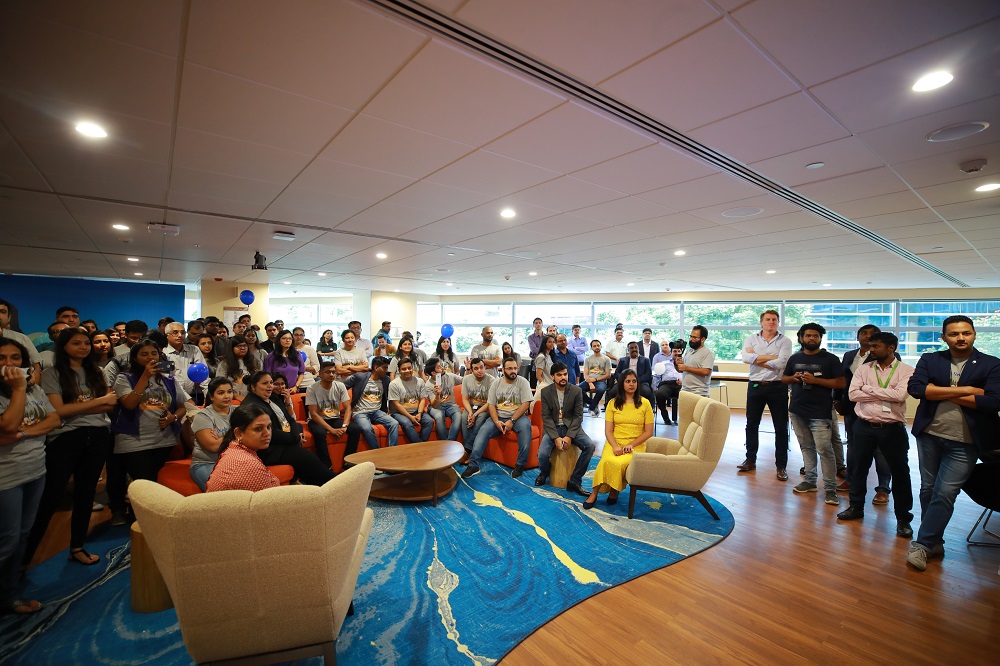
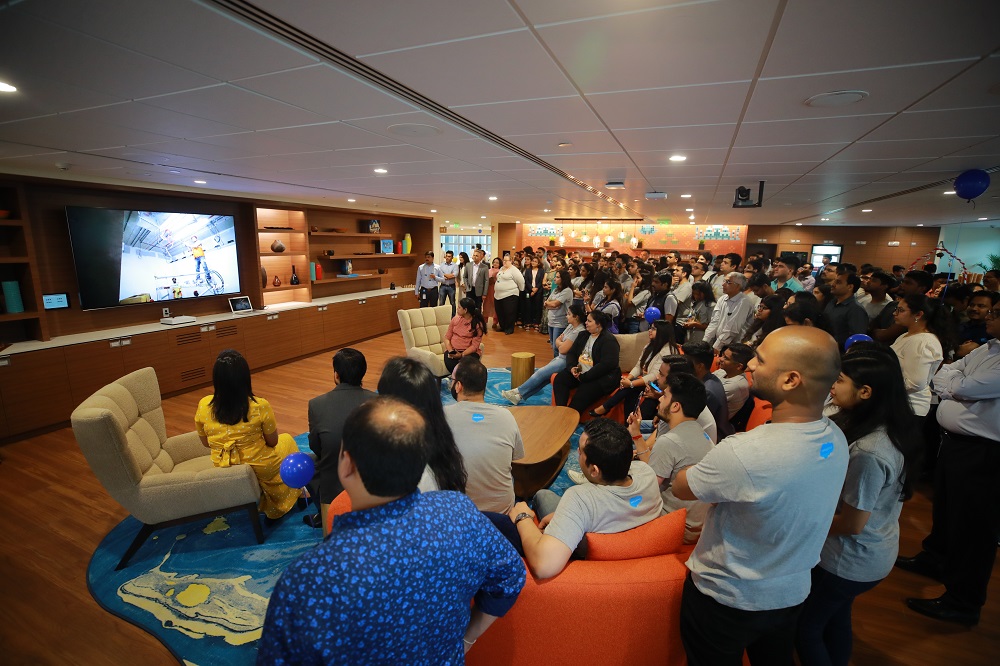
During the course of the pandemic, we introduced employee wellbeing survey in order to stay close to our workforce and understand their changing needs. This immensely helped us make data-driven decisions to better support our employees in an ever evolving environment. The data showed us that 80% of employees want to maintain a connection to a physical space, which in turn guided our re-opening strategy. We are constantly working to transform our offices into more community spaces that foster collaboration and innovation.
We leveraged our solutions such as Work.com and our safety protocols, to reopen all offices across Asia, Australia, Europe, and the United States, each using our Success from Anywhere office reopening model. Given the differences from country to country, or even city to city, this wasn’t a one-size-fits-all strategy. Our holistic plan allowed us to be nimble and flexible while maintaining the safest approach possible.
Over the past two years, the number one thing we’ve heard from employees over the past year is that flexibility is important to them. So, we’ve developed three different ways of working — Office-Flexible, Home-Based, and Office-Based. Most employees will come into the office when it works for them and for their teams and customers — whether that’s 1 day a month, 2 to 3 days per week, or somewhere in between. By providing employees with the flexibility to be successful from anywhere, we’ve been able to increase individual productivity by 16%, prioritize wellness, and drive new levels of collaboration.
Central to this approach is our Flex Team Agreements. At a company, function, and team level, this help define what’s most important in how and where we show up, work, stay connected, and nurture our culture. Each agreement is customized to address each team’s unique needs, and help outline how they behave and operate — keeping them connected, even from afar.
- What are the biggest challenges that the industry is grappling with?
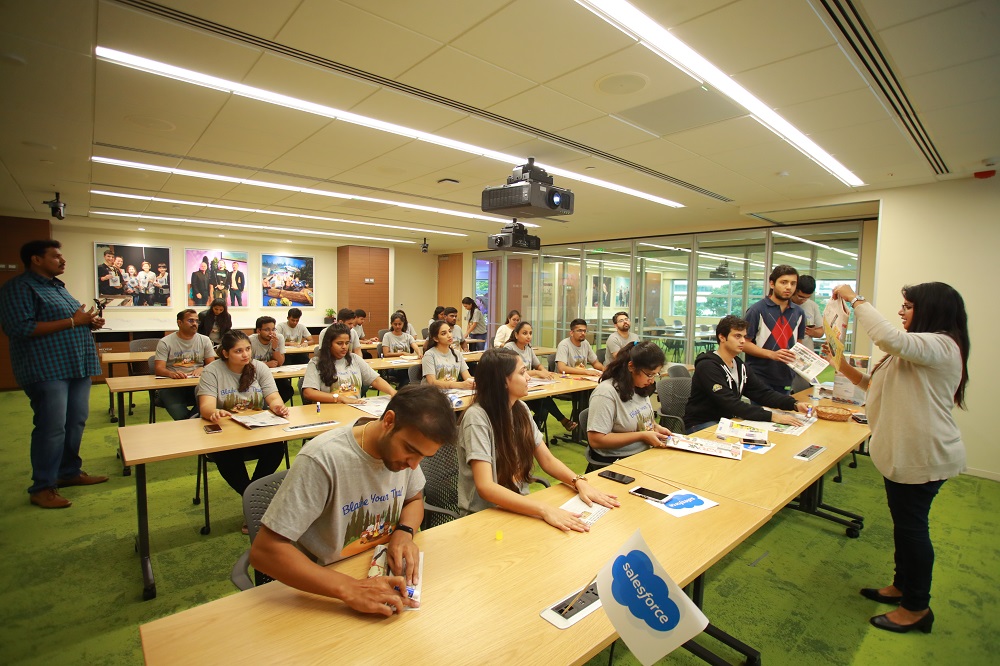
Maintaining a sense of belonging and connectedness with employees in a global and distributed workforce is an ongoing challenge we continue to learn from. While we fully recognize and embrace that we’re in a digital-first world, we know that a majority of our employees still want to have the ability to connect in person.
At Salesforce, our people are our biggest asset and we will continue to invest in benefits and programs to keep our employees and their families happy and healthy. Whether it’s ‘Coffee with Leaders’ series, our talent show “Salesforce Has Talent” or our week-long, reimagined bring-your-kid-to-work day in which 4,000 children participated in, “Salesforce Adventurers Club,” we’ve worked hard to find creative ways to bring people together virtually.
This transformative shift in the workplace has given us an opportunity to create an even better workplace that is more connected, innovative, and productive.
- What emerging technologies is the industry working with?
The way companies, teams, and individuals work have changed more in the past 2 years than at any period in history. No matter what an organization’s return-to-work strategy looks like, from in-person to hybrid to fully remote, digital infrastructure is replacing the physical headquarters as the backbone of work. The new workspace will be data-driven, flexible, tech-enabled, space-efficient, enable collaboration & productivity, and one that embraces the company’s culture and community.
Investing in a digital HQ is an investment in a platform that will continue to evolve with your business and help deliver long-term value for the employees, customers, and partners alike. This is a once-in-a-generation opportunity for every company to reinvent themselves and make work more flexible, inclusive, and productive.
During the pandemic, Salesforce became the digital lifeline for thousands of companies, and for many, Slack became their digital HQ. Companies in every industry are looking to create digital HQs that support remote and hybrid work across every department, and connect with customers operating in a hybrid world.

- How are companies working towards balancing sustainability with safety in the post-pandemic era?
To meet the climate emergency head on, we need every company driving toward a 1.5°C future. Given buildings account for nearly 40% of annual global carbon emissions, workplaces play a key role in any company’s climate strategy. Companies can address sustainability in their physical workplaces by using green building standards like LEED, BREEAM, Green Star, etc. as frameworks for delivering high-performing real estate.
From negotiating green lease language, to prioritising Healthy Materials in the Workplace, embodied carbon reduction, to engaging suppliers to set science based targets. Companies that integrate sustainability into their real estate decision-making process can ensure every workplace meets rigorous sustainability standards that support the health of their people and our planet.
Of course, the definition of workplace has recently expanded. Our Sustainability at Home guide lays out actions anyone can take in this work-from-anywhere world to ensure their workplace, wherever it is, is comfortable, productive, and most of all sustainable.

- What are some of the new systems and processes in place to adhere to green practices?
Sustainability is a crucial element of Salesforce’s core values. This is important because businesses are some of the biggest agents of change, and future generations are relying on our ability to collectively prioritise environmental stewardship to preserve natural resources, adapt to a changing climate and attempt to mitigate catastrophic climate scenarios.
Salesforce’s built environment and workplace culture expresses one of our top corporate values – sustainability – by enabling our employees, customers and guests to minimise their environmental footprint in the workplace. We strategically position our real estate portfolio to be optimised for public transportation access, foster innovative, low-impact interior design and use cutting edge construction practices that minimise landfill waste.
Our office waste infrastructure promotes sorting of recycling and rubbish (and compost where possible!). Green-minded Earthforce teams organise volunteer activities that range from neighbourhood trash cleanups to tree plantings.
Companies can kick start their own sustainability journey by signing onto Science Based Targets and by harnessing the power of Salesforce’s Net Zero Cloud to audit their carbon footprint all the way down to Scope-3 emissions.
- What elements from workplace design do you see being replaced or disappearing entirely?
The pandemic has proven employees can work from home provided they have access to technology and high-speed internet connections. Many organizations succeeded in their business continuity efforts simply by enabling their employees to work from home in a safe and secure manner almost overnight. During this entire time, organizations were quick to adapt so that they continue to perform consistently, while prioritizing employee health and safety.
Interestingly, the majority of the businesses didn’t suffer from this shift and even continued to meet their headcount growth targets. As a result, workforce demographics extended to include talent from all regions of the country with work from home becoming a widely accepted norm. In recent months this concept is being stretched to explore if a section of employees can work from anywhere, provided it fits within the organization’s legal and financial framework. The success of this model will only accelerate the new thought leadership driving real estate location strategy and future workplace design.
While it is increasingly becoming clear that individual autonomy and flexibility are paramount to having an engaged workforce, organizations will benefit by creating an omni-channel office solution. A distributed but well connected workspace portfolio comprising a flagship corporate office (hub) and flexible offices (spokes) combined with the access to collaborative environments in serviced offices to virtual offices will enhance employee experience. This in turn means, leadership will become more inclined towards eliminating social hierarchies at the workplace and making better use of the available real estate. Physical barriers will be replaced with soft boundaries to create neighborhoods and define spaces suitable for activity based work, learning and development.
The overall look and feel of the workplace itself will see an integration of hospitality and residential elements to create a lively and stimulating experience for the employees, which is typically lacking in any traditional office layout. There will be greater impetus on applying the 6 Rs of Sustainability in the construction and program management of all workplace services. Floor plate efficiencies will be also be measured differently – efficiency will no longer be a calculation of how much square feet is allocated per employee; metrics will instead be based on the kind of spaces (such as recreational area, meditation room, parent’s room) available to the employee to promote a wholesome and inclusive experience.
To summarize, I foresee the next few years will witness the real estate office industry evolving to strike a balance between organizational productivity and profit, employee wellness and morale and corporate authenticity to offer a holistic and workplace experience.