


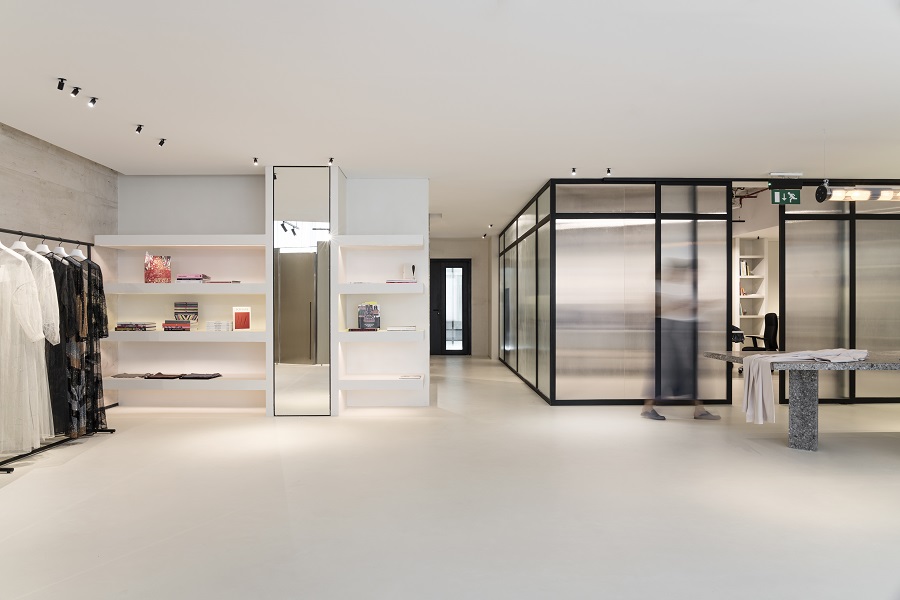
Since the beginning of 2020, the world has been in a spin, encouraging the acceleration and reliance on online retail.
The relatively new digital phenomenon allows architects and designers to reimagine the customer experience across the omnichannel environment. Clients have different expectations and use different devices and platforms to communicate for the same bricks-and-mortar outcome.
It’s interesting to see how gamification, augmented reality, the use of metadata and ultimately the metaverse play a part in how architectural firms are beginning to show the world what is really possible. There are various elements that designers are excited about in the future of technology. SUPERFUTUREDESIGN* (SFD*) keeps receiving invitations from clients to take retail design to the next level. The firm is excited about the flood of new concepts that are perfectly muddled yet in complete harmony to create a new design phase.
In the new phygital world, technology is used not only behind the scenes to increase performance, but also to enhance the customer journey in the luxury environment.
Going beyond design
Architects are beginning to introduce features that were traditionally only seen in warehouses.
For instance, our HAL – Hyper Automated Line – actually pays homage to Kubrick’s ‘2001: A Space Odyssey.’ It encompasses logistics, point of delivery, collection and distribution for the on-the-ground sales personnel, but we also gave it a bold physical presence to push it into the customer experience, right where most of the human interaction happens.
Architectural firms are beginning to go beyond all sense of design and logic. More and more, clients want to incorporate futuristic offerings such as dynamic façades and digital décor, which can be fine-tuned to enable powerful communication and create cohesive visual merchandising.
The ‘digital lounge’: a dedicated space where users can sit, recharge and connect to their devices. However, it’s here that the special arrangement of dynamic armchairs adds to the possibility of physical connection, also encouraging cross-selling opportunities. It’s another example of how the concept pushes designers outside the box on a whole new level. There are no limits within the phygital realm: we could imagine walking underwater, through technology, or in an upsidedown world for kids.
The final mile
The pandemic has caused a restriction on movement; this unprecedented period has allowed designers and retailers to experiment with technology to encourage customers back to the high street.
One of the key reasons for the rise in e-commerce is the increased convenience of the entire purchasing process. The final mile or hurdle is the delivery and return of the goods; the costs are prohibitive. Many firms simply let buyers keep unwanted products. Online shopping is also creating unmentionable waste from packaging and a larger than average footprint, because of delivery miles. Another downside is anonymity: consumers have no loyalty and would quickly use another brand if they don’t receive seamless service. This is particularly true for clothing retailers that face sizing issues, as they are the most significant contributors to the returns pile.
Brands are considering alternatives to streamline this process. Interesting standalone concepts like Helsinki’s Posti Box combine fitting rooms and hospitality elements alongside lockers, unboxing stations and recycling points.
These forward-thinking projects show the need for more efficient interfaces and the development of new physical typologies between customers and e-commerce brands, but yet there is a lack of identity if it’s true that brands are entities the customer feels belonging in.
That’s why the most important reason consumers return to the bricks and mortar is the human component: the ability to connect personally, not only to get advice, or touch and try on products again, but also for the thrill of being on stage.
Meet the doppelganger
Excitingly retailers can overhaul the entire experience by adding tech. We can push the use of radio-frequency identification tags to a higher level, for instance associating them to Generative Sound: an interactive soundtrack that emphasises the shopping moments. Electromagnetic fields automatically identify items attached to a product. They can provide complementary clothing or homeware goods suggestions within the same range. Some brands are already experimenting with this exciting technology and placing it at the heart of the buyer experience within their stores.
Technology is developing so quickly that there are likely to be doppelganger mirrors in changing rooms so that shoppers can try on a limitless range of clothes, resulting in better purchases, less waste and improved sustainability in the fashion industry. Customers will soon be able to create an exact digital avatar of themselves, make combinations in real-time and try on multiple suggestions on the spot.
To add complexity, designers are also keenly considering various age groups and how each ‘group’ reacts to the different environments; they strive to embrace tradition, culture, and modernity so that each space is welcoming and provides a comfortable, inclusive experience for customers.
Flexibility, sustainability and variety are all part of the modern consumer’s touchpoint requirements. Traditional retail is being upgraded quickly into a more flexible model embracing new key design elements that are changeable according to multiple contexts.