
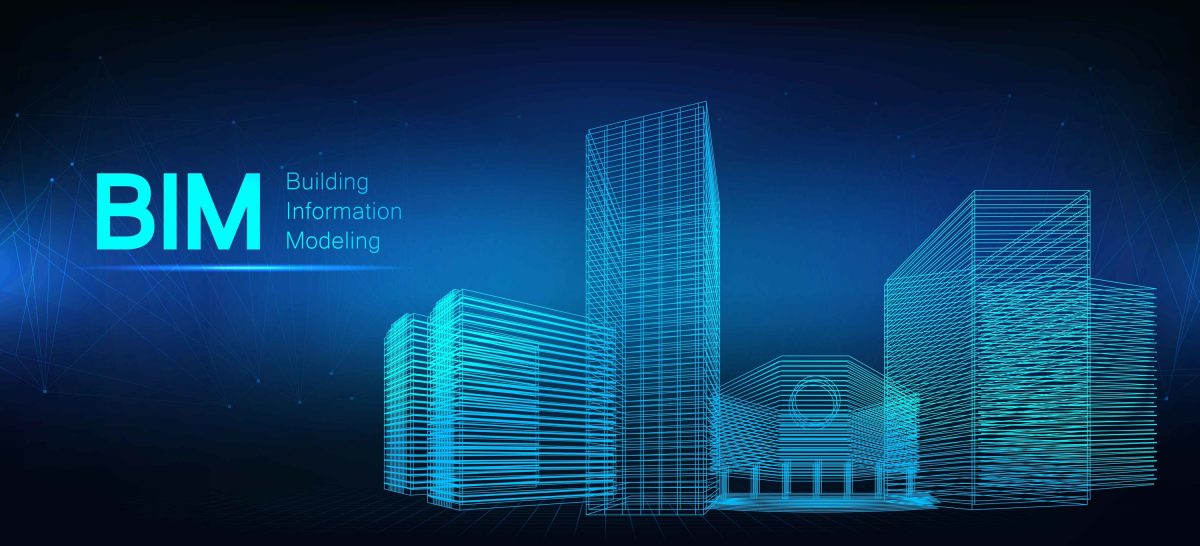
Building Information Modeling / Management is a one-stop project management system for design & construction industry.
It is the process of using information rich 3-D models as a central database to create, check & communicate project information among all stakeholders through out the project life cycle.
Building Information Modeling/Management is a shift from the traditional linear project work-flow. 3Dimensional models help communicate, access and manage the project information both graphically and also in spreadsheet formats helping to develop higher quality projects.
Traditional Project Workflow
Traditional project life-cycle involves linear process of carrying out the activities required for the following stages:
- Planning
- Conceptual Design
- Design Development
- Construction
- Maintenance
Linear project work-flow has obvious disadvantages of loss of information and ambiguity in critical decisions until the last minute. Linear work-flow does not involve all project stake holders early in the project to help avoid abortive work.
BIM Project Workflow
BIM project life-cycle encourages collaboration of the entire project team during the full life-cycle. BIM also provides access to seamless communication with minimal loss of information and enables the team to make critical project decisions early in the process.
BIM is currently perceived as the only direction for the construction industry to increase productivity and to develop high quality and sustainable construction projects. It has been made an industry wide mandatory process and is followed by many countries. Early adopters are already reaping the benefits of the change with greater efficiency. There has been a rise in productivity and also a gain in the competitive edge.
BIM – MODELLING
BIM is the process of authoring, analysing and using the information rich 3-D models to make informed design decisions.
BIM as Modelling involves authoring and analysing 3dimensional building models with information. Many models are developed through a project life cycle to meet the project goals. Each model carries information specific to the purpose and in many cases, the same models are developed from one stage to another by adding more details.
- Conceptual Design Models
An architect’s team being the project lead consultant initiates the first set of BIM models in the conceptual design stage. These models are used to define the project massing and analyse early planning parameters, orientation, wind directions etc. Working closely with the MEP and Structural engineers during this phase is important.
- Design Development Models
As the conceptual design is finalized, architects and engineers develop a multi-disciplinary BIM model. Most of the information incorporated into the Concept Model is reused to avoid duplicating modelling efforts. The models developed during this stage are used for detailed design analysis and to identify coordination issues between all the disciplines. - Construction Models
Construction Models are generally developed by the contractors using design models developed in the previous phase. They carry information specific to the construction and assembly techniques used in the project. These models are further developed to simulate and analyse the construction schedule and also to generate quantities for cost estimation. - As-built Models
As-built models are developed along with the construction of the actual project on-site. Decisions made on the site are documented in the as-built models to record the final building accurately on the BIM model. - Asset Information Models
Asset Information Models (AIM) are developed using the As-builts by incorporating additional details specific to all the equipment and other project specific assets. AIM models are used to manage buildings post construction for handover and facility management activities.
BIM – MANAGEMENT
BIM is the process of managing & maintaining information rich 3D models during the course of a project life cycle.
BIM as Management involves working with the models to successfully maintain and communicate the project information. The process of managing a BIM project is different from the traditional way of working. BIM projects require all project stakeholders to be involved at the early stage. BIM encourages closer collaboration with the team members avoiding loss of information.
- Technology
BIM Technology is radically developed with new tools introduced into the market frequently. Models require special hard-ware and software and it is one of the main aspects to consider before starting a BIM project. BIM Data is heavier in size and more complex and requires the team to gain the skills-set to manage a project using BIM. - Schedule Management
Project schedule in a BIM environment is organized differently from the traditional workflow. BIM Project encourages the team members to make decisions early in the project and provides the requires information for this. This requires the project schedule to accommodate more time for the pre-construction phases of the project. - Collaboration
Collaboration is the key to succeed in any construction project. BIM models enable to team to work in more collaborative environment. BIM Collaboration enables all project stakeholders to access critical project information at all stages of the project more accurately. BIM Collaboration is made easy by having the team to follow a standard methodology for modelling and communication from the beginning.
Adopting BIM for a project requires upfront preparation with standards and workflows and BIM specific training to be conducted for the team members.
BENEFITS OF BIM
Benefits of working in a BIM environment are evident across the project life cycle from design through maintenance.
The clarity gained through enhanced communication of well-organized project information with the help of BIM models shows an over-all increase in productivity and project quality.
Building Information Modelling has proven record of increase in productivity and the quality of the project. BIM enables better design decisions by allowing the project teams to develop and experience the building virtually before the construction. Communicating the project information visually using 3D environment highly reduces the loss of information.
Organisational-level Benefits of BIM
At an organisational level, implementing BIM not only keeps the organization up to date with the industry practices but also has several other benefits.
- Increased productivity
- Enhanced communication
- Reduced conflicts & RFIs
- Improved control over information
- Control over consultants and other project stake holders
- Control on the budget
- Increase in over-all project quality
- Competitive advantage
- New business opportunities
Project Specific Benefits
At a project specific level, the benefits of using BIM are abundant throughout the life cycle.
- Enhanced design visualization
- Ability to develop multiple design options using various project parameters
- Analyse and develop sustainable projects
- Better coordination with all disciplines
- Design conflicts identified early in the project
- Accurate quantification and budget estimation
- Decisions made up-front saving money and time during construction
- Analyse project constructability
- Monitor project schedule, budget and construction
NOTE:
This is a multiple-part series detailing the complete funtionalities and implementation process of Building Information Modelling (BIM).
Below are the other topics included in the series:
In-House BIM developement V/S Hiring external consultants
How BIM can deliver optimum results
In-House BIM developement V/S Hiring external consultants – Which is better?
Top 5 areas where BIM can help realise a project’s full potential
Understanding the “I” in BIM
To contact Voxel1 Solutions visit: www.voxel1.com