

Infrastructure is not the last area one develops in an era of great economic progress. It is, at the very least, an essential part and often a prior condition for great transformation. Building world-class cities and urban infrastructure is a very tall order for any country to fulfil and involves a multitude of complexities, which can be quite overwhelming. Design empowers the very essence of infrastructure and the lifestyles it caters to. And the GMR Group has played a very crucial role in this aspect.
The company has revolutionised India’s urban landscape. Vibrant, dynamic, eclectic—the company has invented new paradigms in creating planned cities. It has helped the country boost its international reputation by combining shrewd analysis, meticulous planning, social responsibility and sustainability.

The legacy
A leading global infrastructure conglomerate with unparalleled expertise in designing, building, and operating airports, the GMR Group has a significant presence in sectors like energy, transportation, and urban infrastructure.
GMR Airports is the largest private airport operator in Asia and the second largest in the world, with a passenger handling capacity of over 189 million annually. The company operates the iconic Delhi Airport, which is the largest and fastest-growing airport in India. It also runs Hyderabad Airport, a pioneering greenfield airport known for several technological innovations. The company also operates New Goa Airport, which is India’s first destination Airport. The airport offers everything a tourist looks for i.e. liveliness in the serene lap of nature, making it a perfect destination for leisure and holistic tourism.
Expanding its overseas footprint, the company is developing and operating Kualanamu International Airport in Medan, Indonesia, in collaboration with Angkasa Pura II (AP II). GMR Airports is also providing technical services to the architecturally renowned and the second busiest airport in the Philippines, Mactan Cebu International Airport in Cebu.
The Group is currently developing two major greenfield airport projects in India and Greece. Bhogapuram Airport in India is poised to transform the economy and landscape of the surrounding areas when ready. Crete Airport in Greece will similarly play a significant role in the region’s local economy.

GMR Aero Technic (GAT) is India’s largest integrated world-class third-party MRO; a part of GMR Hyderabad International Airport Limited (GHIAL). GAT provides complete technical support to aircraft operators, with utmost quality and reliability, to ensure that its customers meet their operational requirements. GAT has constantly been upgrading its capabilities and expanding its service offerings to meet the growing maintenance needs of airline operators within and outside India, with a vision to be a lead MRO in the Asia Pacific region.
As a pioneer in implementing the path-breaking Aerotropolis concept in India, GMR Airports is developing unique airport cities on commercial lands available around its airports in Delhi, Hyderabad, and Goa. GMR Delhi Aerocity is a landmark business, leisure, and experiential district. Similarly, GMR Hyderabad Aerocity is coming up as a new-age smart business hub.
Group’s EPC business is working on the design and construction of the prestigious Eastern Dedicated Freight Corridor project of DFCCI (Dedicated Freight Corridor Corporation of India). GMR Group is also developing multi-focus Special Investment Regions in India.
GMR Group’s underlying philosophy is to work closely with and support the local communities wherever it is present. Towards this, GMR Varalakshmi Foundation (GMRVF), the CSR arm of the Group, focuses on improving the quality of life of people by enhancing skills, providing education, and developing healthcare infrastructure and services.
Charting the course
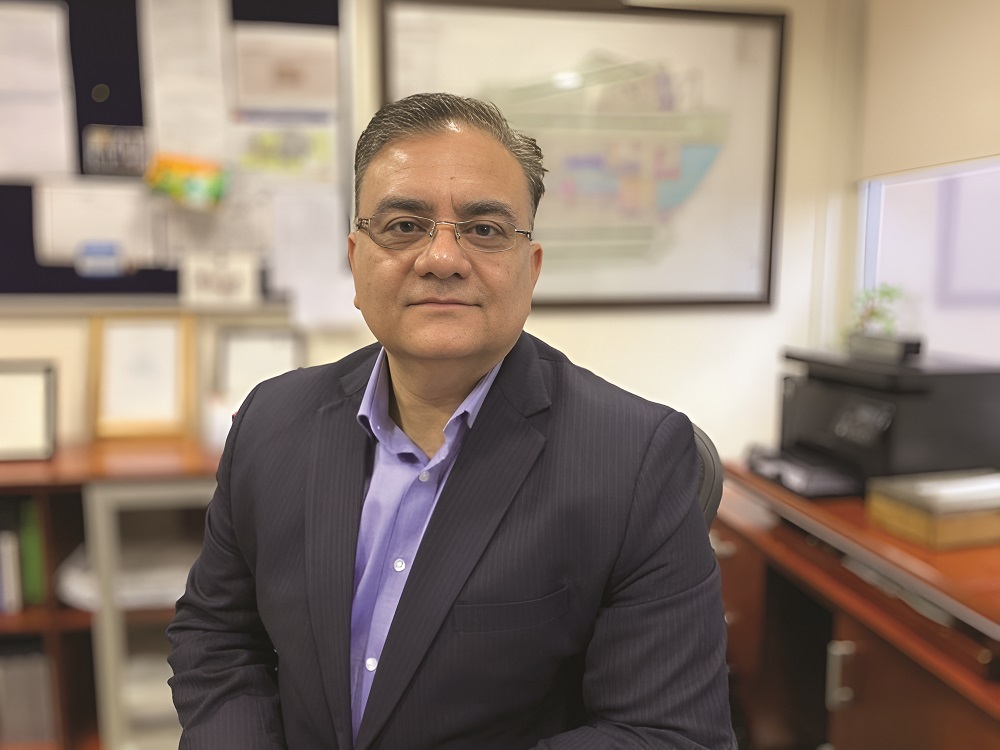
Given that GMR has been a pioneer in the concept of Aerocity, in this exclusive interview with Aman Kapoor, CEO-Airport Land Development, GMR Airports Ltd, we understand the distinctive factors that lend uniqueness to Aerocity’s development model.
Aman Kapoor joined the Group in 2016 and currently oversees the Group’s real estate initiatives across all GMR Airports and spearheads initiatives for real estate strategy, land monetisation, property development, joint ventures and partnerships. Aman has developed the GMR Aerocity brand of integrated developments in Delhi, Hyderabad and Goa airports.
Prior to GMR, Aman served Mckinsey & Co, as a Senior Advisor and was CEO – Commercial Assets for Dubai-based developer Emaar MGF in India. Previously, he has worked for international companies like Jones Lang LaSalle, Cushman and Wakefield, IPC REIT (US), Pepsi Co. Canada and General Mills Canada Inc.

Breakthrough to excellence
GMR conceptualised the Aerocity as a type of an urban development centred around an airport. Aerocity Delhi represents the company’s vision of commercial property development at the airport and, in turn, creating a sort of micro-urban centres in the vicinity of the airport. Elaborating further on this, Aman states, “GMR understands that the economic development model for an Aerocity is different from that of a regular city. It believes that the commercial property development at Aerocity is closely linked to the dynamics and demographics of the region, demand drivers and propensity of the airport travellers cum city dwellers at the various airports. The Delhi Aerocity lying in the heart of the city is a self-contained commercial and hospitality district that includes a mix of businesses, hotels, retail shops, and restaurants, all designed to cater to the needs of travellers passing through the airport.”
GMR Aerocity at Delhi was developed as part of an effort to transform the area surrounding the airport into a hub for international business and tourism. The development is home to a number of multinational corporations, as well as several luxury hotels and other amenities aimed at attracting international travellers.

Focusing on the future
GMR Group, which is the developer of Aerocity in New Delhi, has a vision for the development that is focused on creating a smart, sustainable and excellently designed world-class urban environment that meets the needs of travelers and residents alike.
This vision has influenced the design of Aerocity in several key ways:
• Sustainable design: GMR Group has incorporated sustainable design principles into the development of Aerocity, including the use of renewable energy sources,
and waste management systems. The development is designed to minimise its environmental impact and reduce its carbon footprint.
• Smart infrastructure: Aerocity is designed to be a “smart city”, with advanced digital infrastructure and connectivity that supports a range of services and amenities for tenants and businesses. This includes high-speed internet connectivity, smart building management systems, and digital signage and wayfinding systems.
• Walkable urban design: The development is designed to be highly walkable, with pedestrian-friendly streetscapes and public spaces that encourage walking and cycling. This is intended to reduce reliance on cars and other vehicles and create a more livable, sustainable urban environment.
• Mixed-use development: Aerocity is a mixed-use development that includes a range of hospitality, commercial and retail uses, as well as entertainment options. This creates a dynamic urban environment that caters to the needs of both travellers and local residents, and fosters economic growth and development.
Overall, GMR Group’s vision for Aerocity has influenced the design of the development in a number of ways, with a focus on sustainability, smart infrastructure, walkability, and mixed-use development. This has resulted in a world-class urban environment that is well-suited to the needs of travellers and local residents alike.

Fusing design and efficiency
Aman also elucidates how the strategic location of Aerocity encompasses the various multi-modal transport model, sustainability, pedestrian-friendly design and operational efficiency.
Here are a few examples:
• Multi-modal transport: Aerocity is located in close proximity to the airport, which allows for easy access to various transportation modes, including air, road, and metro. This provides travellers and tenants with multiple transportation options, promoting sustainable travel practices and reducing reliance on private cars.
• Sustainability: The design of Aerocity incorporates sustainable practices such as the use of renewable energy sources, water conservation, and waste management systems. The development also includes green spaces and pedestrian-friendly walkways, which promote a healthy and sustainable environment.
• Pedestrian-friendly design: Aerocity’s streets are designed with pedestrian-friendly walkways, cycle paths, and public spaces, encouraging people to walk, cycle or use public transport. This promotes sustainable travel practices, reduces congestion and improves air quality.
• Operational efficiency: The layout of Aerocity is designed to optimise operational efficiency, with a well-planned network of roads, parking facilities, and public transport options. This allows for smooth and efficient movement of people and goods within the development, reducing congestion and improving accessibility.
“The strategic location of Aerocity has allowed for the incorporation of various sustainable practices, pedestrian-friendly design, and operational efficiency, which make it a highly functional and sustainable urban environment,” explains Aman.
Exceeding the vision
The basic construct and underlying principle of each of the Group’s three distinctive Aerocity projects, across airports at New Delhi, Hyderabad and Goa, remains the same. However, each of them is developed based on the key tenets of its catchment area. Aman discloses how the three developments are different in their own ways and yet have a common thread that binds the company’s vision.
Aerocity Delhi, with the Indira Gandhi International Airport at its nucleus, is a commercially vibrant and sustainable urban city within a city. Delhi Aerocity has direct links to Gurgaon, which is the commercial hub of the NCR region. This urban centre boasts a variety of luxury hotels, restaurants, pubs and shopping complexes. GMR Aerocity is being built as a “Secure, Smart, and Sustainable Commercial District,” the first of its kind in India. It encourages experiential living through work, play, fitness, world-class cuisine, and entertainment options, as well as providing highly connected and interactive urban areas for the airport community’s socioeconomic development. The first phase of Aerocity, known as Hospitality District, is now home to more than 15 hotels, 3 Grade A offices, and retail spaces, as well as well-designed public amenities.
Aerocity Hyderabad is an integrated mixed-use development, which includes key ports and establishments, such as Business Park, Retail Park, Aerospace and Industrial Park, Logistics Park, Institutional Zone and Hospitality. It brings forth contemporary infrastructure designs in a pollution-free environment. It’s a one-stop destination with everything under one roof connected seamlessly with the Airport ecosystem.
Aerocity Goa, on the other hand, being a premium tourism destination of the country, is conceptualised as a tourism and hospitality-based Aerocity. The development is envisaged to be pivoted around a water body with hotels, casinos, golf cum luxury resort, villas, serviced residences and institutional facilities as the key components.