

“We build buildings which are terribly restless. And buildings don’t go anywhere. They shouldn’t be restless.” When Minoru Yamasak made this statement, the idea was crystal clear- buildings should be adaptive rather than being chaotic and catastrophic. Coined in the mid-1970s, the term “adaptive reuse” promulgates the preposition that land as a natural resource is scarce and development cannot be infinite. However, some of the earliest examples of adaptive reuse architecture can be traced back to the renaissance period. While the earlier practice of adaptive reuse was more inclined towards economic revival, the contemporary Adaptive Reuse Architecture has since evolved. For instance, the focus today is on restoration, preservation and sustainability as moral, ethical and environmental considerations. Moreover, with environmental legislation in place and the impact of climate change crippling cities, the focus has now been redirected to adaptive reuse.
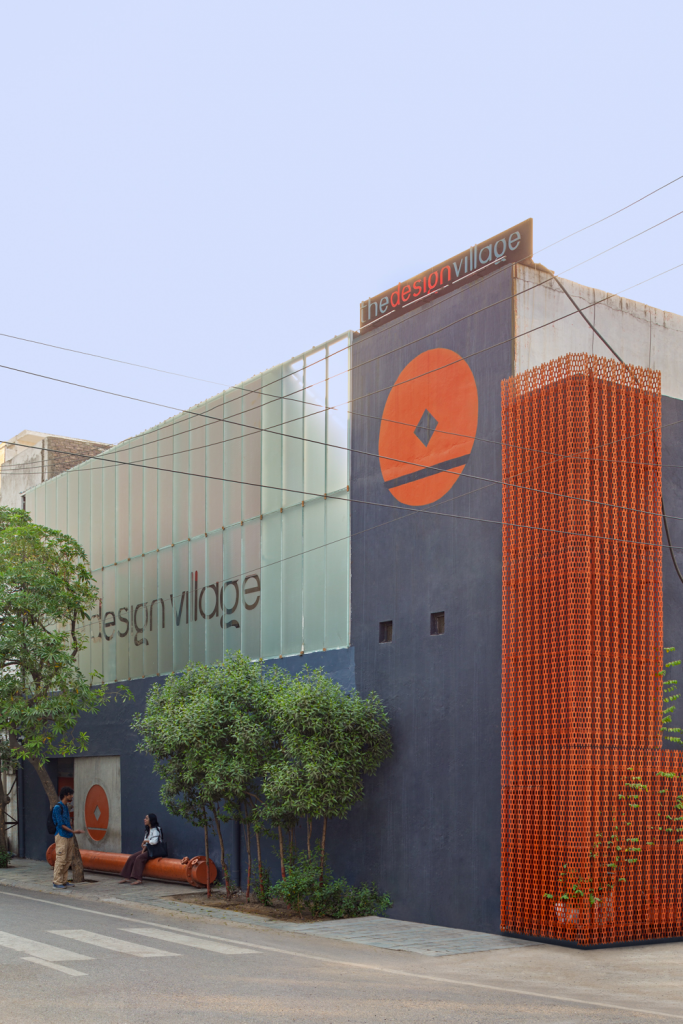
Existing structures were either spruced up or completely redone if they were unsafe. Some columns and beams removed were also reused in the spirit of adaptive reuse architecture and also to control the economics of the project.
In May 2017, when The design village (TDV), an interdisciplinary industry-centric educational institute – decided to move its existing campus to a larger premises to accommodate the growing number of students at the design school, an abandoned Kattha (catechu) factory in the same neighborhood emerged as a viable alternative. The factory was set up in 1987 as an extension of the one existing facilities at sector 8 in Noida. While it was bought to be used as a godown to support the high production at the facility, as many as 150 workers toiled here to produce 30,000 kgs of Kattha each day. Due to the increased levels of pollution and harm the production process incurred to the neighboring vicinity, in December 2014, the unit was eventually shut down. The abandoned factory undoubtedly offered an immense design and renewal potential while simultaneously paving ways for preservation of a built structure by changing its use rather than razing it down that would have incontestably added to the urban environmental pressure.

The initial decision to resort to adaptive reuse was underpinned by TDV’s reluctance to leave its existing ecosystem of five years in its parent company – Archohm–an architecture and design studio in Noida. However, it was also a conscious conscience that catered to the idea- ‘less is more’ and synergised with the minimalist design ideology of Archohm. Within days, the deal was struck and the plot was ready to be revitalized before the students came back late in July to begin the new academic session. The urban design framework of ‘drosscape’ was the vantage point for design interventions. The adaptive reuse of this derelict, defunct, economic and industrial landscape-a reality of the past thus transformed it into a dynamic educational landscape-a vision for the present and aspiration for the future.

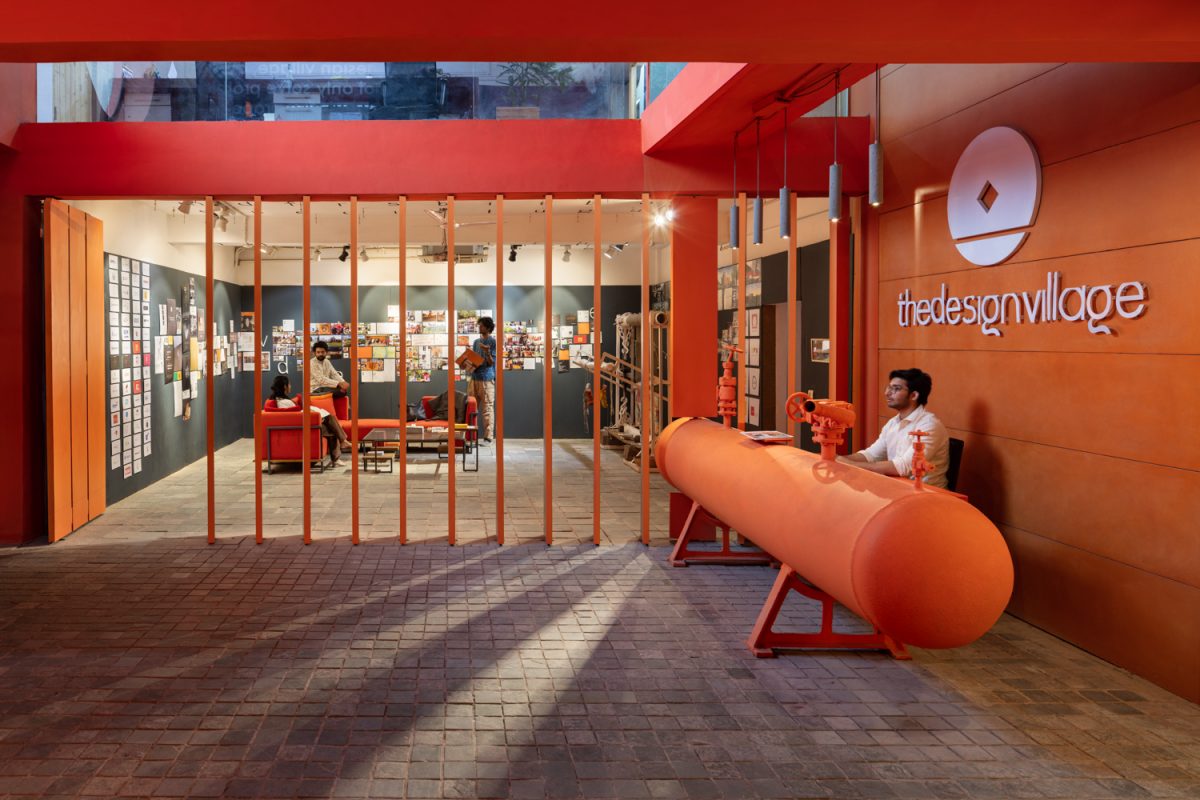
The transition from the polluting factory to the inspiring institute– the daunting journey of what it took to bring it to life, came with its own challenges viz the excruciating constraints of time, budgets, context and its rather challenging spatiality. Two months was all the time given by fate, to turn the fate of this old manufacturing unit in a desolate state of urban decay. Studio Archohm and students from TDV helped convert this former industrial facility into a dream village. Conscious efforts were made to retain some aspects of the inherent character of the factory, creating a seamless marriage between old and new. Thus, the many big, small and almost always grotesque machines became sculptures and markers in space; companions to students in their design journey. While they bore testimony to technology as well as
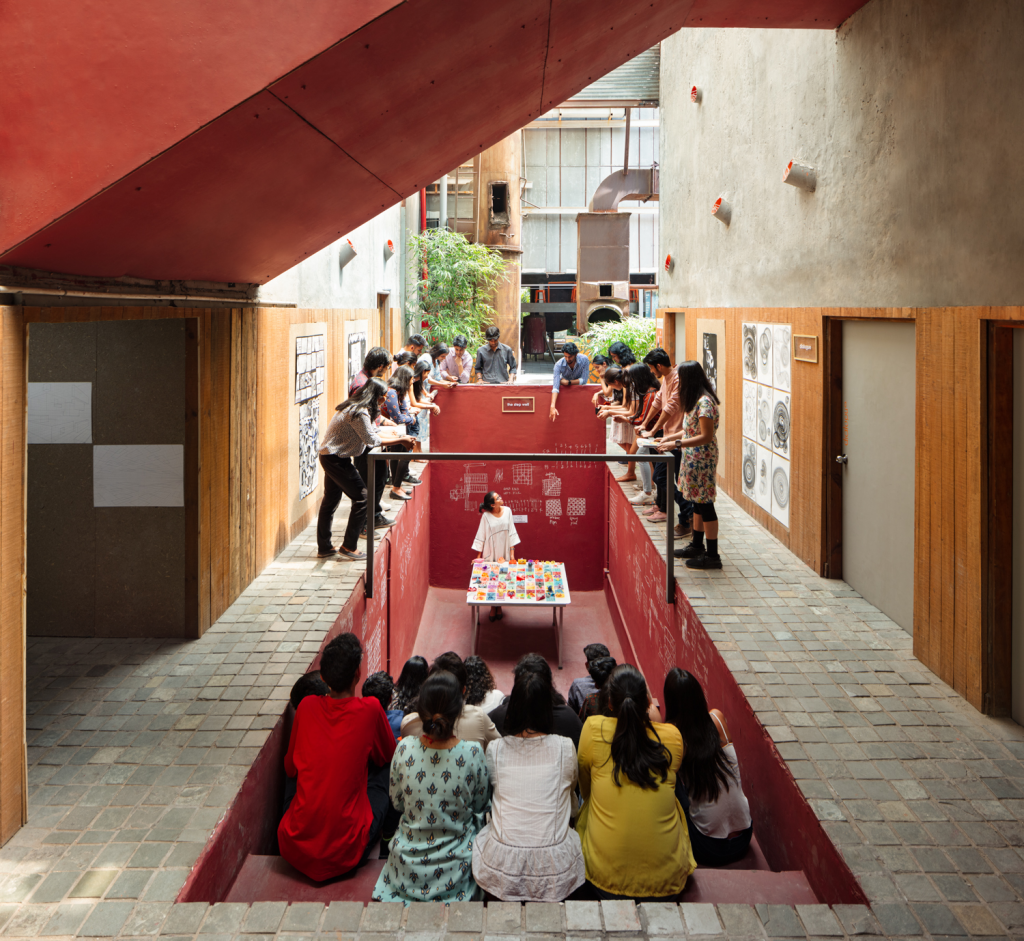
hand driven mechanics, both representative of the past, they have now found themselves playing a new role as ambassadors of industrial aesthetics with stories to tell.
Apart from the machinery and old walls being celebrated, the material palette was frugal with raw pine wood, glass, cement plaster and steel. Existing structures were either spruced up or completely redone if they were unsafe. Some columns and beams removed were also reused in the spirit of adaptive reuse architecture and also to control the economics of the project. Existing mezzanine floors were used as they were – true to their colours, textures and forms. Materials and meanings were retained to the maximum extent they could. Narratives of the past were kept intact while giving the built structure the newness it deserved, imparting a whole new meaning to the withered factory- now TDV, one of the most celebrated design campuses in Delhi- NCR.