


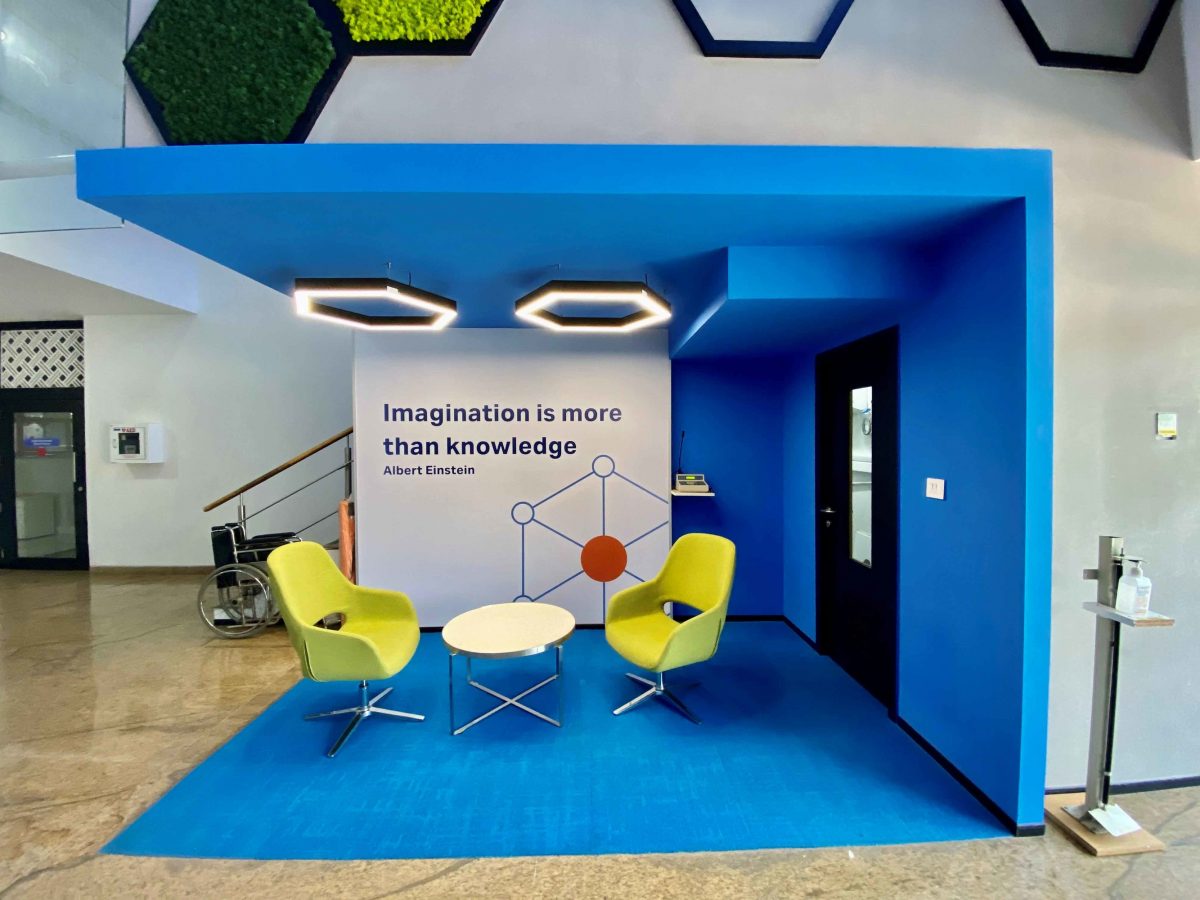
As the name indicates, Drywalls are primarily constructed without using water in comparison to the conventional brick walls. Introduced in 1916, they were initially meant to protect homes from urban fires in USA and soon were marketed as poor man’s answer to plaster walls. Hundred years later, drywalls continue to be the popular choice for interior spaces owing to its flexibility, ease of buildability, versatility, and fire-resistant properties.
To begin with, lets understand the essential components of a drywall system. The framework consists of metal sections or studs running vertically from floor to the slab and horizontal sections connecting the vertical members creating a rigid grid. The framework is filled with acoustic material to ensure best sound absorbing properties are achieved. The outer layer or the skin is usually single or double gypsum board, which is then suitably finished to achieve the desired design intent.
So, what makes drywalls so popular. The top pick for this answer is construction time. To understand this aspect in depth, let’s do a comparison with brick wall:
- A 10 sq. meter of brick wall would require a minimum of 2 days to build which would include introduction of structural beams in compliance with the building code. Post this, the wall must be cured for 8-10 days, depending on climatic conditions and another 2 days to dry before any finishing can be applied. In total 2 weeks.
- On the other side, a dry wall for 10 sq. meter area can be constructed in just one day, completed with gyp boarding ready to take the desired finish on the surface. The advantage of saving construction time makes drywall immensely popular across the globe, afterall time is one of the most valuable resource. Likewise saving time helps in significantly reducing the overall project budgets.
The next best advantage of drywall systems is the flexibility. Being lightweight construction material, Architects need not worry about the location of beams, while preparing floor plans. Flexibility encourages the architects to be creative and come up with designs which otherwise are strenuous to achieve with conventional walls. “Form” plays an important “function” in architecture. Flexibility of material in its usage allows the design community to think beyond the rigid lines, a key driver to innovate and explore. The versatility of the gyp-board surface makes it a preferred choice, whether the design intent is to have a smooth paint finish, textured finish or to be finished with wall graphics and artwork. Possibilities are endless.
Logistically, light weight material means the ease with which it can be transported from the factories or warehouses to the construction sites. This essentially converts into man-hour efficiency and eventually leads to substantial cost savings. Next in line are the acoustics. The drywall system allows the designers to achieve the desired acoustic levels for a particular space. The perforated gyp boards are highly recommended for cinema halls, auditoriums, studios, audio visual rooms, and spaces where the sound levels are always meant to be under check. In meeting rooms for example, acoustic panels can be effortlessly mounted on the drywall partition system for sound and healthy usage of space.
The list of advantages is incomplete without the mention of fire resistance properties of drywalls. In the beginning, we learnt that drywalls were initially meant to protect houses from urban fire. With many advancements, they continue to be used as preferred material for fire resistant walls. The good part is the flexibility we get according to the fire resistance needs. Let’s take for example consider a conference room which must be designed for 1-hour fire rating. This can be achieved by using gypsum on both sides of the framework, since each layer of gyp provides minimum of 30 minutes of fire rating. An adjacent space, which houses a server rack has a requirement for 2-hour fire rating. All we must do is to apply 2 layers on each side instead of one. Its one of the simplest things to be done with ease.
While we are talking about a wall system which offers immense possibilities and has revolutionized interior wall construction, it is imperative to understand its impact on our environment. Whatever we build today will have some or the other implication on the generations to come. Every material or system we use must pass the test of sustainability. In other words, sustainability is necessity. So, lets assess how drywall systems fare on this parameter. Contrary to the popular belief that gyp walls hurt environment, we found out some interesting stats about drywall systems which state otherwise.
One-meter square of partition walls, using drywall systems instead of traditional systems would translate into
- 44% reduction in global warming potential
- 34% reduction in primary energy use
- 73% reduction in wall system weight
- 15% reduction in freshwater usage
When we apply this model for an average building which has 10000 meter square of drywall instead of conventional walls, we would have saved 135 tonnes of CO2 emissions, 96000 litres of net fresh water and electricity usage of an Indian city of 156 460 people for 24 hours. The recycled content on drywalls make it a more compelling reason for its choice as preferred wall system. Drywalls comes across as a system with the promise of a better, cleaner, and sustainable life.