


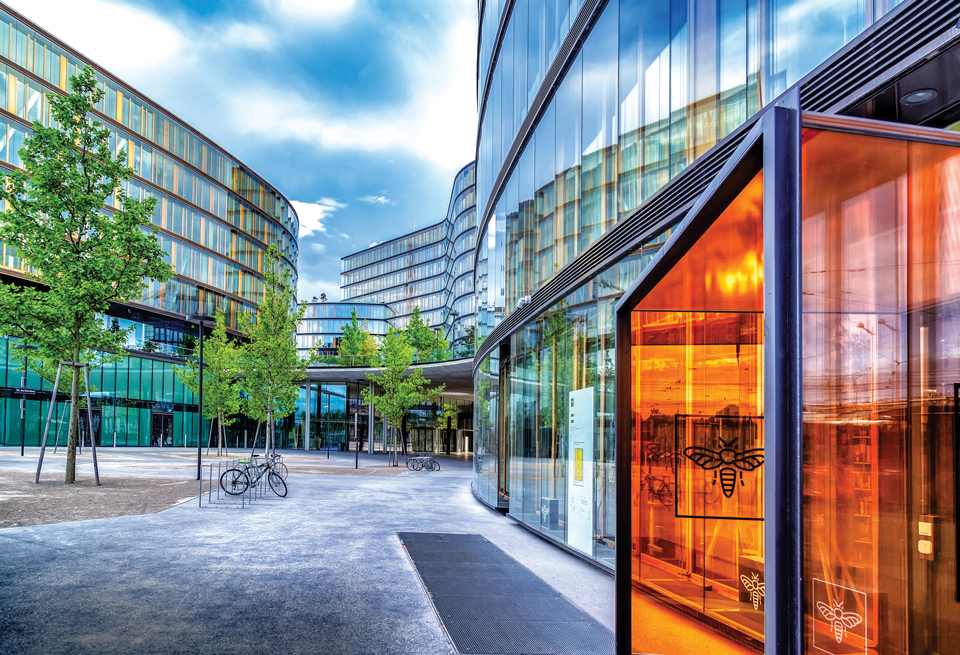
A quick internet search for the term “green buildings,” would get 18.3 million hits in less than a second. Words like “sustainable” and “green” have long been associated with premium buildings. Today, these words have become part of our global conversation about everything from a worldwide movement towards energy efficient, environmentally sound buildings to enterprise-wide real estate portfolios. Acronyms like GBL, BIM, and IPD have entered the scene. We live in an age of global climate change challenges, increasing regulatory pressure for greater energy efficiency and carbon reduction, consumer interest, and employee pressure on corporations. These trends have fuelled corporate social responsibility (CSR) programs, voluntary enrolment in non-governmental organisation initiatives like the Carbon Disclosure Project and the Climate Registry, and integration of sustainability into daily business practices. All of this coupled with increased energy demand and rising energy costs, has created many challenges but few answers. Building owners, operators and occupants are left to sift through mounting “green noise” to understand how to achieve environmental and economic benefits through smart building design and operation strategies.
Green building pays
A fundamental change is taking place. With the rapid increase of renewable energy use, and the convergence of information technology and building technologies, we are on the path toward net zero energy or even positive energy buildings. This is reflected in the fact that smart grid, smart cities, eco-districts, and green campuses are already being built and retrofitted. Further, when implemented strategically, green construction and retrofits bring social as well as financial benefits.
However, green certification does not guarantee a high-performance building. Increasingly, there is recognition that green buildings must be designed from inception to minimise environmental impact throughout the building life cycle. Designing for high performance from a life-cycle perspective is critical and depends on several fairly recent innovations in the design/build process: Building Information Modelling (BIM) and Integrated Project Delivery (IPD), and ever more sophisticated energy and financial modelling tools and methods.
High-performance green buildings of the next decade will be designed by cross-functional teams using complex energy and building modelling tools, and applying the newest information gleaned from these models. Looking to the enormous potential within the green buildings movement and focusing on the triple bottom line, smart teams of people are collaborating, innovating and partnering to bring a whole new breed of high-performance green buildings into the marketplace.
For forward thinking building owners, operators and tenants, the need for green buildings is clear. According to the World Business Council for Sustainable Development, buildings account for up to 40% of energy use in most countries. With global energy demand outgrowing current production, there is a compelling reason to act with force.
Following are some of the compelling factors that are contributing towards investment in high-performance buildings:
• The need to reduce climate change
The energy dilemma is here to stay. Our planet faces an unprecedented energy challenge, with global energy demand growing faster than current production capacity, resulting in diminishing supplies and increasing prices. By 2050, energy demand will double in order to keep pace with demographic, economic and industrial growth throughout the world. Within this same timeline, we must cut in half the amount of carbon gas emissions compared to levels in 1990 to avoid the dramatic consequences of climate change that will affect every citizen, business and country.
The Intergovernmental Panel on Climate Change reports a projected population increase from 7 billion today to 8.3 billion in 2030. 70 million of these people live in developing or emerging countries which are growing eight times faster than industrialised nations. As this new urban middle class economy emerges with access to consumer goods and services, it is obvious there will be a tremendous increase in energy demand that must be satisfied.
According to studies by the International Energy Agency, by the year 2030, three quarters of our energy sources will remain CO2-related which will result in grave consequences if the global temperature rises by even 3°C. As energy consumption continues to rise, it is imperative that we find a way to live with less reliance on fossil fuels, if we wish to protect the planet’s climate and preserve the fuels for future generations.
High-performance green buildings directly affect this issue by reducing environmental impacts in water, materials, waste, energy, and carbon emissions, while also proving that sustainability does not mean people have to sacrifice functionality, productivity, or comfort. In fact, deploying innovative technology, in the context of holistic designs, leads to comfort for users, care for the community and cash for the owner.
• Ensure energy access and reliability
Quality of life is directly impacted by availability and reliability of energy. Today, 1.3 billion people (20% of the world’s population) have no access to electricity whatsoever. These people are essentially cut off from significant economic and social development and they have limited access to educational opportunities and comprehensive healthcare. Even in countries where people and businesses have access to energy, lack of reliability can disrupt daily life, negatively impact the economy and even threaten life. Severe weather conditions like heat waves and cold snaps put intense pressure on electrical grid systems and can lead to power outages that threaten health and safety of individuals.
Kuwait already uses 98.5% of grid capacity, according to the Energy
Information Administration and the Middle East has one of the world’s highest per capita consumption rates of electricity. The Gulf region is facing major investments to increase grid capacity to meet the rapidly rising power demand and avoid power outages. Europe is expected to invest 1 trillion Euros through 2020 in its power infrastructure to ensure reliability of service. Many other areas of the world are experiencing equally challenging circumstances that make it difficult to provide predictable, reliable energy which has a direct negative impact on the quality of life for individuals and on the ability of companies to conduct business efficiently.
As energy demand escalates all over the world, we need to make the grid greener and smarter—with more renewable energy sources and intelligence across the whole electricity network. In this context, high-performance green buildings can play an important role: buildings can both generate and store electricity, and push it back out to the grid when the grid needs it most. In other words, buildings can respond to the needs of the eco-district or smart city by both reducing use and releasing stored energy back to the grid—thus ensuring reliability and continuity of service, and contributing to improved quality of life for community members.
• Mitigate risks of energy price volatility and supply security
As energy demands increase, so do prices. But the equation is much more complicated than that. Ongoing instability in the Middle East and North Africa has a direct impact on world energy markets, both in terms of price and supply. The Fukushima Daiichi nuclear power plant disaster not only effectively took about 30% of Japan’s power supply offline (as the country shut down all 50 plants for maintenance after the 2011 meltdown), it caused a backlash of fear in many parts of the world that are now reconsidering their own nuclear policies and potential associated risks. While Japan and other countries are still debating the role of nuclear power moving forward, it is easy to see how one incident can have major, lasting ramification on energy supply, security and costs.
Designing and occupying high-performance green buildings is a great risk mitigation strategy. In recent years, commodity speculators, in concert with increasingly erratic weather patterns, have played a major role in the volatility of energy prices in electricity, natural gas, and oil. Many companies spend immense funds to manage the risks of this volatility. High-performance green buildings reduce energy consumption—sometimes dramatically. Such buildings can modify the patterns of use to avoid expensive peak rates and to become more efficient overall, regardless of time of day. Buildings that generate energy through renewables can also sell energy back to the grid, thanks to the two-way communication inherent in the smart grid. A smart building knows how to respond to peak energy load and pull from the most renewable source of power.
• Meet energy efficiency and sustainability regulations, incentives, and goals
Although government mandates are increasing, there are no clear directives on how to reach goals. It is clear that green buildings are an important part of the answer to the energy dilemma. As the built environment continues its move through a major transformation, it holds an incredible opportunity for process, technology and human innovation.
In 2010, the European Parliament and the Council of the European Union approved updates to the Energy Performance of Buildings Directive, in order to strengthen and clarify existing building performance legislation. Among the agreements reached by member states are:
• By 2020, all new buildings will be designed to achieve “nearly zero energy” results, with energy sources coming primarily from renewable.
• After 2018, all new buildings occupied and owned by public authorities are nearly zero-energy buildings.
• By 2020, 20% of energy supply for buildings must come from renewable sources
• Member states must implement mandatory certification (Energy Performance Certifications) of new buildings, upon construction, and existing buildings, at the time of sale or rent, along with periodic certification of public buildings.
Each year, floor stock in China increases by another 2 billion square meters, which represents half of the world construction market. This is driven by population growth, economic development, and dramatic and rapid urbanisation. In 2009, China set a goal of 40%-45% CO2 reduction (below 2005 levels) per GDP by 2020. China has also set a goal of using 15% non-fossil fuels by 2020. In its 12th Five Year Plan, which covers 2011-2015, China continues to raise ambitions while shifting its focus to quality, rather than rate of growth. The plan seeks to:
• Raise new building energy saving standards by 65-75%
• Complete a total of 400 million square meters of renovations to existing buildings, making them energy efficient.
• Expand building efficiency to the rural market
• Implement national green building plans
• Construct 1 billion square meters of new green buildings including government office buildings, Eco-City attached projects, government subsidised projects, government investment projects, etc., and conduct mandatory GBL certification
• Issue 500 new green building certificates (100-200 projects each year)
• Provide financial, policy and land support to green building developers
These are only a few examples of governmental initiatives that are taking place around the world, and their impact will only grow over time.
A high-performance green building can be thought of as a living organism and as with all living things; it must have a nurturing environment to achieve sustained health and performance. Such buildings are designed for economic and environmental performance over time, with an appreciation for unique local climate and cultural needs, ultimately providing for the health, safety and productivity of building occupants.