


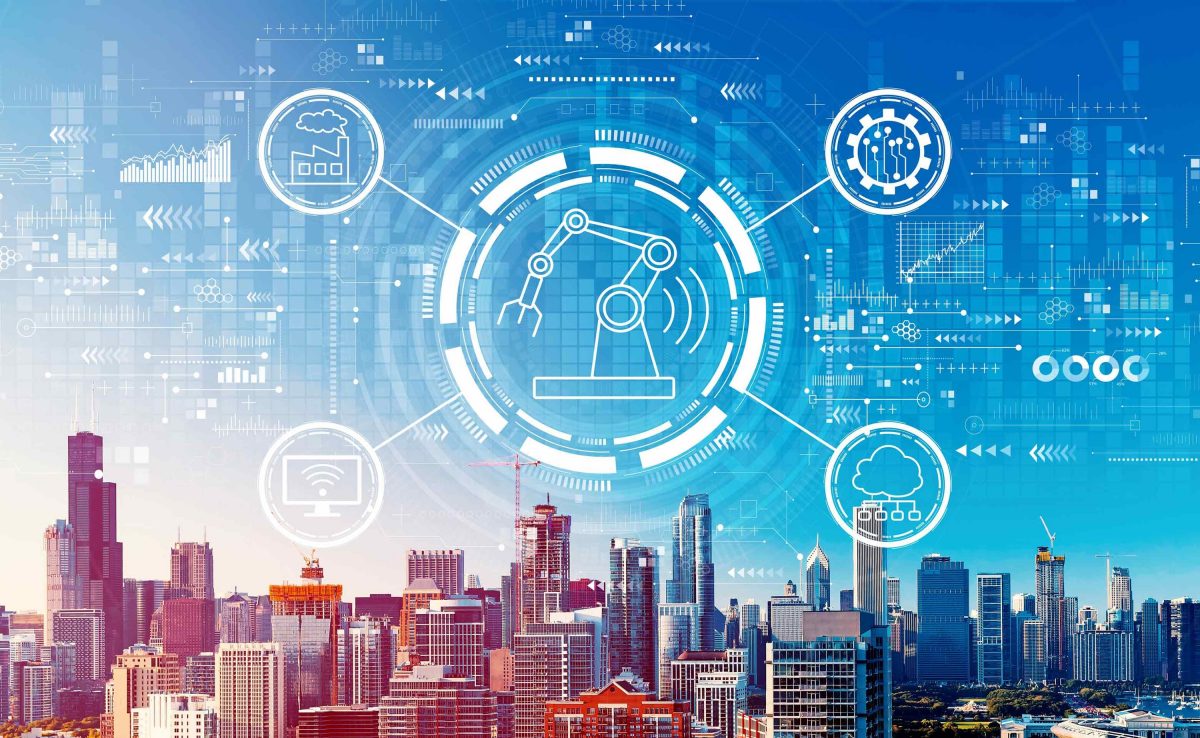
The facilities management (FM) sector has been quick to embrace new technologies and tools that have led to better and more precise delivery of FM services. A key factor in the use of such technologies has been to automate the entire system so there is a continuous sharing of data and information between various units as well as more rapid mobilisation of resources.
Stephen Gill, the academic head of the School of Mathematical and Computer Sciences at Heriot-Watt University, explores the benefits and challenges of IoT and automation in facilities management.
Stephen Gill, the academic head of the School of Mathematical and Computer Sciences at Heriot-Watt University
BENEFITS
- Leveraging data: Data is everything. Buildings integrated with building automation systems (BAS) that control the Heating, Ventilation and Air Conditioning (HVAC) systems, for example, can leverage smart analytics solutions to provide actionable insights to facilities managers based on data generated by buildings.
A smart analytics platform can determine the exact nature of the issue, diagnose the issue, and offer proper recommendations to resolve the issue. For instance, BAS can determine when an equipment is deviating from operational efficiency through power metering and other techniques. This means facilities managers can quantify which equipment is utilising more energy than expected due to wear and tear or other factors.
With analytics, facilities managers can be truly data driven and perform actions based on derived insights. As a result, facilities managers are more efficient and at the same time able to increase the comfort levels of the occupants of the building.
- Streamlined workflows: Automation reduces the level of human intervention required to complete a process and presents all the data in one dashboard environment which helps facilities managers manage multiple facilities from one central location.
Automation allows streamlining that in turn help improve efficiency, productivity, and maintenance management. When FMs optimise their processes with smart technologies such as service automation, they can authenticate jobs performed on site, control risk, record all service requests, and process invoices with ease through a single, easy-to-read dashboard.
Moreover, service automation also generates valuable insights from data collected from various sources to help reduce equipment failure or even extend the lifecycle of building assets. The centralising of information is thus the biggest benefit of automation.
- Remote control and monitoring: A natural consequence of the ongoing pandemic is the increased need for remote monitoring. Fortunately, the facilities management sector has managed to deploy IoT-based sensors and analytics to monitor room, occupancy, social distancing, and cleaning regimes. Plus, temperature and humidity sensors enhance comfort and reduce the chances of spreading the virus through air.
Additionally, remote monitoring of spaces is crucial for optimising energy consumption in buildings. Remote data collection is useful for fine-tuning the operation of HVAC systems that helps avoid higher energy bills. Remote monitoring helps improve the environmental performance of the building and empowers facilities managers to deploy more effective sustainability programmes.
Moreover, as the new generation of facilities management professionals are poised to have a mobile-first mindset, the trend of incorporating advanced IoT technologies into buildings and facilities will (and should) continue).
CHALLENGES
While IoT and automation present many advantages and are opening doors to many new possibilities, facilities managers should also be cognisant of specific barriers and challenges that tag along as well.
- Device compatibility: IoT needs a complex and wide range of technology partners to join forces in order to be successful. It can be challenging to connect useful legacy HVAC equipment with smart thermostats, data centers and other mobile networks before one sees proper ROI and enhanced performance.
Facilities managers can thus be faced with implementation failure or bugs in the software/hardware that result in serious consequences and liability for building operation and occupant wellness. It is hence important to work to test, test and test. Interoperability tests can check if devices can work together and at the same time, they can determine performance issues and security vulnerabilities.
- Initial cost implications: As FM requirements evolve, the need for more advanced technologies and digital solutions is natural. Given the additional technology involved with IoT devices, the high initial costs can be a constraint for many facilities operating on limited budgets. For example, fire extinguishers with smart sensors cost more than conventional extinguishers. Hence, facilities managers require options at various price points and packages so they can implement IoT and automation solutions, and scale up as their budgets expand and as they see more ROI from them.
- Security vulnerabilities: The increased adoption of IoT, automation and other technologies also poses another challenge: threats to security. The smarter a building becomes, the more vulnerable it becomes. As facilities managers become increasingly reliant on IoT and related technologies and applications, data security is a key challenge, especially in the face of sophisticated attacks. Thus, a close collaboration between facilities managers and IT professional is crucial to create and implement comprehensive cybersecurity strategies that are necessary with the continued convergence of information technology (IT) and operational technology (OT).
The goal of incorporating IoT and automation in buildings and facilities is to help enhance the overall security and safety of tenants, efficiency of building assets, and customer experience while minimising the level of human capital and intervention required to achieve the desired results.
However, proper implementation requires the expertise of IT professionals who can ensure the proper implementation of IoT and automation systems. At the same time, it is necessary to present facilities management staff with the necessary training and upskilling opportunities to ensure that they can maximise IoT and automation to the highest
possible level.