


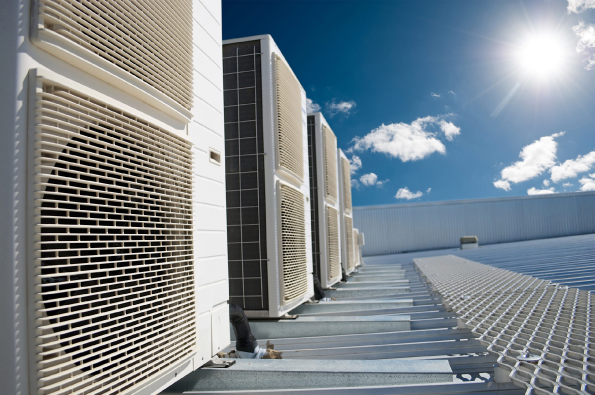
By 2025, the world population is set to rise to an estimated 8.1 billion. Not only will we need more food, water and shelter, but we’ll need more energy to sustain humanity. With a demand for more buildings and infrastructure, we’ll naturally see an increased need for heating and cooling systems in both public and private sectors.
Since temperatures and humidity are very high in summer, more people will continue to buy and use air conditioners to keep cool. As demand for HVAC systems goes through the roof, we must be mindful of the impact this holds for the future and our planet. The significant energy demand will add pressure to electricity grids and as a result, drive up local and global emissions.
According to the International Energy Agency, cooling consumes over 2,000 terawatt hours (TWh) of electricity every year, which is two and a half times the total electricity used in Africa. These numbers are only going to climb, and now more than ever, businesses need to be more accountable and active contributors to climate action.
It all starts with evolving the HVAC systems to keep up with the cooling-related electricity demand. Because HVAC systems account for the high-energy usage in buildings, every facility can benefit from increased energy and cost savings by improving HVAC operations through proper design, installation, scheduled maintenance and other activities.
Rigorous action by governments is critical in encouraging builders and architects to plan for early HVAC design with energy-efficient systems as per the energy code requirements and in line with the building’s design. Such initiatives will guarantee lower energy costs, higher reliability, and optimised operations.
Such initiatives enable businesses to future-proof their operations, which is a vital step for the future stability of business operations.
Smart applications are not new – from video surveillance, security systems to lighting and more, we are now able to control systems with a push of a button on our tablets and mobile phones. As technology continues to advance, smart applications are now aiding HVAC operation from both an end user, and maintenance professional perspective, ensuring that energy is conserved, and equipment is efficiently operated in both homes and offices.
With regards to market leading HVAC technology, IoT solutions including artificial intelligence can be deployed to further optimise operation and improve equipment reliability. This includes utilising machine learning to automatically identify performance drift and predict maintenance issues before they occur and therefore ensure optimal energy and comfort performance. Not only does this benefit the end user in terms of cost savings, but also increases equipment reliability and an enhanced customer experience.