

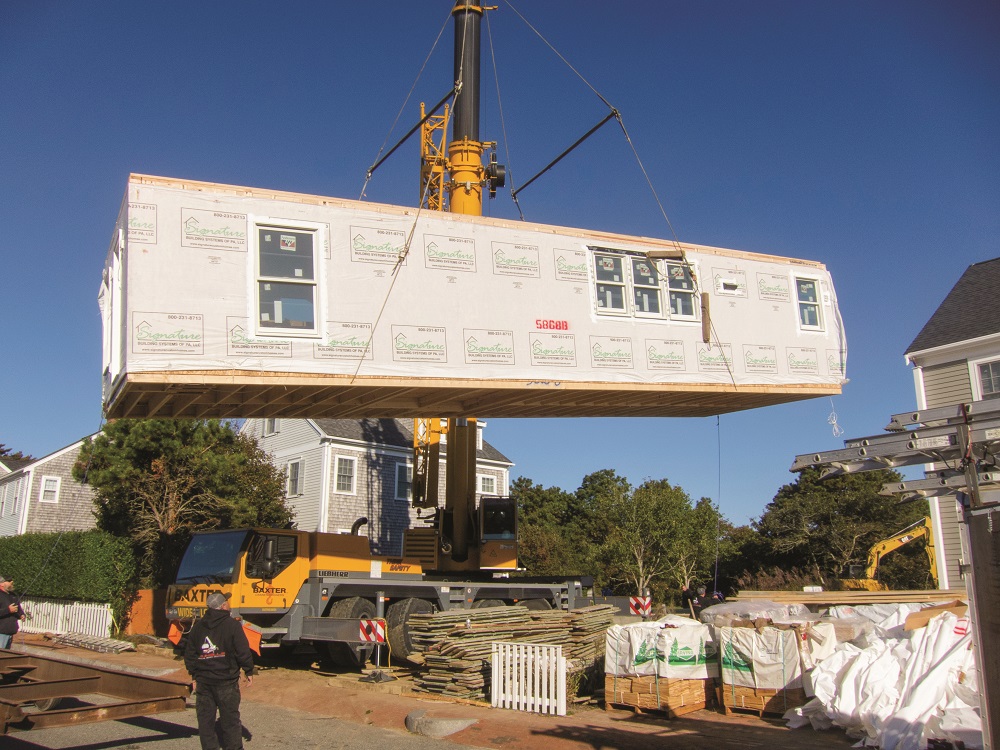
While various state governments tried to construct new Covid facilities from scratch rapidly and hospitals created dedicated Covid wards in a short timeframe, one new construction model was explored by many hospitals and healthcare centers during that time: the modular construction design.
Ravideep Singh, Associate Director at Creative Designer Architects (CDA), recalls that “during the Covid-19 outbreak”, the modular construction model was adopted by hospitals and healthcare centers in India “for setting up Alternate Care Facilities (ACF),” which was, “typically, a mass emergency response infrastructure.”

While the pandemic boosted the adoption of the modular construction model by the healthcare sector, its popularity continues to rise even Today.
Modular construction defined
Modular construction, also known as prefabrication or off-site construction, is a method of building structures in which various components are manufactured in a factory setting and then assembled on the construction site. Prefabricated units, precast slabs, or other structural elements are a part of modular construction. These can be constructed in modules elsewhere and assembled on-site. This construction method has been gaining popularity recently, particularly in the healthcare industry. In India, modular construction is being increasingly used for the construction of hospitals and healthcare centers due to its many advantages over traditional construction methods.

Explains Kunal Bhattacharya, Principal – Healthcare Planning & Design, RJB Architects: “Being an arrangement of interlocking blocks, these buildings tend to be ephemeral unless serious hard-wired engineering is engaged to design them to be relatively long-lasting. In the age of fast food and a burgeoning population, witnessing rising demands for instant gratification, modular construction makes the traditional manual construction methods look anachronic.” Kunal Bhattacharya is the Empaneled Architect at Medica Synergie Private Limited, which owns and manages Hospital in Kolkata.
Modular construction benefits
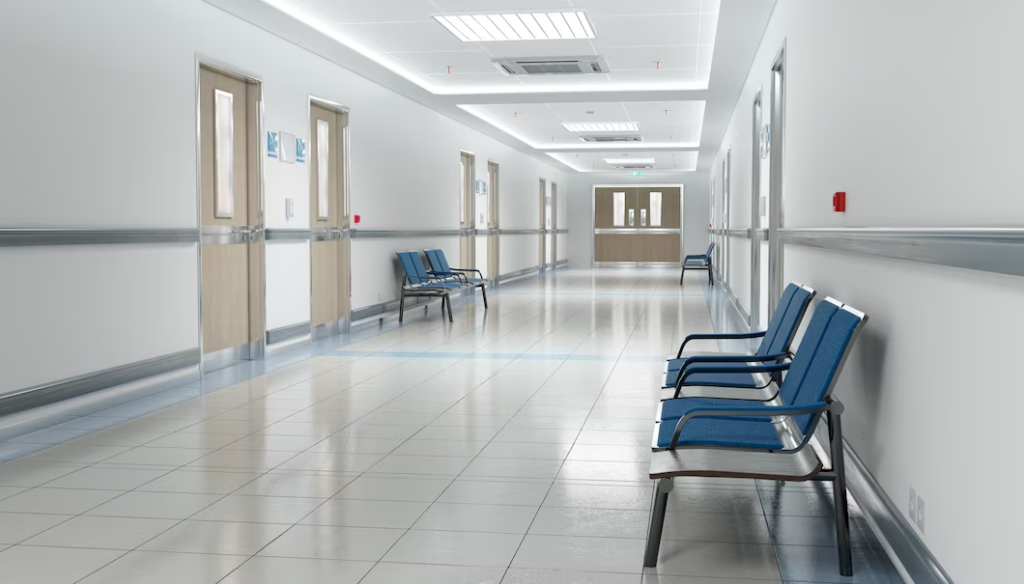
Modular construction offers a range of advantages to all building projects, especially healthcare buildings. Seema Desai, Studio Head – Healthcare, Adrianse Global, says, “Modularization as a technique offers versatility and flexibility in terms of building functions; unlike conventional construction, which largely relies on labor skill and size of the workforce, modular construction depends on controlled factory settings, rigorous quality control, and regularized timeframe to produce the most efficient results, even at a large scale.”

Healthcare buildings, particularly hospitals, can derive a lot of benefits from modular construction and its inherent advantages, says Kunal of RJB Architects. “Not only do healthcare buildings consist of several repetitive modules in building infrastructure, but they can derive maximum efficiency out of hospital operations by taking advantage of the modularity of building elements – this can also result in reduced operational mistakes due to increased familiarity with the environment in different parts of the hospital.”

Nithin Hosabettu, Design Director, IMK Architects, says, “As modular construction works on an overall concept of repetitive modules, it helps in reducing the wastage of materials. Modular products are better valued and engineered, as more time can be dedicated. The final products are more detailed – providing better results in finishing and precision.” He adds, “Hygiene management is of utmost importance in hospital environments during renovations. Modular construction systems such as dry walls, LGSF, modular metal partitions, modular ceiling systems, etc., can help in reducing dust at the site. Also, any changes in services needed later on can be easily done with these systems.”

Manoj Chaudhary, Director, Edifice Consultants, says, “Today, scalable models of healthcare infrastructure are being explored so that hospitals can start small and grow with demand in a planned manner across multiple locations. The main intent of scalable models is to design the facility on a flexible and adaptable floor plate. By adding to or subtracting from this basic module, new and advanced levels of healthcare can be built.”
Stating that modular constructions have demonstrated a reduction of up to 50 percent in energy use and over 90 percent in wastage of materials against traditional methods, Ravideep of CDA says, “Since the fabrication happens off-site in controlled conditions, there is less dust and moisture trapped in the facility – allowing for a better indoor environment and longevity of the material. Higher quality construction with less dust and moisture also improves the healing environment for patients.”
Some of the benefits of modular construction for healthcare organizations in India can be summarized below.
Shorter construction times: Modular construction allows for the simultaneous construction of components in a factory setting and on-site, resulting in shorter construction times compared to traditional construction methods. This is particularly beneficial for hospitals, where the construction of new facilities is often needed to keep up with the growing demand for healthcare services.
Providing an estimate for time-savings, Seema from Adrianse Global says: “On average, a building construction timeline can be reduced anywhere from 20 percent to 50 percent when compared to conventional build method.”
Cost-effectiveness: Modular construction is more cost effective than traditional construction methods due to lower labor costs and more efficient use of materials. Additionally, prefabricated components can result in less material waste and less site disturbance, further reducing costs.
CDA’s Ravideep says: “As per studies conducted by KPMG and others, modular construction in healthcare has seen up to 30 percent savings in cost and up to 50 percent in timelines. We believe these are nascent figures with a very preliminary use of these technologies. Once these technologies are adopted universally, the savings should enhance further.”
Environmental sustainability: Modular construction is more environmentally friendly than traditional construction methods, resulting in less material waste and fewer emissions from construction equipment. Additionally, many of the materials used in modular construction are sustainable and can be recycled or reused at the end of the building’s life. “With reduced activity at the site, disturbances to the neighborhood, as well as air quality, are kept at a minimum,” says Kunal of RJB Architects.
Commenting on the environment-friendliness of modular construction, Seema of Adrianse Global adds: “Buildings designed with this approach tend to minimize waste generation as design elements are produced purposefully to allow better control of inventories.
Modularity in design units allows the building to have multiple service cycles and increased adaptability to various functions. Since the majority of the building units are produced in a single location, procurement, and site deliveries, transport emissions are also minimized.”

Customizability: Modular construction is highly customizable, allowing for the design of unique and customized healthcare facilities. The use of prefabricated components allows for greater flexibility in design and the ability to make changes or updates to the facility as needed.
“Standardized floor plates based on universal grid offer the maximum flexibility in accommodating a variety of configurations of medical modalities. Therefore, they also lead to a resilient structure,” opines Manoj of Edifice Consultants.
Better quality control: In modular construction, most of the work is done in a controlled environment, such as at a factory or workshop, where the quality of the work can be controlled and managed more effectively. This leads to the higher construction quality and reduced defects and errors.
Modularity also helps in achieving better aesthetic value. As the layouts of all locations are based on a single planning principle, it allows for the design of a unified facility with the same operational parameters and a similar look and feel, says Manoj of Edifice. “The similarity in components helps create a brand value along with streamlining patient, relatives and staff experiences across facilities,” he says.
Improved safety: Modular construction can enhance safety during the construction process. Due to the controlled environment, the risk of accidents, injuries, and other hazards is reduced.
The application areas
The most common applications of modular construction in healthcare are patient bathrooms, exam rooms, single-toilet rooms, and patient-overhead utilities, informs Seema of Adrianse. “These can all be prefabricated off-site and brought to the project site for installation. The standardization of modules can bring about efficiency in square footage area and allows for quality control as the assembly plan is typical for modules- also helping reduce waste material.”
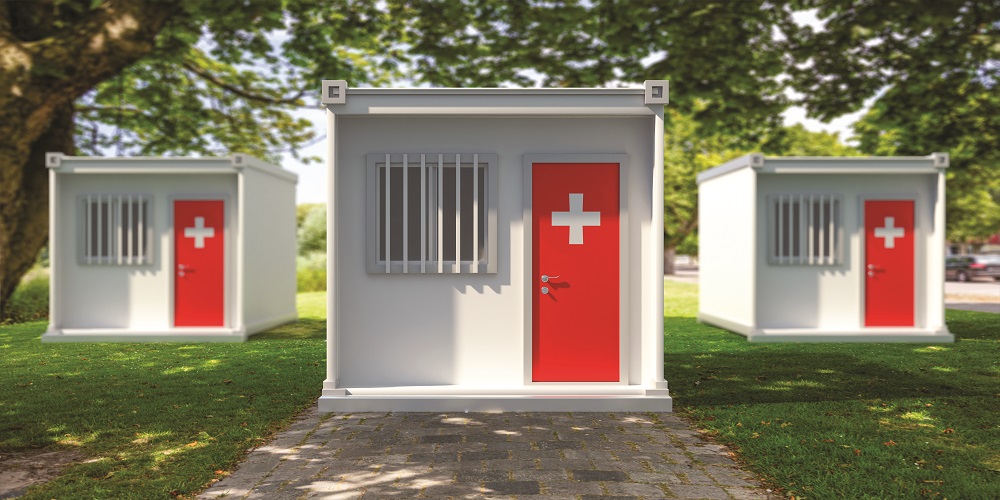
In addition, the medical facilities that need to accommodate surge capacity or provide new capabilities like vaccination cubicles and labs can use modular construction. This application was tested and used aggressively during the pandemic. A few areas where modular construction makes sense include service rooms (HVAC, LT Panel, etc.), in-patient rooms, in-patient room toilets, consultation rooms & procedure rooms, perioperative spaces, and holding bays. “These modules can be repurposed or relocated to respond to similar kinds of requirements in the future,” Seema says.
Healthcare trends
Healthcare modular construction is becoming increasingly popular due to its environmental benefits, such as reducing material waste and emissions from construction equipment. Many modular construction companies are now focusing on using sustainable and eco-friendly materials, such as green roofs and solar panels, in their projects.
The healthcare modular construction market is expected to benefit from technological advancements such as ‘Building Information Modeling (BIM)’ and 3D printing.
These technologies allow for increased automation and precision in the design and construction of healthcare facilities, resulting in faster and more efficient construction processes.
Growing demand for prefabricated and modular solutions in emerging economies: The healthcare industry in emerging economies, such as India and China, is expected to drive the growth of the healthcare modular construction market. The increasing demand for healthcare facilities in these countries is expected to lead to a growing demand for prefabricated and modular solutions, as they offer cost-effective and efficient construction options.

Precautions and good practices
While modular construction may offer several advantages to healthcare facilities, there also are a few challenges and considerations. Nithin of IMK Architects lists the challenges associated with modular construction and a few concerns. For instance, hanging certain weights, like overhead storage on the partitions without prior planning, may damage the structure. “These need to be planned before executions. There are different boards for different weight factors, for wet areas, for a better grade of acoustics, fire resistant purposes, etc. We found that these require us to be more specific in defining the usage in advance, whereas hospital projects are prone to changes in requirements. So, vendors have come up with one type of board which can be used in multiple ways,” he says.
In the case of precast slabs and beams – specifically in concrete need a lot of precision; otherwise, assembling on-site becomes a significant hurdle, Nithin mentions. “The joints need to be sealed properly. The changes in these systems, such as the core cuts for services and changes in planning as per site requirements. Etc., may become difficult if not planned.”
These construction methods, he adds, require skilled labor as compared to conventional construction, which can add to the cost. “The cost of these constructions is 10 to 15 percent higher than the conventional type. The lead time for procuring materials for the modular construction method is also slightly higher than acquiring building materials for a conventional system.”
Highlighting another drawback, Kunal of RJB terms modular constructions as being ephemeral in nature. “Too many structural joints tend to make such healthcare buildings susceptible to lateral movements. Therefore, a hundred percent of modular buildings are unsuitable for high-rise construction.”

Future forward
While modular construction for healthcare buildings has a few drawbacks, the advantages outweigh them. Modular construction, according to Manoj of Edifice Consultants, is future-proof. “The programs and interiors within the universal standard grid can be modified time and again best to reflect the emerging needs of every medical center. Therefore, expansion, renovations or re-arrangement of programs across floors can be carried out with relative ease.”
“The gestation period of commissioning a hospital,” says Kunal of RJB Architects, “can drain significant resources in per-operative expenses, which could find better utility in operations. By reducing the pre-commissioning period, one could look at revenue turnaround much earlier through modular construction.”
In the future, hospitals and healthcare centers in India might also adopt a hybrid model that combines the best of both worlds – the traditional and modular construction methods. The specific self-contained healthcare service units requiring fast scale-up will be ideal for modular construction. At the same time, the rest of the infrastructure will be built using traditional construction methods.
CDA’s Ravideep concludes: “Even though adoption is slow at the moment, this will eventually bloom at a larger level as we grapple with the scarcity of skilled workforce and operating margins in the coming years. Modular construction puts forward a compelling proposition to these issues, primarily with faster timelines, hence quicker ROIs, better quality control, and visibility of finances.”
Source: https://www.healthcareradius.in/