


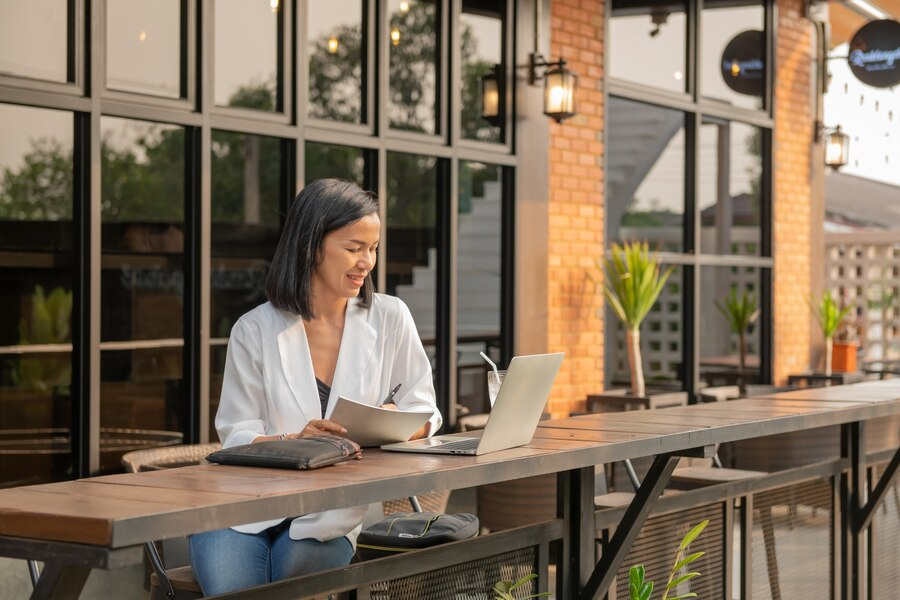
As the commercial landscape continues to evolve, so too does the design of workspaces. The traditional cubicle setup and closed spaces are quickly becoming a thing of the past, with workplaces now prioritizing collaborative and creative environments that encourage productivity. One of the most notable trends in office design today is the integration of multi-functional outdoor spaces. These outdoor spaces serve several purposes, including providing a place for employees to take a break, hold meetings, or even work. They also offer an opportunity for organizations to showcase their commitment to sustainability and create an inviting, welcoming environment for both employees and visitors.
Embrace Biophilic Design
Biophilic design is a concept that incorporates natural elements into both interior and exterior spaces to enhance well-being and reduce stress levels. Gaurav Pathak, Founder of Design 21, suggests, “To create multi-functional outdoor spaces, opt for natural materials such as wood, stone, and greenery to blend the boundaries between indoor and outdoor areas. For example, designing a courtyard with plants and trees provides employees with a calming environment to take breaks or collaborate with colleagues, embracing a multi-functional spatial quality.” He also adds, “Green walls, where plants are grown vertically on a building’s exterior or interior walls, can be incorporated in semi-outdoor areas, that act as an insulator and provide a natural cooling effect, reducing the need for air conditioning.”

Use Modularity
Modular outdoor furniture is essential when creating flexible spaces that can be easily reconfigured to meet changing needs. Anil Badan, Founder and Principal Architect of Studio B Architects, asserts, “Movable planters, benches, and tables can be arranged in various configurations to accommodate different uses. This approach also helps in optimizing the use of outdoor spaces and catering to changing needs (from small meetings to large team-building events) while creating a cohesive design.” He adds, “Movable furniture can be used to create seating areas that encourage collaboration and socialization among employees. Even, movable planters aid in creating privacy screens or to section off areas for various activities.”

Incorporate Technology
In today’s digital age, technology has become a crucial aspect of our lives, and it can be incorporated into outdoor spaces to enhance functionality. Abhigyan Neogi, Founder and Principal Architect of Chromed Design Studio says, “Solar-powered charging stations can be used to charge mobile devices, and Wi-Fi can be made available to allow employees to work outside. This integration of technology allows for more freedom and flexibility, giving employees the chance to work outside the traditional office space.” The architect adds, “Smart lighting can be installed in outdoor spaces to create an ambience that is both inviting and functional. This can include motion-sensor & multi-coloured lighting that transforms according to external conditions, also improving the work experience.”

Workplaces that strive to integrate multi-functional outdoor spaces into their office designs also demonstrate a sheer commitment to the well-being of their employees and the environment. Incorporating sustainable elements such as green roofs, energy-efficient lighting, and rainwater harvesting helps reduce their environmental impact while promoting a healthy work environment.
The emergence of multi-functional outdoor spaces is an irresistible trend that continues to grow in modern offices. Thus, architects and designers have an opportunity to create innovative, inviting spaces that promote well-being, creativity, and productivity.