


Launched in 1993, as a subsidiary of the Embassy Group, the facility management firm – Embassy Services – is now working towards a vision of becoming one of the most formidable entities in the IFM industry. The company, which was initially established as an in-house unit to manage the group’s residential and commercial portfolio across the country, over the past couple of years, has expanded its purview across the Indian real estate sector, offering state-of-the-art, technologically-advanced FM services.
Standing out from the crowd is no easy feat, particularly if you’re in the service industry. In a market saturated with dozens of companies, each delivering varying degrees of expertise, it can be a challenge to distinguish yourself. However, with its innovative solutions, automated processes and service interface, Embassy Services accomplished its expansion into this segment with élan to successfully carve out a niche for itself in this burgeoning sector.
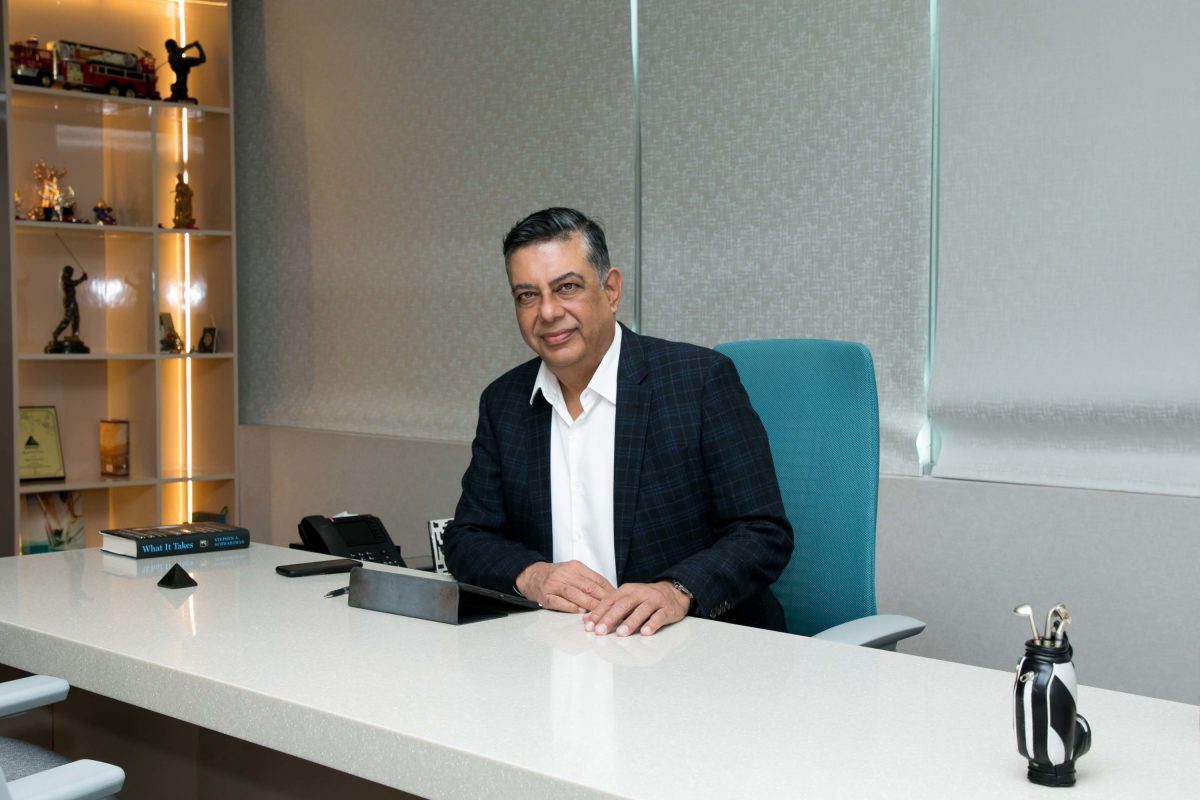
As the managing director and the CEO of Embassy Services, it’s easy to perceive the sense of pride Pradeep Lala has when he talks about the growth of the company and the principles it stands by.
What is your opinion about the evolution of the FM sector in India?
The sector is currently fragmented with many small players and many organisations running the function with in-house resources. However, slowly people are waking up to the need for outsourced professional service providers who follow global standards and certifications that ensure strict compliance to laws and statutory protocols.
Many organisations understand that outsourcing FM operations allows them to focus on their core business and also leads to a long-term reduction of costs. Since the function by itself is very complex and involves a lot of work, many are accepting this reality and moving toward an outsourced model. Especially after COVID, most have further realised the need for proficient and compliant FM services since safety and hygiene are the need of the hour that needs to be provided with expertise.
The current value of the FM industry is about USD 150 billion and is set to grow at a 20% CAGR to hit over USD 400 billion by 2025. There is certainly a lot for everyone to capitalise on.
Given that, the FM landscape in India is undergoing a major transformation, with the increasing demand for quality services and manpower, how is this being demand being addressed?
The demands for more skilled and quality services are addressed with proficient training modules and the implementation of technology. Boosting a data-centric approach to FM using technology tools and enabling manpower with efficient training programs allows for quality delivery of FM services.
Also, certifications from global bodies such as LEED, BSC, IGBC, CII, etc. bolster the best practices and processes of an organisation to provide operational excellence.
What are some of the strategies you’ve adopted to enhance client servicing?
One of our main strategies towards clients is to sell them only what they need and not what we have. This helps in building a genuine relationship with value. We gain their trust and work as an integral part of their organisation’s goals to reduce costs and energy footprints.
This helps in maintaining a high retention rate of over 98% for us at ESPL.
We leverage our experience of over 25 years in managing owned assets and experiential learning to cater to the entire spectrum of real estate. Also, our pan-India presence spanning over 70 million sq.ft., with over 180 clients from various industries and a 100% owned manpower company named TCFM (Technique Control Facility Management) gives us the flexibility and reliability to cater diverse client requirements. Bolstered by trust and transparency, we provide operational excellence, every day, every time.
Man and machine together make a lethal combination. And this sector combines the competence of man with technology to enhance operational delivery and customer satisfaction. How has the company leveraged this combination to improvise service delivery?
The sector is one which is driven by the sheer on-ground presence of man to look after the numerous utilities and assets of a premise. Now, this can pose numerous challenges on a large scale as managing thousands of people and machinery can become stressful. Hence, the use of technology.
While the numerous functions of FM can now be bolstered with a data-centric approach and cloud integration, it becomes easy to analyse data from anywhere around the globe in a completely paperless ecosystem. This also decreases the incompetency levels since every task and action can now be calculated for its efficiency. With IoT devices and sensors placed across facilities and utilities, we can monitor, track, analyse, predict, forecast, and hence enhance the operational delivery of both man and machine.
Could you tell us about some of the in-house processes and systems developed by the company?
We are an organisation with global certifications for FM. This helps us maintain global industry standards and processes needed for operational excellence. Some of the buildings we manage are LEED/IGBC Platinum certified which means that the FM deliverables require strict compliance and update of processes. We are certified for international frameworks such as ISO 9001, ISO 14001 and ISO 45001, with the aim of exceeding customer satisfaction. We are also recipients of the ‘Sword Of Honor’ from the British Safety Council which is an acknowledgment of our quality systems and processes. Right from waste management, housekeeping, statutory compliance, environmental health and safety, employee engagement, to sustainability and green initiatives, all our practices are top of the line.
Digital logbook.
On the technology front, we have an array of tech tools labeled under ‘E-Spectrum.’ These are a set of over 12 tools that assist in the plethora of FM deliverables. Right from monitoring diesel for generators to tracking manpower and completion of their tasks, these provide data to all the FM tasks. This helps to calculate the efficiency and competency of deliverables thus resulting in cost savings and energy savings for the client. We also use a digital logbook which enables real-time access of technical data from anywhere across the globe and reduces the use of paper completely.
Promoting a data-centric approach to FM is the need of the hour and this is crucial to enhanced service delivery.
Which vertical one do you think has shown the highest growth is adopting organised facilities management?
We are at a juncture where most of us are aware beings, who would like to be sustainable and understand the need for reduction of carbon footprints. Especially after COVID, everyone further realises the need for organised and compliant facility management.
The commercial office sector has adapted very quickly, since many organisations find great value in being ‘green’ and also need to ensure compliance with statutory norms. While the compulsion to ensure best practices of FM in itself has helped with growth for professional FM organisations such as ours, the genuine intentions of many organisations and their people too are conducive to this growth.
IMPACT OF EXTERNAL FACTORS
Despite organisations, taking charge of all safety and hygiene needs for a safe return to the office, the number of people returning to the office is low. What are these external factors that are restricting this?
- Fear of the virus: While it is arguable that some may pose ‘selective fear’ when it comes to only returning to the office and are okay to go on a holiday, the majority aren’t okay with both. Now that the vaccines are out, we will see this subside.
- Global mandates: Many of our clients in India are headquartered in America or Europe who are currently in the midst of a second wave. Understandably, they would have the same mandate for all their employees across the globe as their values and systems are built as such.
- Safe public transport options: Given our population and lack of great infrastructure, many would find it hard to report to the workspace with ensured safety. Not too many have the privilege of private transport either, so this is surely a factor.
- Is the workspace actually needed? – This is another question most organisations are still addressing. While it would work for a few, it will certainly not work for many. Some might explore co-working or flexible workspaces, it is good to consider and make decisions that increase safety and reduce costs, but not at the cost of productivity resulting in revenues. We will also have to consider the implications this has on a work-life balance. This will be a wait and watch module adapted by most and only time will tell if India is ready for a WFH culture.
All said and done, people need to return to the office since many small businesses are dependent on this huge population of working individuals. It is the responsibility of every individual to make this effort despite their comfort so that the whole population can thrive as an economy.
How are you addressing the challenge of training and educating manpower?
Education is one of our main focus areas when it comes to CSR. We have already set up our own FM training institute so that the youth can pursue FM as a great career option. This will result in boosting opportunities for education, employment, and hence the economy. We face a slight delay though due to COVID but we should be at this soon enough.
What are the other challenges you face currently – be it with the clients or with the design and construction fraternity or otherwise?
The FM workforce is at the forefront, working in the midst of this crisis and even in difficult circumstances. The greatest learning from this critical period is management’s ability to embrace a whole host of new measures and operating standards, not only to protect employees, but to maintain business continuity. This COVID-19 epidemic has brought facility management services into the spotlight with a focus on hygiene.
- One of our major challenges is the reduction in the requirement of manpower since our major portfolio is the commercial sector. While we see this as a temporary situation that will surely subside, we have seen a decrease in profitability due to this reason. However, the increase in quality and quantity of materials needed for our services almost balances this out.
- Some of the challenges we face are to cope with ever-changing statutory norms set by govt. bodies and organisations. This is also an opportunity for us to enhance our own processes that meet the demands of the day.
- Design changes are also a challenge constantly addressed to avoid crowding, especially in areas such as elevators, lobbies, food courts, gates, etc. Provision of social distancing demarcations, reducing seating capacities, constant sanitation of common touch points such as knobs, buttons, railings, etc. allow for a safer environment.
- Another major challenge is that of managing HVAC systems. While many have upgraded their equipment, and altered schedules and parameters, this is still a challenge for an indoor work environment.
Our utmost priorities to work around on are with building sanitation, HVAC and forced air quality, floor plans and workplace considerations, new workplace policies, support for a distributed workforce, all of this while ensuring the safety of our own workforce.