

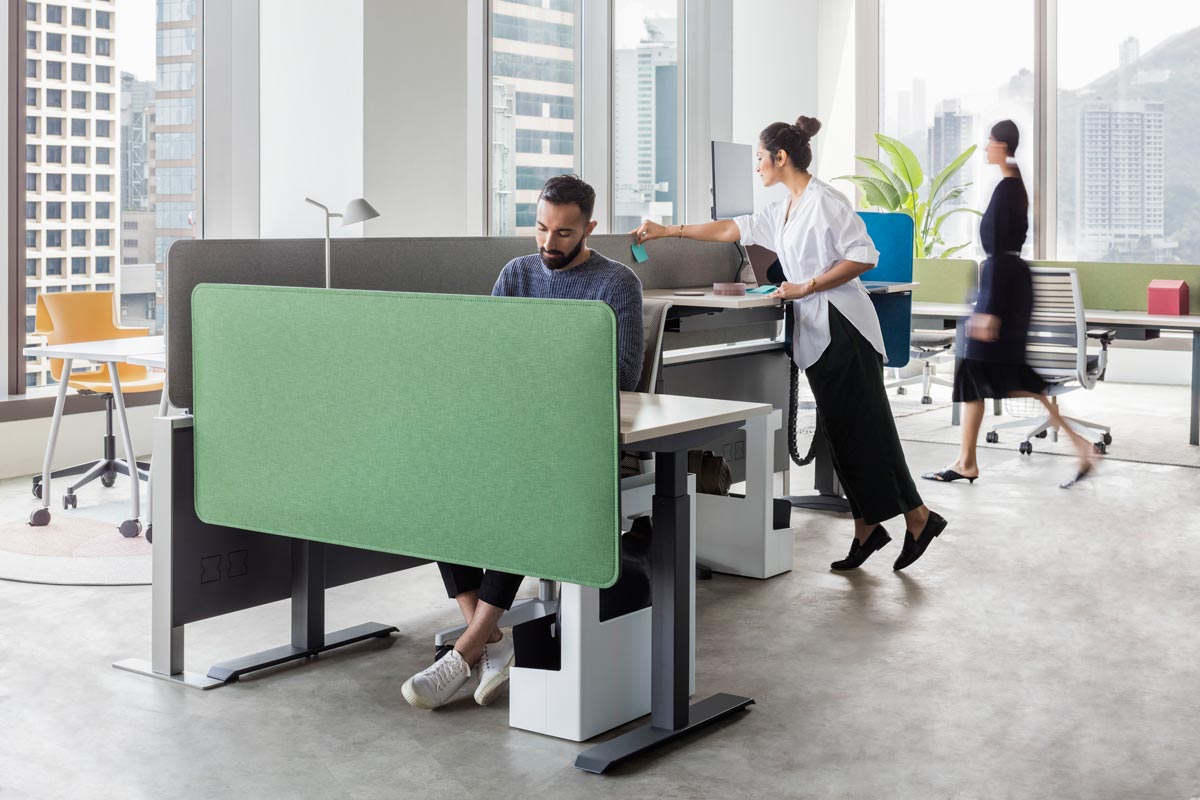
The pandemic has definitely accelerated office space trends to a very large extent in terms of spaces, kind of facilities and technology. Even as India’s office space continues to change tack in response to the coronavirus pandemic, the winds of change are already gaining momentum in its favour.
According to Knight Frank’s report, demand for office space in the country increased 25% year-on-year in the first three months of 2022 as more and more companies get into the hybrid working mode.
The brand-new office is back in action mainly on two fronts. Firstly, the efforts made by the sector stakeholders to bring the sector back from the adverse effects of the pandemic are yielding positive results. And secondly, the office, as many naysayers had predicted in the aftermath of the pandemic, is not going anywhere.

How has the workspace changed?
Post-pandemic, well-being has become a key metric to determine the efficiency of the office. Even though a shift had begun to take place in the case of Grade-A offices, previous workspaces were all about functionality—minimalistic in every sense. They were mainly enablers of work performance with a moderate focus on employee comfort and their general well-being. In the new office space has become the prime area of focus for developers of commercial space, big or small. Even small co-working spaces today, which account for a large share of office space in India, are thriving particularly for the ease and comfort they can offer employees—not just as workers but as humans.
The pandemic has caused a definite change in the perception of employees and employers about the workspace typologies and the comfort it brings along with the spaces.
A way of working by which people can work from distributed locations, such as home, office, or anywhere, by leveraging cloud technologies has taken a major role in the workplace.
Workspace designs, as a matter of fact, are being drawn heavily from the hospitality sector. Office décor is turning more equally ferocious on employee comfort than functionality. While boasting gymnasiums, crèche and rejuvenation areas as their integral part, post-pandemic workspaces put a great deal of focus on furniture arrangements, lighting and art and décor to make themselves more appealing to the workforce.
Workspaces will be a social hub for meaningful relationships, learning and collaboration.
More collaboration, less chaos
The pandemic has taught us all the value of human bonding. In workspaces, keeping that bond remains even more crucial amid the limited facetime employees get with each other. In fact, most businesses believe that increased collaboration can serve to bring people together and inspire teamwork. As the world of work evolves, companies are investing heavily in developing more collaborative workspaces to stay competitive.
Since hybrid work policies demand better collaboration among employees, technology-laced workspaces have become highly collaborative. Companies are investing in technologies that allow people to ensure employees stay connected seamlessly within and outside their campuses. A collaborative office space, with its easy-to-move-in and easy-to-conduct business features, allows employees flexibility throughout their workday.
Healthy workplaces and wellness will be central to the hybrid model, which would be the future of work-life balance and maintaining sustainable ecosystems.
The choice and flexibility of spaces will be the prime driver while designing the workspaces.
Unlike the old office where one had to run from one end to the other to find answers to a problem, a collaborative workspace has a hands-on team to address all issues an employee might face—from space to technology to amenities and to neighbourhood.
Bottomline
In the times to come, companies will continue to invest in developing offices more aligned with changing employee demands. This improvement would be driven by equipping offices not only with new-age technologies but also interior changes that optimize employee comfort, an ecosystem of spaces, choice of working and typology of spaces a workspace would offer. If the office has to compete with the warmth and luxury of home offices amid a shift in employee attitudes toward more flexible ways of working, it will have to continue to improve itself to stay ahead.